

Corporate Suites Signs 35 KSF Lease in Midtown
The firm will open a coworking space across two entire floors.
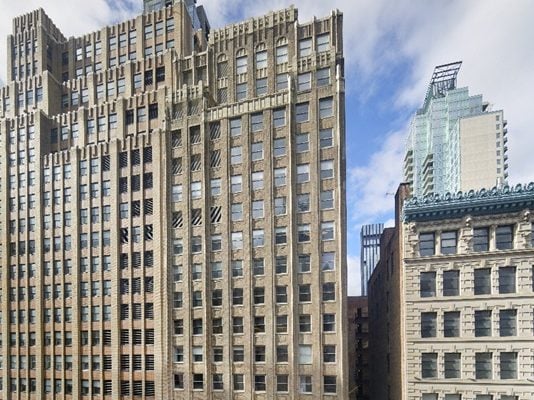
Image courtesy of George Comfort & Sons
Flex office provider Corporate Suites has signed a 13-year, 34,857-square-foot lease at Wohio Holding Inc.’s 16 E. 34th St. in Midtown Manhattan. The tenant will open a coworking space across the entire 18th and 19th floors.
The future flex venue will feature smaller private offices, conference and training rooms, phone booths, a café and an on-site support team. Corporate Suites will join Roytex Inc., Guideposts, Formation Bio, Tzumi Electronics and Agilis Insights in the tenant roster, according to Yardi Matrix information. George Comfort & Sons manages the office building and handles leasing activity.
Completed in 1925, the Class B, 349,683-square-foot property has floorplates averaging 19,355 square feet across 22 stories. Amenities at the mid-rise include seven passenger elevators and 16,600 square feet of retail space. The most recent capital improvement program at 16 E. 34th St. upgraded the lobby area and added an amenity roof deck.
The block enclosing the office building is adjacent to the Empire State Building and six blocks south of Bryant Park and Grand Central Terminal.
Coworking footprint grows larger, expands into suburbs
Though Midtown Manhattan remains a highly dense spot for flex locations, the new coworking map has begun expanding beyond the central business districts, into suburban nodes and secondary markets, closer to the homes of remote teams. In efforts to remember its original purpose—that of reaching and supporting hybrid workers—the latest strategy in coworking industry trends is adapting to where these individuals live, rather than coagulating them downtown.
As of the first quarter of 2026, the national coworking footprint reached 164 million square feet, marking a 16.5 percent increase year-over-year and accounting for 2.3 percent of the total office inventory, according to a recent Yardi Matrix report. This growing demand for flexibility also prompted traditional office owners to turn to arrangements mimicking the amenities and concessions of the coworking model.




You must be logged in to post a comment.