

Nashville Office Market Sees Strong Pricing, Slower Sales
Office investment activity has slowed in Music City, but other metrics tell a different story.
Nashville’s office sector recorded mixed performance across key fundamentals in the first eight months of the year, according to Yardi Matrix.
Development activity remained robust relative to inventory, with the Music City posting the second-highest pipeline in the country as a share of stock.
Meanwhile, investment activity slowed. However, several high-profile transactions pushed office prices among the highest nationwide, placing Nashville alongside top-performing markets.
Coworking space accounted for 3.3 percent of Nashville’s total leasable office inventory, ranking the metro second in the nation and above its peers.
Nashville’s pipeline, among the highest by out-of-stock share
As of August, Nashville had roughly 1 million square feet of overall space underway across nine projects. This accounted for 1.5 percent of its total stock.
The pipeline size placed the Music City sixth among similar markets. Dallas topped the ranking at 3.5 million square feet, followed by Houston (2.1 million square feet). Peers with smaller pipelines included Denver (998,476 square feet) and Atlanta (767,000 square feet), among others.
As for competitive office space, Nashville had 958,745 square feet under construction, accounting for 1.6 percent of its inventory—more than three times the 0.5 percent national average. The metro’s share stood out as the second-highest in the U.S., after Miami’s 3 percent.
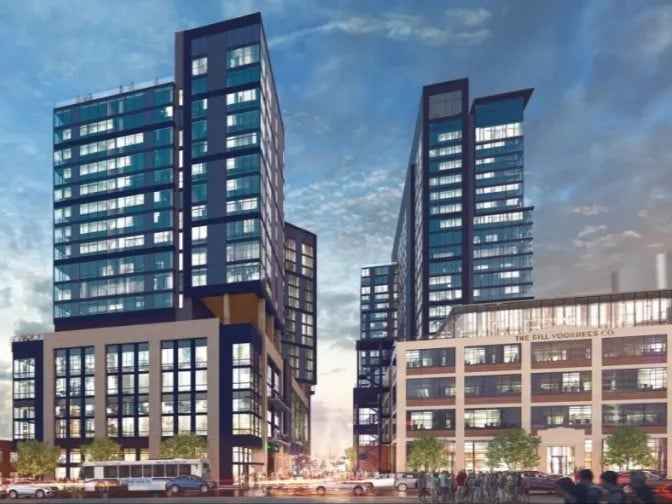
The 522,675-square-foot One Paseo was among the largest construction projects in Nashville as of August. Developer SomeraRoad broke ground on the 22-story project in April as part of Paseo South Gulch, a $1 billion mixed-use urban district integrating historic former warehouses converted to a four-tower property with residential, retail and office space alongside a 146-key hotel. One Paseo is set to be delivered in September 2027.
The second-largest project was the 143,184-square-foot building at 430 Chestnut St., underway since late 2025 and expected to reach completion this year. AJ Capital Partners is developing the property within Wedgewood Village, a mixed-use campus set to include office, retail and residential space.
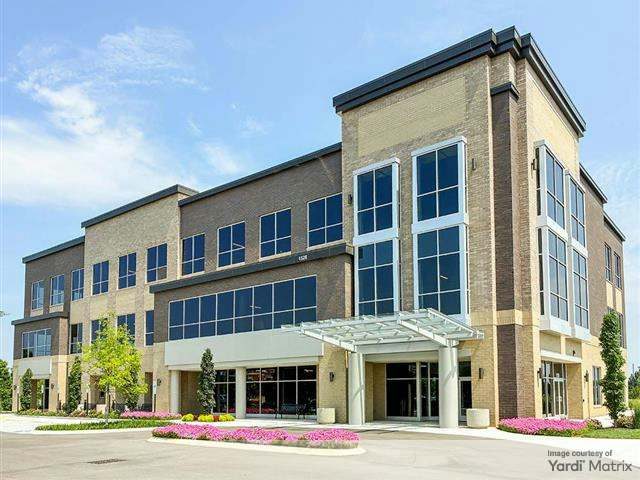
In terms of office completions, there was a single building totaling 40,928 square feet that entered Nashville’s inventory in the first eight months of the year, marking a 97 percent year-over-year drop in deliveries. Agilitas Property Development delivered the three-story medical office property on 3.5 acres at 1528 Gateway Blvd. in Murfreesboro, Tenn.
Slower investment pace, elevated pricing
Nashville’s office investment volume totaled $555.2 million in the first eight months of 2026, placing the metro in the lower half of the top 25 markets. Among peers, Dallas led with $3 billion, followed by Austin, Texas ($2.6 billion), among others. Markets with smaller sale volumes than Nashville included Orlando, Fla. ($485.9 million) and Tampa, Fla. ($227.1 million).
The Music City properties sold for $405.15 per square foot—nearly double the $204.56 national average. The figure placed the metro on the fifth spot nationally, trailing Austin ($877.70 per square foot), Manhattan ($599.66 per square foot), San Francisco ($535.52 per square foot) and Miami ($405.73 per square foot).
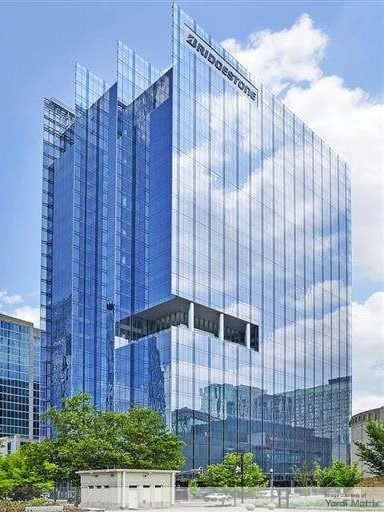
The priciest deal of the eight-month interval was Highwoods Properties’ $255 million sale of Bridgestone Tower. Drawbridge Realty acquired the asset in May, marking its entrance in the metro. The 522,000-square-foot downtown high-rise sold at nearly $489 per square foot, the second-highest office price in the city’s history.
In another significant transaction, Shorenstein paid $146.5 million for the Moore Building in July. The company purchased the 239,500-square-foot property from Portman Holdings, making it its fourth investment in the Music City.
Office vacancy continues to improve in Nashville
Nashville’s office vacancy rate reached 18.2 percent in August, slightly above the 17.8 percent national rate. The index witnessed a 130-basis-point recovery year-over-year, placing the metro on the eighth spot among the markets with notable vacancy improvements.
However, 17 of the top 25 markets still recorded rates above the national benchmark. Peer markets with elevated figures included Austin (24.5 percent), San Diego (24.2 percent) and Houston (23.6 percent). In contrast, Tampa, Fla. (15.2 percent) and Phoenix (17.2 percent) had less available space than Nashville.
Asking rents for Nashville office space averaged $32.18 per square foot in August, below the $33.20 per square foot national average. Similar markets with higher listing rates included Austin ($46.05 per square foot) and San Diego ($42.94 per square foot), among others. Orlando ($25.25 per square foot) was the most affordable among peers.
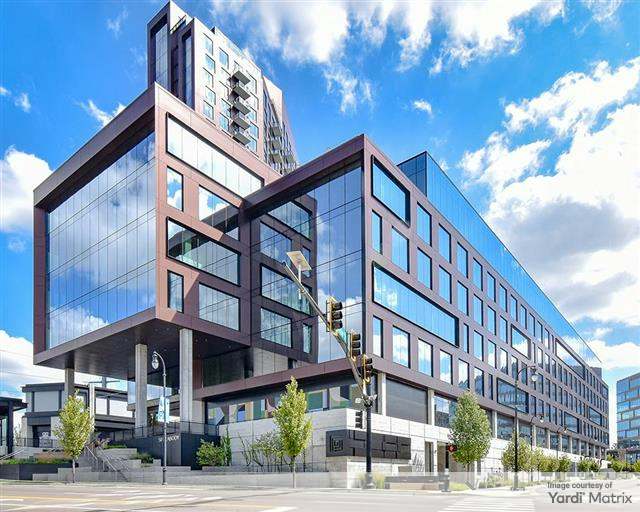
In one of the metro’s largest leases, signed in April, Starbucks committed to 250,000 square feet at Peabody Union, a mixed-use complex in South Bank Nashville. Starting 2027, the company will use the entire building at 50 Peabody St. for its Southeast corporate hub. Completed by Stiles and Hensler Development Group in December, the six-story property will house up to 2,000 Starbucks employees.
Flex space claims elevated share of inventory
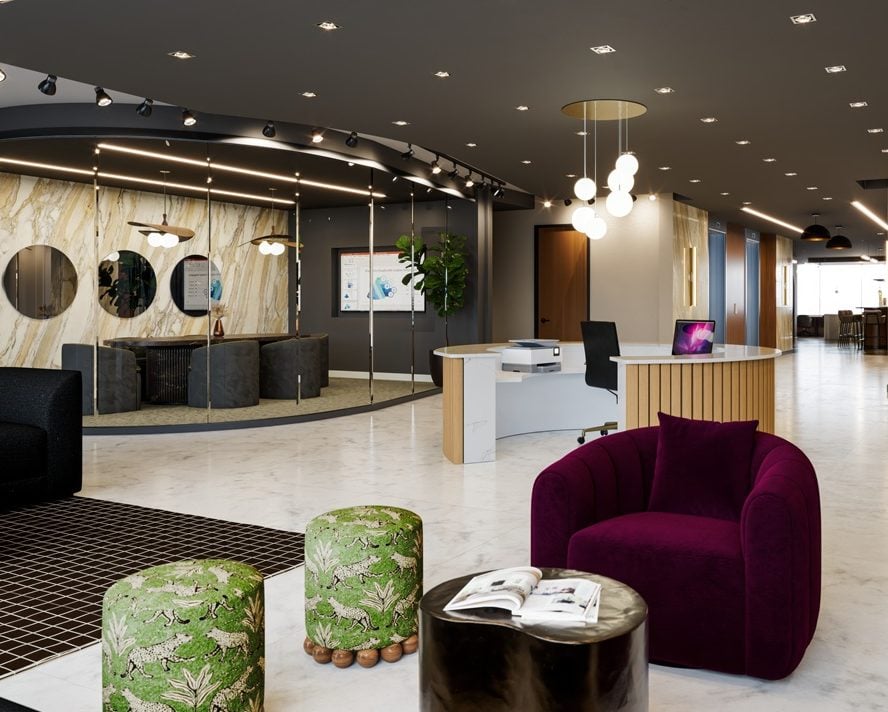
The Music City’s coworking inventory amounted to 2.1 million square feet across 119 locations in August, according to CoworkingCafe data. The metro’s figure exceeded Charlotte’s (1.8 million square feet) and Orlando’s (1.6 million square feet). Dallas had the most flex office space among peer markets, at roughly 7 million square feet.
Nashville’s share of coworking space as percentage of all leasable office space reached 3.3 percent, above the 2.4 percent national average. It was the highest figure among similar markets and the second-highest in the national ranking, after Miami’s 4.7 percent.
Regus remained the largest coworking operator in the metro, with a total footprint of 284,014 square feet. Other companies include Espaces (263,001 square feet), Industrious (106,667 square feet) and Spaces (96,000 square feet).


You must be logged in to post a comment.