


San Diego’s Office Landscape, Between Highs and Lows
Find out which of the market's metrics perform best, according to Yardi Matrix data.
San Diego’s office market has shown both strength and strain in the first nine months of the year, according to Yardi Matrix data.
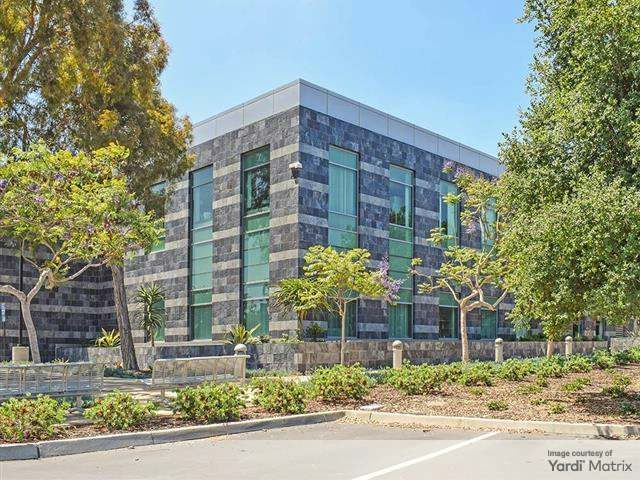
Development activity remained steady across the metro, while the investment volume hit the $1 billion mark, positioning America’s Finest City in the top 10 U.S. markets. Despite softening investor appetite, San Diego still had some of the most highest office prices in the country, well above the national average.
Meanwhile, the vacancy rate climbed sharply—unsurprising given the oversupply of office and life science space following the post-pandemic surge in construction activity. While major leases are still being signed here and there, they have yet to significantly reduce the rate.
San Diego’s office development calmly carries on
As of September, San Diego’s under-construction pipeline comprised approximately 2 million square feet of competitive space across 11 projects, representing 1.7 percent of total stock—more than double the national average of 0.8 percent.
Among similar markets, San Diego occupied the fourth position for pipeline size. Austin led the rankings with 3.8 million square feet, followed by the Bay Area (2.9 million square feet) and Houston (2.6 million square feet). The smallest pipeline was in Charlotte, N.C., where only 276,379 square feet were underway.
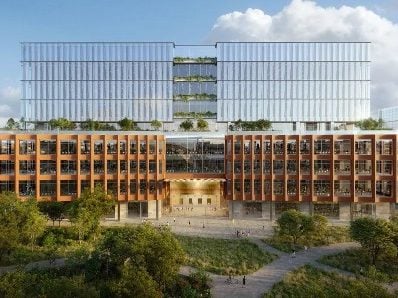
San Diego’s top five largest projects underway encompass 1.5 million square feet. The most sizable one is Alexandria Real Estate Equities’ 4135 Campus Point Court. Totaling 426,927 square feet and fully preleased by Bristol-Myers Squibb Co., the development is set to come online in early 2026 as part of the company’s 1.3 million-square-foot office complex dubbed Campus Point by Alexandria Megacampus.
Meanwhile, the metro saw 1.4 million square feet of office completions across eight properties year-to-date through September, representing 1.2 percent of the existing stock and marking a 48.7 percent year-over-year drop. Developers broke ground on only two projects totaling 182,000 square feet; however, this represented a 165.9 percent year-over-year growth.
Investment slows, prices remain elevated
Investment activity in San Diego generated more than $1 billion in transactions year-to-date as of September, placing the metro on the 10th spot among the top 25 U.S. markets. Once again, Manhattan led nationally, its sales volume reaching $5.5 million.
Among similar markets, San Diego’s office investments were almost on par with Houston’s ($996 million), while the Bay Area ranked second nationwide, with $4.3 billion in sales. Nashville registered the lowest volume, at $168 million.
Assets in the metro sold at an average of $304 per square foot in September—well above the national $195 per square foot. This was the fourth-highest price in the U.S., leading to San Diego ranking second among its peers. The Bay Area led with an average of $392 per square foot, while more affordable markets included Nashville ($135 per square foot) and Houston ($95 per square foot).
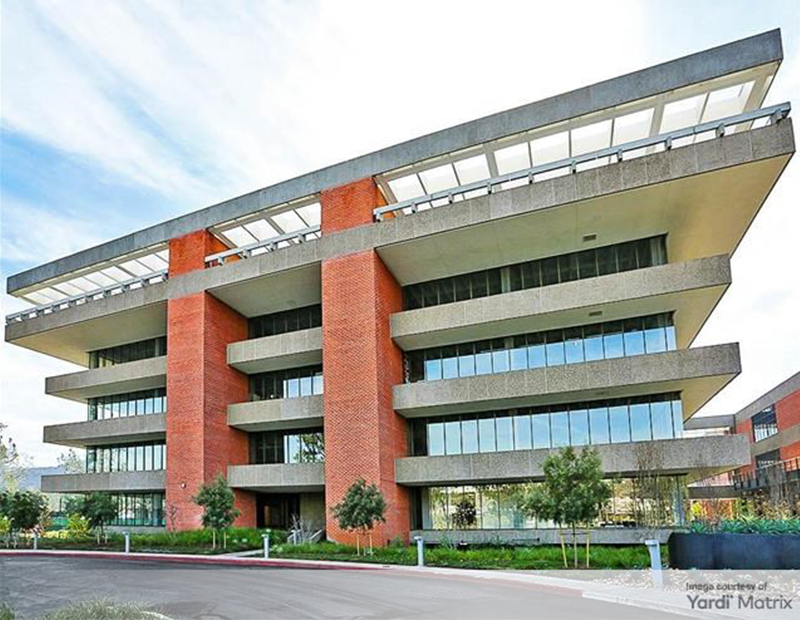
One of the largest office sales in San Diego was the $255 million purchase of Pfizer’s La Jolla campus in the Torrey Pines submarket. Blackstone-owned BioMed Realty acquired the five-building research campus totaling 496,479 square feet in a deal that closed in March.
In another recent significant deal, Lincoln and SVP acquired AMP&RSAND, the two-building, 350,000-square-foot office campus that formerly was home to the San Diego Union-Tribune. CIM Group sold the Mission Valley asset for $92 million in September.
High vacancy persists, rents climb
In San Diego, where a booming pipeline created an oversupply yet to be absorbed, the vacancy rate reached 21.1 percent—above the national average of 18.6 percent and up 120 basis points year-over-year in September.
Among peer markets, tighter vacancy levels were recorded in Phoenix (17.6 percent), Charlotte (19.3 percent) and Nashville (19.5 percent), while high vacancies persisted in Austin (27 percent) and the Bay Area (23.8 percent).
Meanwhile, San Diego office space asking rents averaged $45.23 per square foot in September—above the national average of $32.79 per square foot and representing a 5.1 percent year-over-year increase.
San Diego’s office rent averages were among the highest nationwide. Other expensive markets included Austin ($45.46 per square foot) and the Bay Area ($51.77 per square foot), while more affordable metros featured Phoenix ($29.41 per square foot) and Houston ($27.12 per square foot).
A notable lease transaction closed in July at the Campus Point by Alexandria Megacampus. Novartis signed a 16-year agreement for a 466,598-square-foot build-to-suit research facility—the largest life science leasing transaction in Alexandria’s 31-year history.
Coworking stability supports market fundamentals
San Diego’s flex office inventory amounted to 2.5 million square feet across 143 locations in September, according to CoworkingCafe, representing 2.4 percent of the total leasable office space. The metro surpassed the national average of 2.1 percent.
Among similar markets, Atlanta and Houston had larger inventories, at 5.3 million square feet and 4.9 million square feet, respectively. However, San Diego outperformed Nashville (2.2 million square feet), Austin (1.9 million square feet) and Charlotte (1.6 million square feet).
Regus was the coworking provider with the largest San Diego footprint, at 580,634 square feet. M.C. Strauss Co. (400,153 square feet) ranked second, followed by Spaces (233,263 square feet), Premier Workspaces (228,332 square feet) and WeWork (210,564 square feet).




You must be logged in to post a comment.