


Seattle Office Vacancy Decreases, Sales Activity Stays Weak
Updates on how the metro compares to its peers, plus a major policy shift.
Seattle’s office market continues to reflect the pressure facing many CBDs, where distressed assets account for a larger share of recent transaction activity than in urban or suburban markets. The city’s downtown has been further strained by hybrid work patterns and tech-sector layoffs, placing additional strain on older or less flexible office properties. One example is U.S. Bank Center, which is set to sell for $280 million, a 54 percent discount to its 2019 sale price—underscoring the valuation reset still playing out across Seattle’s urban core.
READ ALSO: Turning Empty Floors Into New Homes
On the policy side, the metro shifted from approving conversion incentives to putting them into practice in 2026. The city issued rules for its sales and use tax deferral program in February, giving owners of underused commercial buildings a clearer path to convert space into multifamily housing if at least 10 percent of the units are affordable. The program is meant to lower construction costs and, over time, help pull older, less competitive office space out of the market.
On the plus side, this year Seattle started to lean more on policy changes than metric improvements to reshape its office landscape. The city approved a sale and use tax deferral for converting underused commercial buildings into housing, a move intended to make downtown office-to-residential deals easier to finance and, over time, pull older Class B and C space out of inventory.
Sales volume trails peers, pricing holds above U.S. average
Seattle’s office investment volume year-to-date as of May lagged behind all its peers, ranking toward the bottom of the top U.S. metros. The market saw $297 million in sales, with assets trading for $292 per square foot on average.
The metro’s average sale price, however, was well above the $213 per square foot national index. Manhattan ($650 per square foot) and San Francisco ($614 per square foot) commanded the highest prices in the country. San Diego ($206 per square foot) and Chicago ($109 per square foot) are some of the gateway cities that trailed behind Seattle.
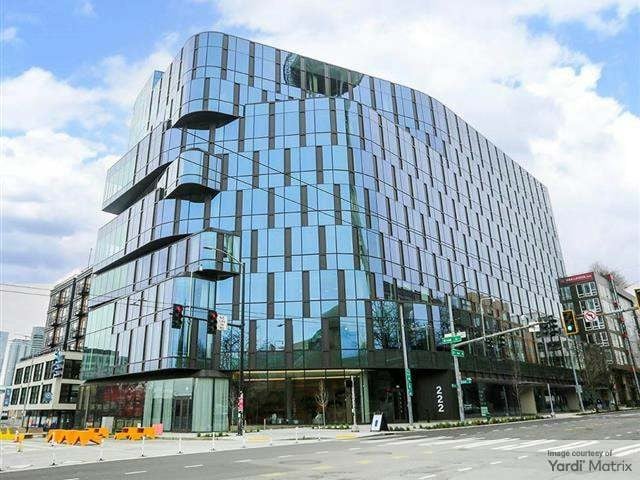
In the first quarter of this year, Intercontinental Real Estate sold 222 Fifth, a 197,919-square-foot office building in Seattle’s Uptown neighborhood completed in 2024. 3Edgewood acquired the asset for almost $250 per square foot, well below the metro’s average.
Development activity remains limited
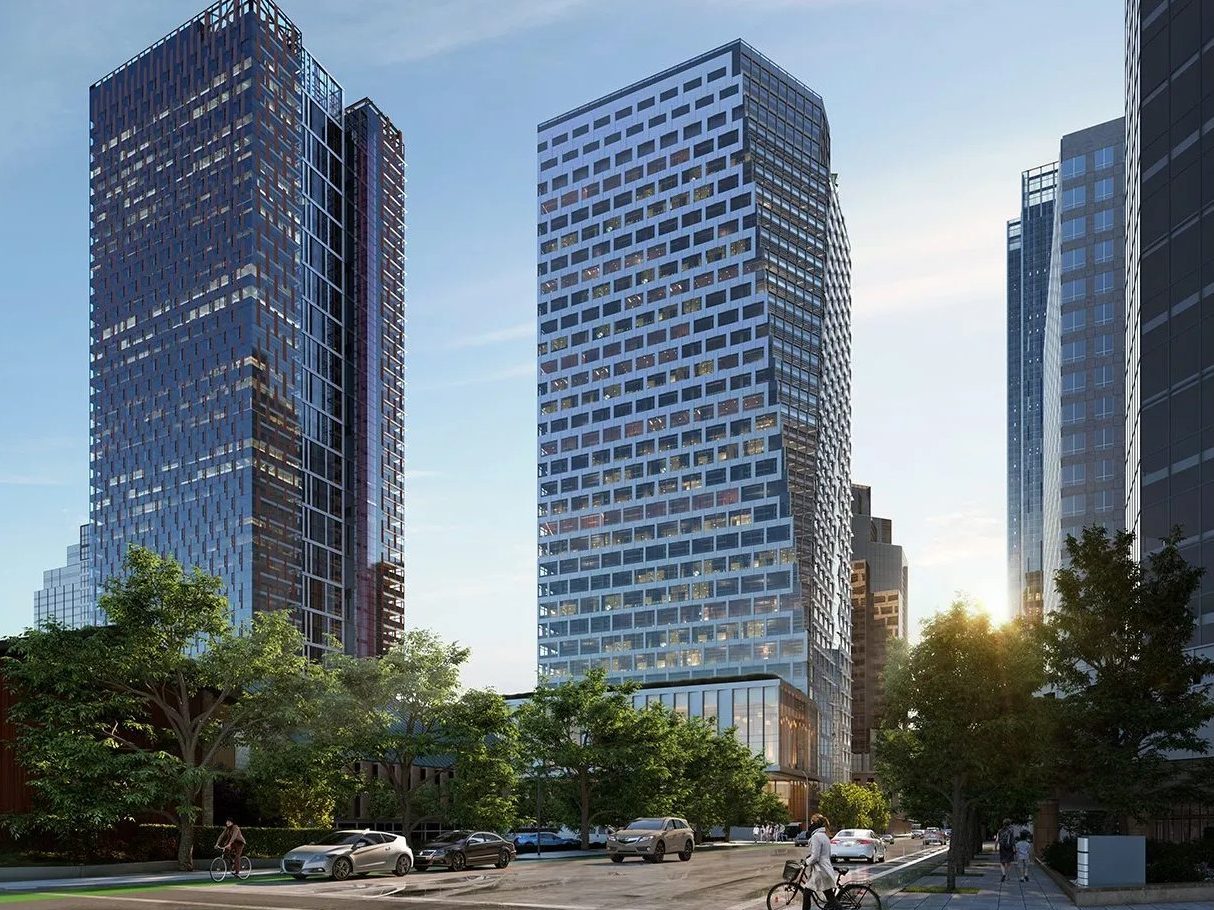
Seattle’s office development pipeline as of May comprised only 15,910 square feet. Office deliveries have also stayed limited, further underscoring the slowdown in new supply across the market. However, when also taking into account owner-occupied projects, this figure rose to more than 2 million square feet, with the largest project underway remaining Amazon’s Tower 1 at Bellevue 600.
The development is a 43-story, roughly 1 million-square-foot office high-rise in downtown Bellevue that broke ground in 2021 and topped out in September 2024. The building is part of Amazon’s broader Bellevue 600 campus, which was planned as a two-tower office development with retail, meeting space, public open areas and direct access to nearby transit.
Vacancy improves, but remains above national average
Seattle’s office vacancy rate as of May dropped to 23.3 percent, marking a 250-basis-point year-over-year improvement. The metro posted one of the largest recoveries among the largest U.S. markets but remained above the 17.6 percent national average. Across the country, vacancy dropped 180 basis points over the last 12 months.
Manhattan (13.1 percent) and Miami (13.2 percent) had the least available space, while San Diego (23.6 percent) was the gateway metro with the highest availability.
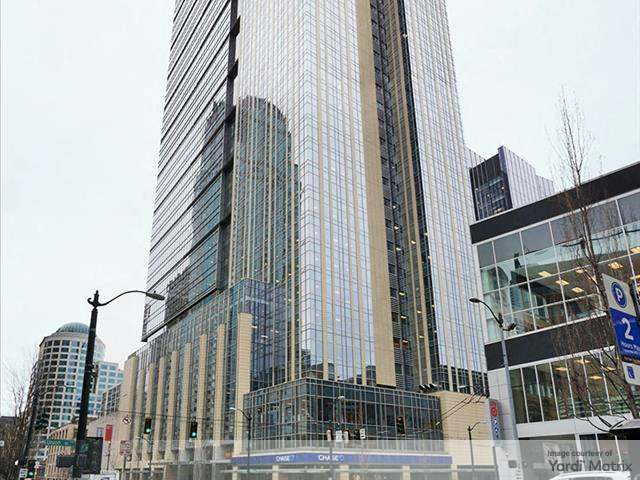
In one of the largest deals in the metro of this year, JPMorgan Chase expanded to 128,000 square feet at 1301 Second Ave. within the city’s downtown. CommonWealth Partners owns the building where the company added more than 40,000 square feet.
Average listing rates for Seattle office space reached $35.43 in May, marking a modest 50-basis-point increase compared to a year ago. The metro fared better than Chicago ($28.34), but trailed behind all other gateway peers. Manhattan ($69.29) and San Francisco ($62.11) were in the lead.
Coworking footprint holds near U.S. average
As of May, Seattle’s coworking footprint totaled more than 3.4 million square feet across 175 locations, according to CoworkingCafe. Flexible workspace accounted for 2.2 percent of the metro’s overall office inventory, about 10 basis points below the 2.3 percent national share.
Among gateway metros, Seattle ranked near the middle of the pack. Miami (4.2 percent) remained the leader, while Washington, D.C., trailed at 1.9 percent. Boston and San Francisco, both at 2.2 percent, were in line with Seattle. By total square footage, Manhattan (12.6 million square feet) led the country.
Regus remained Seattle’s largest coworking provider, with 593,739 square feet across 29 locations. The company was followed by extraSlice (300,212 square feet) and WeWork (290,979 square feet), while Spaces (167,858 square feet) and Industrious (165,620 square feet) rounded out the market’s top five.



You must be logged in to post a comment.