

Engineering at Elevation: Inside Seattle’s First Light Tower
The project’s architect and designer unpack the technical challenges and collaborative solutions behind this mixed-use high-rise.
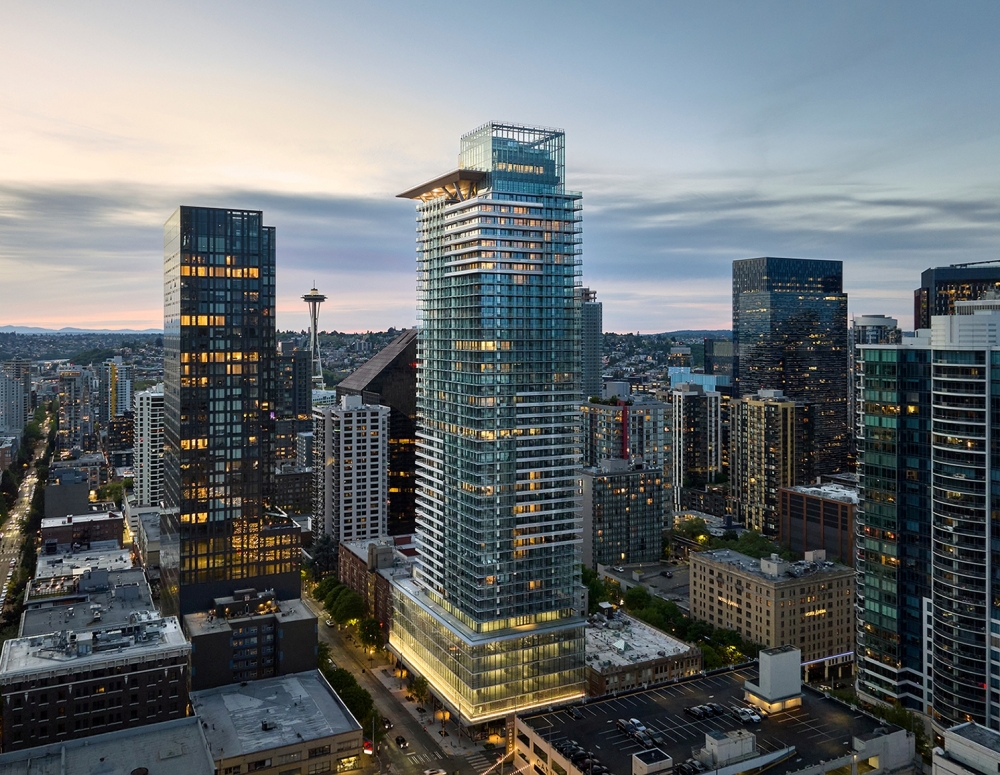
Rising 48 stories above downtown Seattle, First Light stands among the city’s tallest towers, but its uniqueness extends beyond height alone. The mixed-use building introduces a more sculptural approach to the skyline, reflecting a broader shift in Seattle’s high-rise design toward identity, materiality and experience.
As the city’s vertical landscape continues to mature, projects like First Light are reshaping expectations for high-rise living. The development comprises 459 condominium residences across 41 floors, nearly 200,000 square feet of office space spanning levels two through seven, and approximately 6,000 square feet of ground-floor retail.
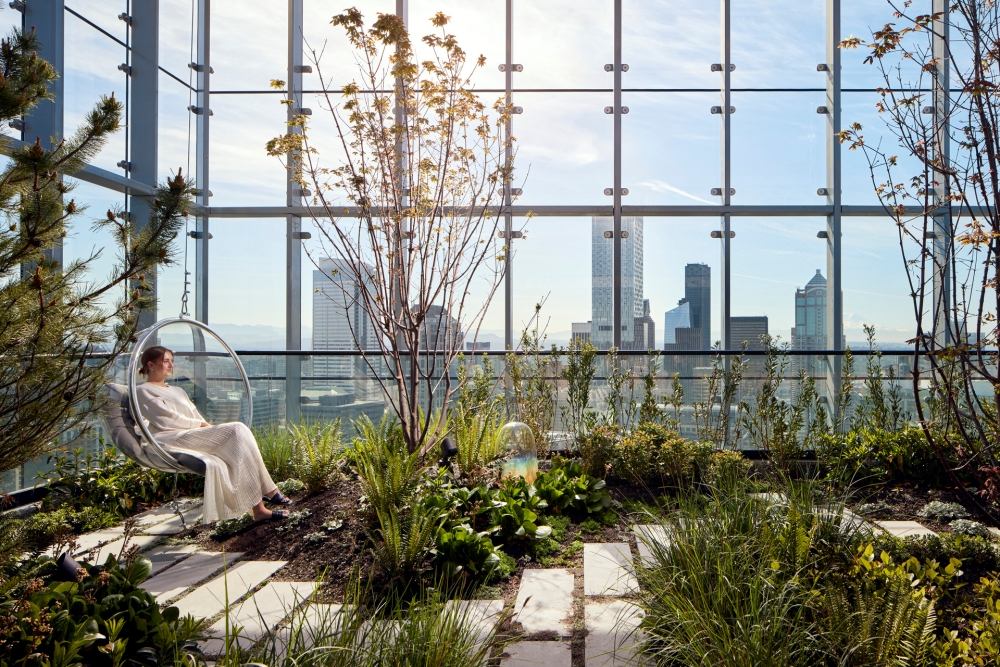
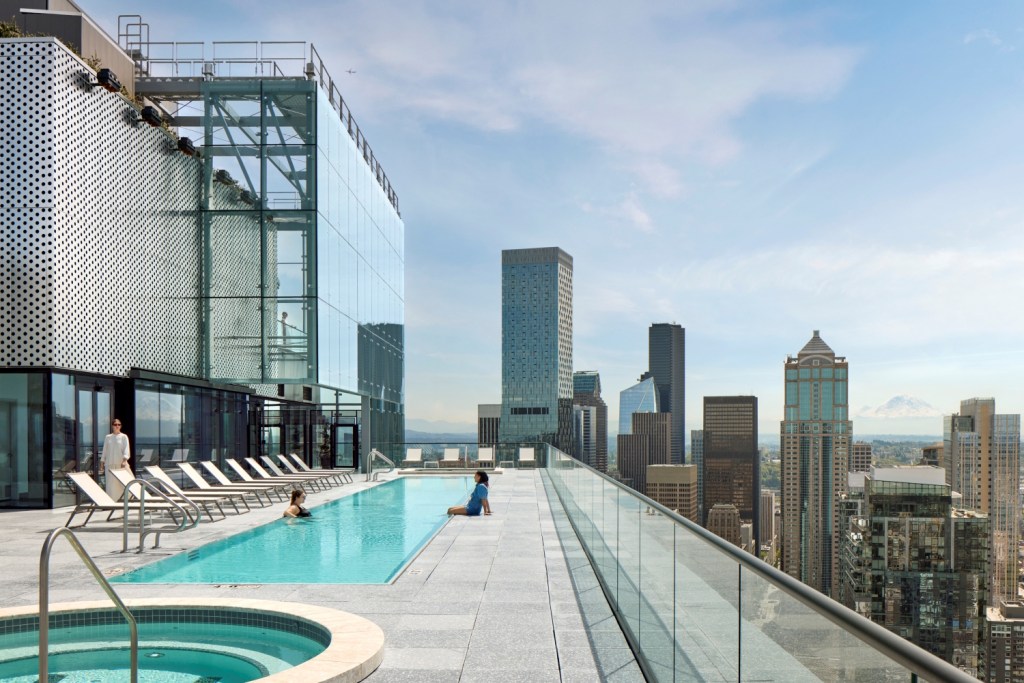
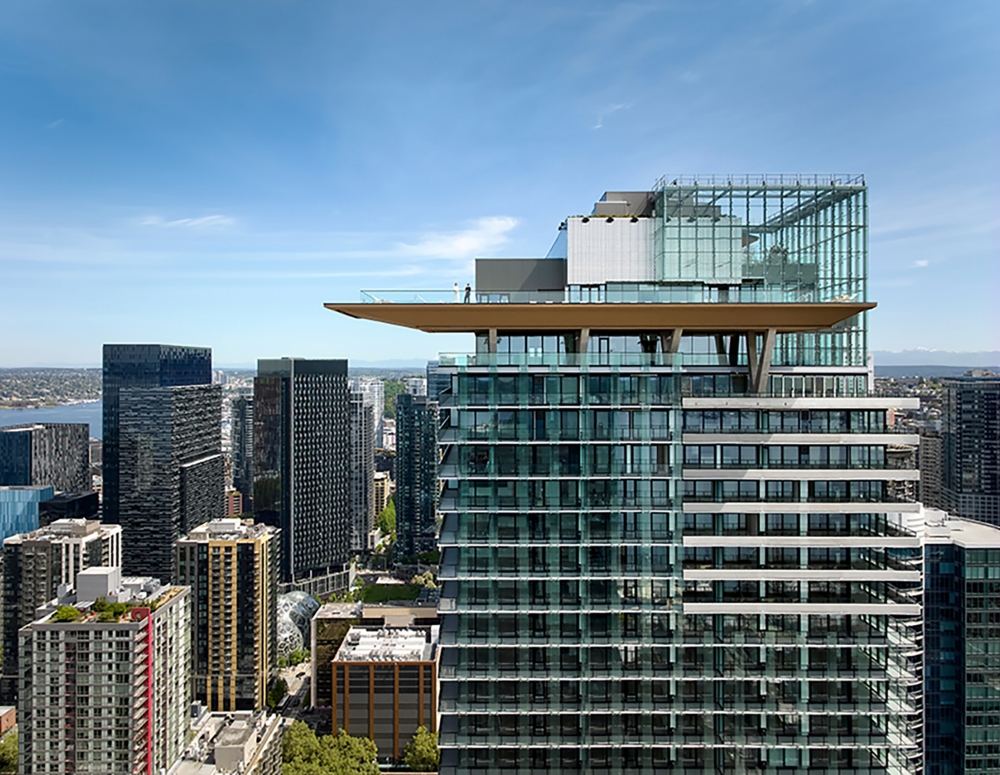
Its amenity spaces—most notably a cantilevered rooftop pool and garden—are designed not as afterthoughts, but as defining architectural elements that extend the building’s relationship with the city. Developed by Westbank Corp., with MG2 serving as executive architect and James K.M. Cheng Architects leading the design, First Light reflects a collaborative effort to weave art, sustainability and community into a dense urban setting.
In this conversation with Commercial Property Executive, James K.M. Cheng and Jooyeol Oh, principal at MG2, share the design thinking behind the tower, discuss the technical and conceptual challenges of placing a pool on the 47th floor, and reflect on how the project speaks to the evolving role of high-rise architecture in Seattle.
READ ALSO: What’s Driving Mixed-Use Design

What inspired the overall design concept for First Light and how did you aim to distinguish it within Seattle’s skyline?
Cheng: There are multiple inspirations for the design of First Light. One is the concrete expression of Seattle’s industrial past, with examples such as Pike Place Market and Olson Kundig’s nearby concrete residential mixed-use building, Pike and Virginia. We felt that the use of concrete as an architectural expression recalled the historic architectural influences of the area and rooted First Light to the neighborhood.
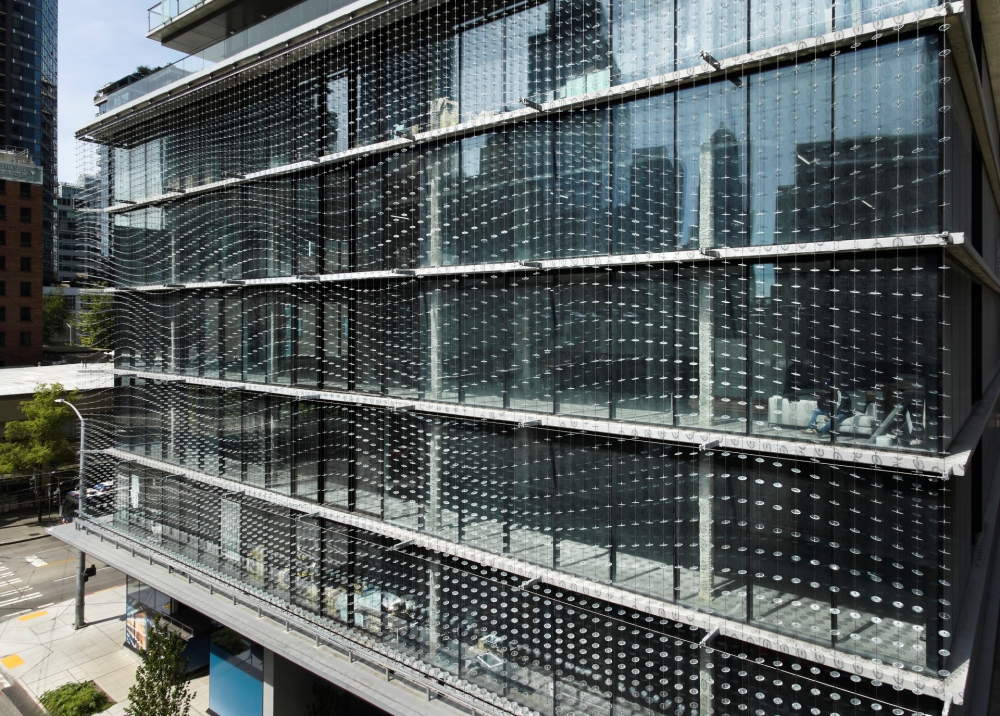
Another major inspiration was the tradition of glass artistry in the region, such as the Pilchuck Glass School, which led us to working with Seattle glass artist John Hogan, and the use of fretted vertical glass panels on the façade as well as John’s ‘dancing disks.’
The last inspiration was livability. Most residential buildings in Seattle are mainly glass with few balconies. We decided to wrap balconies with floor-to-ceiling glass all around, to extend the inside space to the outside, and to visually expand the view while at the same time extending the outdoor livability. We wanted to contrast this approach with the typical Seattle residential buildings so that First Light would be distinctive and recognized.
In order to distinguish the building from the other towers in downtown Seattle, we decided to forgo the typical mechanical penthouse type of silhouette. Instead, we placed the residential amenities with a cantilevered infinity swimming pool on the very top along with a secret garden to differentiate it from the others.
How difficult was it to blend art, architecture and livability in a dense urban environment like downtown Seattle?
Cheng: We believe art, architecture, livability and environmental sustainability are inseparable and are always an integral part of our design. Especially in a dense urban downtown like Seattle, people need their third space—as the units are much smaller than a single-family house. It is important that they get extra breathing room, their own private space within the project. First Light’s shared rooftop amenities with tremendous wraparound views encourage socialization and interaction between residents.
What were some of the most complex design and construction challenges the team faced, and how were they overcome?
Oh: Executing the vision for First Light demanded exceptional craftsmanship and technical precision. The cantilevered pool on the 47th floor—the highest in Seattle—presented one of the project’s greatest architectural and construction challenges and became a defining test of high-rise design and collaboration.
Extending far beyond the tower’s edge, the pool pushed engineering and construction boundaries, requiring nearly two years of coordination between the general contractor, structural engineer, architect and multiple third-party consultants. Every aspect of the process was safety-driven and execution-focused, with multiple engineering reviews validating both the temporary and permanent systems.
The rooftop pool has become one of First Light’s signature features. Tell us more about how you integrated such an ambitious element safely and seamlessly into the high-rise design.
Oh: Due to the pool’s elevation and exposure, special consideration was given to wind loads, temperature changes and weather-related movement. Temporary support systems were prefabricated to minimize onsite work at height and reduce exposure over the busy streets below. Castellated steel beams were bolted directly to the concrete deck to support the cantilever and prefabricated working platforms were anchored to these beams to safely facilitate formwork and installation. All structural connections—particularly bolts passing through the slab—were coordinated precisely with in-slab MEP systems to avoid conflicts with ductwork, PEX piping and electrical feeders.
Temporary elements were intentionally overdesigned with built-in redundancies to eliminate single points of failure. Formwork was pre-cambered to account for an expected 3″ deflection during the concrete pour. The structure was poured in segments, with survey teams actively monitoring movement in real time to ensure tolerances were met.
A dual-layer safety net system was installed beneath the entire temporary assembly—one mesh net for debris and one rated for personnel fall protection. In addition, a dedicated bracing system was designed to mitigate wind loads during construction and the system underwent frequent inspections by third-party engineers.
Successfully executing this signature architectural element required exceptional collaboration, precision planning and a shared commitment to both design integrity and construction safety.
Can you expand on how collaboration and coordination between multiple teams was key to the project’s success?
Oh: Coordination between MG2, our engineering partners and the contractor was fundamental to the success of First Light. With a tight floor-to-floor height—literally fractions of an inch to spare—we relied heavily on Navisworks and digital clash-detection modeling to anticipate conflicts within the dense web of building systems.
What made the process successful was not just the technology, but the culture we built around it. Instead of approaching challenges with a ‘who’s problem’ mindset, the entire team adopted a solution-driven, collaborative attitude. All consultants came to the table ready to problem-solve in real time. That collective commitment allowed us to resolve complex technical challenges early, protect the design intent and, ultimately, deliver a far better process and product.
READ ALSO: 18 CRE Trends We’re Taking Into 2026
Speaking of delivering a superior product, what strategies or materials enhance the project’s environmental performance?
Oh: First Light approaches sustainability through thoughtful design, efficient systems and a commitment to supporting an urban lifestyle, part of a broader movement highlighted in green building trends.
High-performance triple-glazed windows and energy-efficient mechanical systems contribute to reduced energy use and enhanced comfort throughout the building. Stormwater is managed onsite through integrated bioretention strategies that mitigate runoff and support responsible water management.
Programmatically, the building is designed to deliver maximum livability within a compact urban footprint. Rooftop amenities—including a pool, gym and shared green space—support resident well-being, a focus increasingly seen in well-being in the office, without expanding the building’s footprint, offering vertical density as a strategy for sustainable growth in Seattle’s urban core.
By integrating performance-driven features with lifestyle-forward programming, First Light demonstrates that high-rise design can be both aspirational and environmentally responsive.
How does First Light reflect changing expectations for luxury residential and mixed-use development?
Oh: Buyers and tenants now seek environments that not only include high-end materials, but are also holistically designed, experiential and deeply connected to the urban fabric of where they’re located.
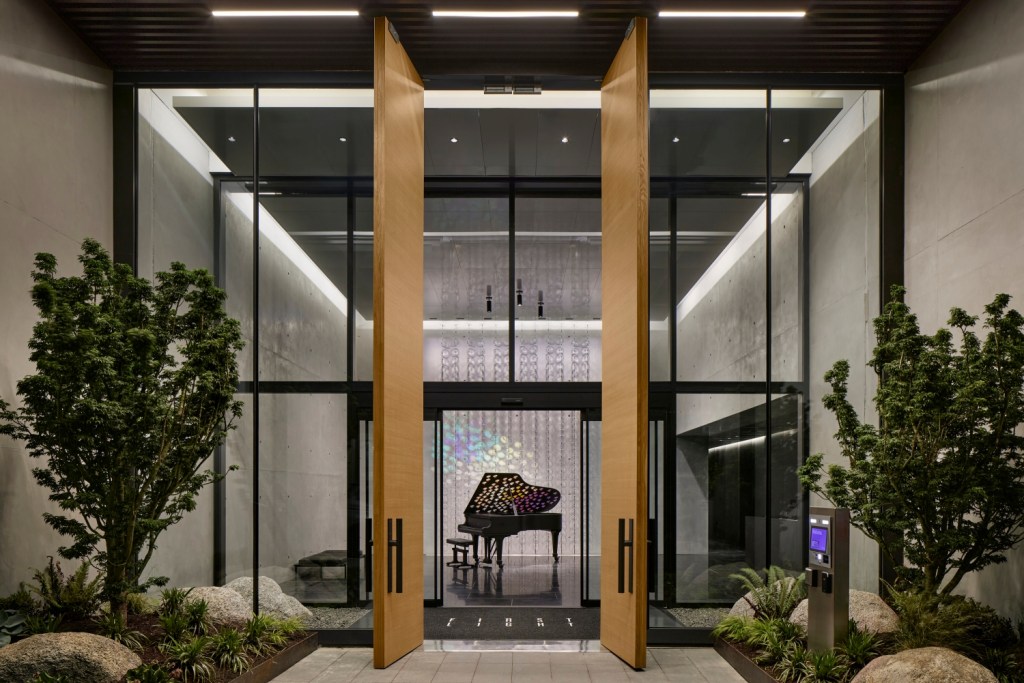
John Hogan’s luminous ‘veil’ around the podium as well as the tower’s overall interior design establishes a sense of purity, simplicity and elevated minimalism, transforming the entry sequence to an artistic experience and celebrating raw concrete materiality and light. Inside, the same design philosophy extends into every residential unit through refined materials, careful detailing and a focus on creating a serene sanctuary away from urban intensity.
Another important aspect that positions First Light within the new expectations of mixed-use development is its integration of approximately 200,000 square feet of Class A office space. Rather than isolating uses, the building creates a vertical neighborhood where people can live, work and retreat within a single, thoughtfully crafted environment.
The office component brings daily energy and a sense of community to the tower, supporting the idea that modern luxury is not only about private comfort but also about convenience, connectivity to the community and curated urban living. Wellness is also central to that redefinition. The rooftop greenhouse garden, workout studio and lounge amenities offer a restorative counterbalance to the busy city life.
From your perspective, what does this project contribute to the future of high-rise design in Seattle?
Oh: First Light raises the bar for what future high-rise development in Seattle can and should be. The building’s level of design ambition and execution is exceptional, especially in a market where many towers tend to blend together without a strong architectural distinction or a commitment to craft.
First Light demonstrates that Seattle’s skyline can embrace towers that are both artistically expressive and technically rigorous. Its integration of art, material honesty and meticulous detailing proves high-rise living does not have to be formulaic. It can be inspiring.
By prioritizing design integrity at every scale—from the iconic podium veil to the interior details—First Light sets a new benchmark for future developers and design teams. My hope is that First Light encourages a new generation of Seattle high-rises that are not just tall, but meaningful additions to the city’s architectural identity.
What lessons from First Light are shaping MG2’s approach to current or upcoming developments?
Oh: First Light taught our team at MG2 lessons that are now directly influencing how we approach our current and future more complex mixed-use projects. Above all, it reinforced the importance of maintaining an innovative mindset. This project pushed us to think beyond conventional residential tower design, especially integrating art, not as an accent or just a decoration, but as a foundational component of the building’s identity, detail and execution.
First Light also reminded us of the value of being active participants in creating a vision and, as executive architect, the importance of not simply executing a brief, but engaging as true collaborators with the client, artist and design partners. First Light demonstrated that when the team is aligned around a strong idea and empowered to innovate, the outcome can be transformative.
You must be logged in to post a comment.