


Union Pacific to Develop 2,000-Acre Industrial Park Near Houston
The property will include on-site freight railroad access.
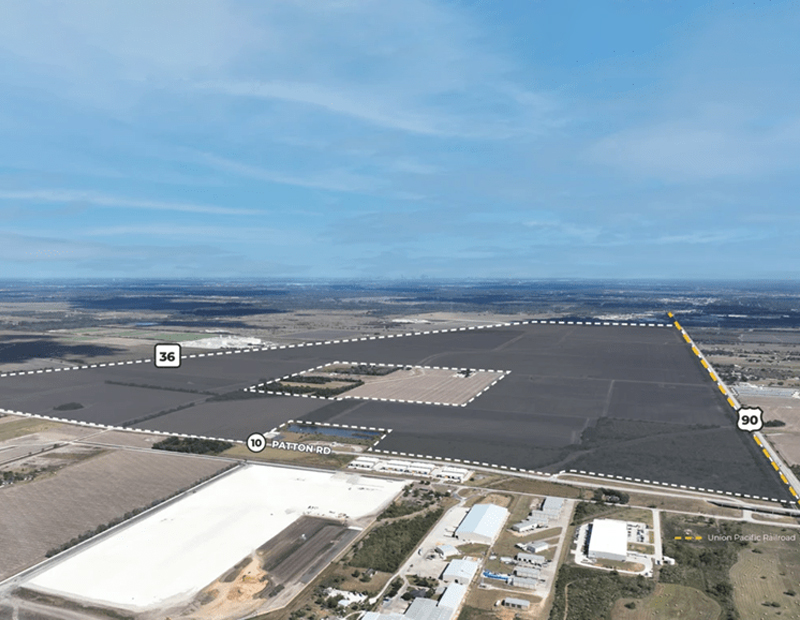
Union Pacific Railroad is developing a 2,000-acre, master-planned industrial park in Rosenberg, Texas. The Houston-area development, called Mainline Texas Industrial Park, has the potential to total 20 million square feet.
1,300 acres will be Union Pacific rail-accessible, while 700 acres will instead target non-rail industrial and commercial tenants. The property will also include up to 1,700 rail storage spots.
Additional amenities will include regional drainage and detention systems, access to a high-capacity gas pipeline and on-site water and wastewater plants.
Colliers is handling leasing for the property.
A prime location
The industrial park is taking shape along U.S. Route 90 and Texas state highways 36 and Spur 10, with close access to Interstate 69. Downtown Houston is a 48-mile drive, while George Bush Intercontinental Airport is some 58 miles. In prepared remarks, Kenny Rocker, Union Pacific’s executive vice president of marketing and sales, said Mainline Texas will connect tenants with more than 25 million customers within a 250-mile radius.
With on-site access to the Union Pacific rail network, Mainline Texas will connect tenants to more than 32,000 miles of railroad track across 23 states. The railroad network also provides access to major Texas ports, including the Port of Houston, Port Freeport, Port Corpus Christi and Port of Brownsville.
READ ALSO: 2025 Top Commercial Real Estate Developers
While industrial development is booming in U.S.-Mexico border towns as a result of near-shoring, markets across Texas are also benefiting, as tenants seek to take advantage of the region’s growing population and central location.
Dallas and Houston led the nation for industrial assets under construction as of October 2025, according to Yardi Matrix. At the time, Dallas recorded almost 30.1 million square feet in development and Houston had about 20.1 million square feet in the pipeline, representing 5.4 percent and 6.1 percent of stock, respectively.


You must be logged in to post a comment.