


ICSC Special Report: Upbeat Buzz About Retail, Plus Some Caveats
Retailers are under pressure, but the demand for space remains robust, dealmakers and analysts told CPE.
What’s around the corner for tenant and consumer demand that will shape the retail real estate sector in the coming year?
During ICSC’s annual New York City event, conversations with a broad cross-section of real estate professionals painted a picture of a resilient, even vibrant sector. Despite feeling the heat on multiple fronts, retail tenants are keeping demand strong, attendees told Commercial Property Executive. At the same time, retailer and consumer trends also point to some potentially significant soft spots.
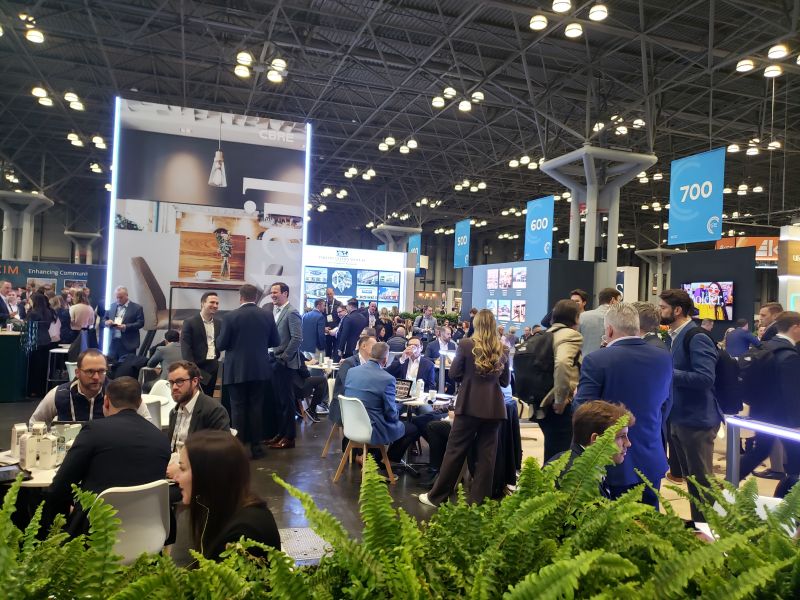
As 2026 approaches rapidly, retail experts predicted general stability and resilience, aligning with current commercial property market trends. “More of the same,” as Scott Schnuckel, managing director of Americas retail at CBRE, told CPE during the two-day event at Manhattan’s Javits Center. “Everyone is searching for reasons for it to shift dramatically, but they aren’t coming.” Consumer spending, the ultimate force behind retailer growth and leasing momentum, remains healthy as the public increasingly shops for value.
This year, large-scale store closings and bankruptcies of familiar brands have made headlines in the mainstream media: Walgreens, Party City, Macy’s, JCPenney, Big Lots and Claire’s, for example.
Yet those announcements don’t tell the whole story. Industry analysts noted during the conference that these store closings take place as many retailers want to grow their footprint in a market that has produced little new product in recent years.
READ ALSO: 18 CRE Trends We’re Taking Into 2026
One retailer’s downsizing often presents opportunity for another prospective tenant. And when multiple retailers are chasing well-located space, it ratchets up the pressure for them to make commitments. “Because of the competition, brands are losing out space because they’re taking too much time to make decisions,” said Nicole Larson, Colliers’ national director of retail research services.
Retailers’ 2026 wish lists
Conference attendees noted that well-located, attractive real estate is at a premium in many major markets. As a result, “Retailers are getting flexible in square footage and which markets to go to,” Schnuckel said. If available space can’t be found in the brand’s usual preferred location—say, an open-air center—some retailers are willing to try an outlet center. If adequate, well-located space isn’t available in a major city, retailers are willing to explore opportunities in nearby suburbs.
Retailers in expansion mode are also open to schedule flexibility. If the goal is to open 300 new stores, 100 locations for three consecutive years might be too much of a stretch. Instead, the retailer may rebalance that strategy by varying the number of store openings, Schnuckel noted.
What else are retailers looking for today? For one thing, they’re gravitating toward newer space. Once that older space goes on the market, it stays there for a while. About 40 percent of available space has been on the market for at least 24 months, Brandon Isner, Newmark head of U.S. retail research, told CPE.
Even as some retailers report record consumer sales, tenants are under increasing pressure from the same factors that are squeezing consumers. “There are a number of retailers right now that are really seeing their costs rise, especially in cities” and dense suburbs, noted Isaiah Harf, Northmarq’s regional managing director for three investment sales offices in Chicago, Cincinnati and Toledo, Ohio, and the newly appointed co-leader of the firm’s new net lease and sale-leaseback group. Expenses are rising in multiple categories, such as rent, labor and construction.
Also concerning for retailers as next year approaches is consumers’ declining confidence in their financial situation. Although retail sales are on track to rise again, Colliers estimates that growth will decline 20 basis points to 2.9 percent, Larson reported. Retailers are pulling back underperforming stores, but not at the same pace they were earlier in the year.
A telling yardstick of what’s ahead for retailer performance in 2026 is just around the corner. “This holiday season will be the biggest benchmark of how the market is performing,” predicted Isner.


You must be logged in to post a comment.