


Lincoln Property, PGIM Form Health-Care JV
The partners will invest mainly in medical outpatient facilities.
Lincoln Property Co. has formed a partnership with PGIM’s real estate arm to seek investments in U.S. outpatient medical properties, the Commercial Observer reported.
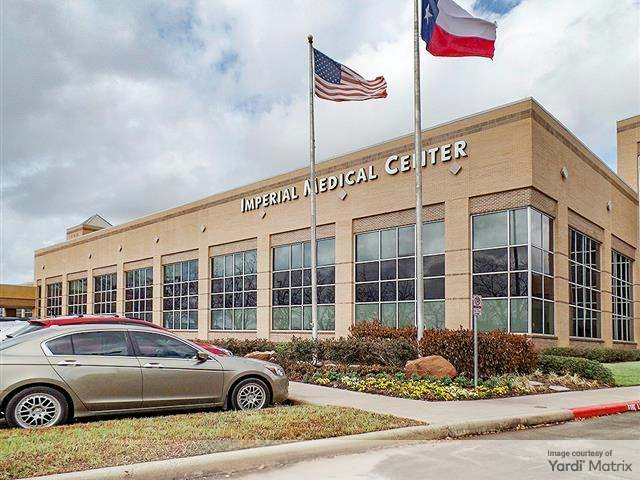
The joint venture kicked off with the acquisition of two assets totaling 193,000 square feet. The facilities are Imperial Medical Center in Sugar Land, Texas, a Houston suburb, and the California Cancer & Research Institute building in Pleasant Hill, Calif., in the Bay Area.
The two investors will look for core plus and value-add deals. Besides outpatient facilities, the partners will also target senior housing properties.
READ ALSO: What’s Ahead for Medical Office in 2026
Lincoln has engaged in other partnerships recently. In November, the company expanded its national partnership with Agellan Commercial REIT, assuming property management responsibilities for 12 Houston-area industrial and office properties totaling 1.5 more than million square feet. The firm’s portfolio on behalf of institutional clients includes more than 680 million square feet of commercial space worldwide, across all property types.
The joint venture’s first investments
Lincoln and PGIM seeded their partnership with the purchase of the California Cancer & Research Institute building in Pleasant Hill. LaSalle Investment Management sold the 65,000-square-foot asset for $15.2 million, according to Yardi Matrix data. Completed in 1987, the facility rises three stories at 400 Taylor Blvd.
The joint venture’s second acquisition involved Imperial Medical Center, a 128,000-square-foot building in Sugar Land. Pinecroft Realty previously owned the two-story asset, the same data provider shows. The 1983-completed property is at 1111 Highway 6 S., roughly 21 miles from downtown Houston.
Health-care real estate to remain strong in 2026
Next year will be a strong one for health-care real estate, PwC and the Urban Land Institute predict, supported by demographics and sustained outpatient demand. For investors, the niche property will also benefit from its role as a core defensive asset.
New construction will be limited next year, which will put upward pressure on rents and reinforce stable fundamentals, the report noted. At the same time, demand will be driven by advancements in health-care technology, which will mean that many services can be performed in an outpatient setting rather than an inpatient one.
Occupancy rates for medical properties in the top 100 U.S. metro areas have been increasing for several years, and given the niche’s fundamentals, will probably continue to do so. Medical office investment activity is also forecast to grow in 2026 in the sector as capital markets ease and investors become more confident in the sector’s long-term growth trajectory.


You must be logged in to post a comment.