


Remembering Frank Gehry, Visionary Architect
Considered the first “starchitect,” Gehry reshaped skylines with a legacy of iconic, sculptural buildings.
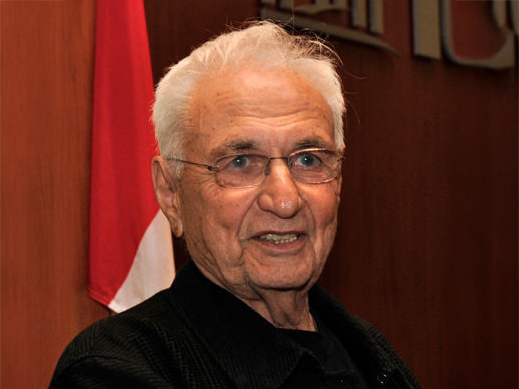
One of the most well-known personalities in architecture, Frank Gehry, died on Friday, Dec. 5, according to Reuters. Known for his sculptural shapes and unconventional designs, Gehry enjoyed an active career spanning more than six decades.
Famous for iconic buildings such as the Guggenheim Museum in Bilbao, Spain, and the Walt Disney Concert Hall in Los Angeles, Gehry passed away at his home in Santa Monica, Calif., following a respiratory illness. He was 96.
Born in Toronto in 1929 as Frank Owen Goldberg, Gehry moved with his family to Los Angeles as a teenager. He initially studied ceramics at the University of Southern California before switching to architecture, supporting himself by working various jobs. He earned his bachelor’s degree in 1954.
Often described as the original “starchitect,” Gehry developed a highly recognizable, sculptural style that blurred the line between art and architecture. His buildings are defined by sweeping curves, fragmented forms and the expressive use of metal, giving many of them a sense of movement and fluidity.
Frank Gehry and his unmatched architectural legacy
His best-known project, the Guggenheim Museum Bilbao, became one of the most economically influential structures of the late 20th century. Its 1997 opening spurred what became known as the “Bilbao effect,” showing how a stand-out signature building could transform tourism and support broader urban redevelopment. In similar fashion, Gehry’s Walt Disney Concert Hall in downtown Los Angeles played a major role in reshaping the surrounding district, helping draw investment to the area.
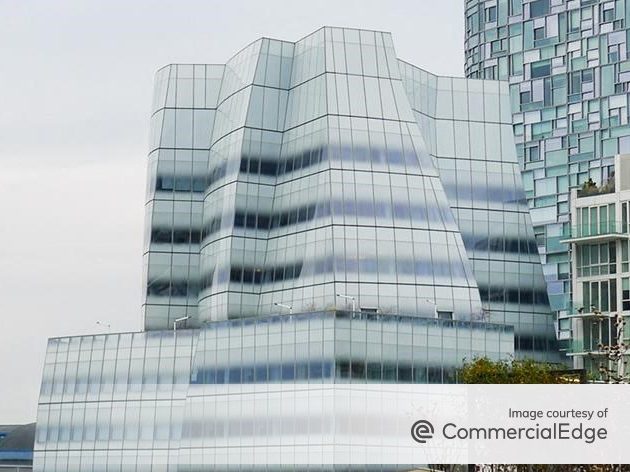
555 West 18th St. in Manhattan, designed by Frank Gehry. Image courtesy of CommercialEdge 
Rendering of The Grand in downtown Los Angeles, designed by Frank Gehry. Images courtesy of the Related Cos. and CORE USA 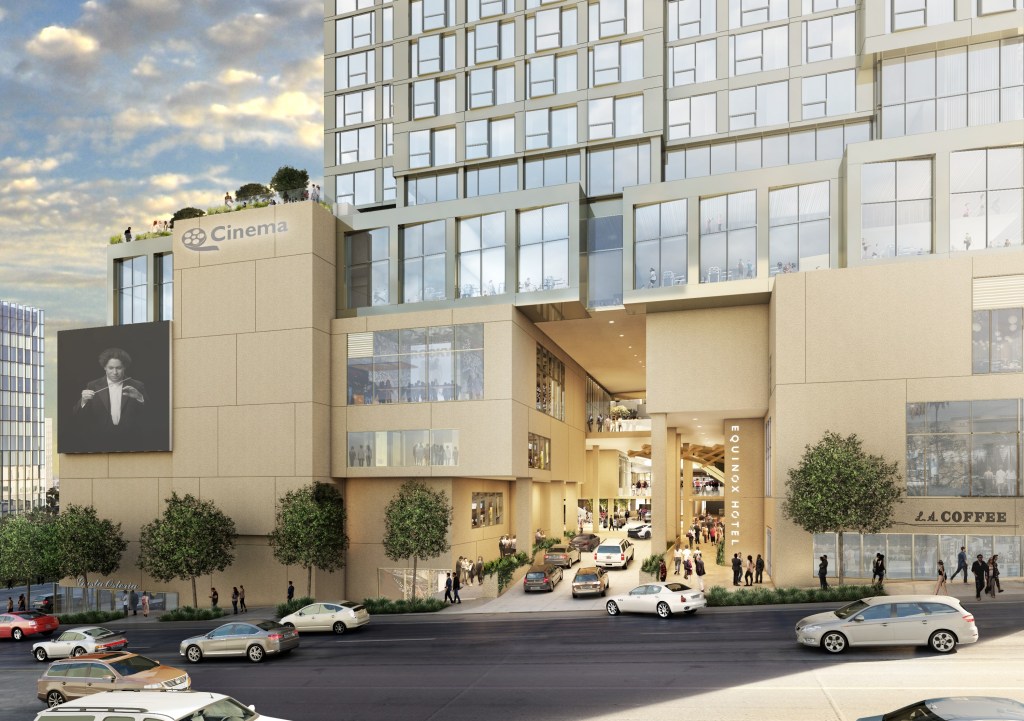
The Grand is a $1 billion mixed-use mega-project in downtown Los Angeles. Image courtesy of Related Cos. and Gehry Partners. 
Second Century commemorates Warner Bros. Studios’ 100-year anniversary. Image courtesy of Worthe Real Estate Group and Stockbridge
Gehry proved that commercial real estate could benefit from bold design—generating visibility, foot traffic and long-term asset value. His buildings often became civic landmarks, shaping neighborhood identities and influencing investor perceptions.
Gehry received the Pritzker Architecture Prize in 1989, the highest recognition in the field, cementing his status as one of the most influential designers of his generation.
He is survived by his family. His distinctive architectural legacy reshaped the socio-economic trajectory of countless neighborhoods and cities, leaving a lasting imprint on the way urban environments evolve and thrive.




You must be logged in to post a comment.