


Federal Realty Pays $187M for DC-Area Shopping Center
The property is anchored by Whole Foods and shadow-anchored by Target.
Federal Realty Investment Trust has acquired Annapolis Town Center, a 480,000-square-foot open-air shopping center in Anne Arundel County, Md., for $187 million. The property, completed in 2009, is anchored by Whole Foods and shadow-anchored by Target.
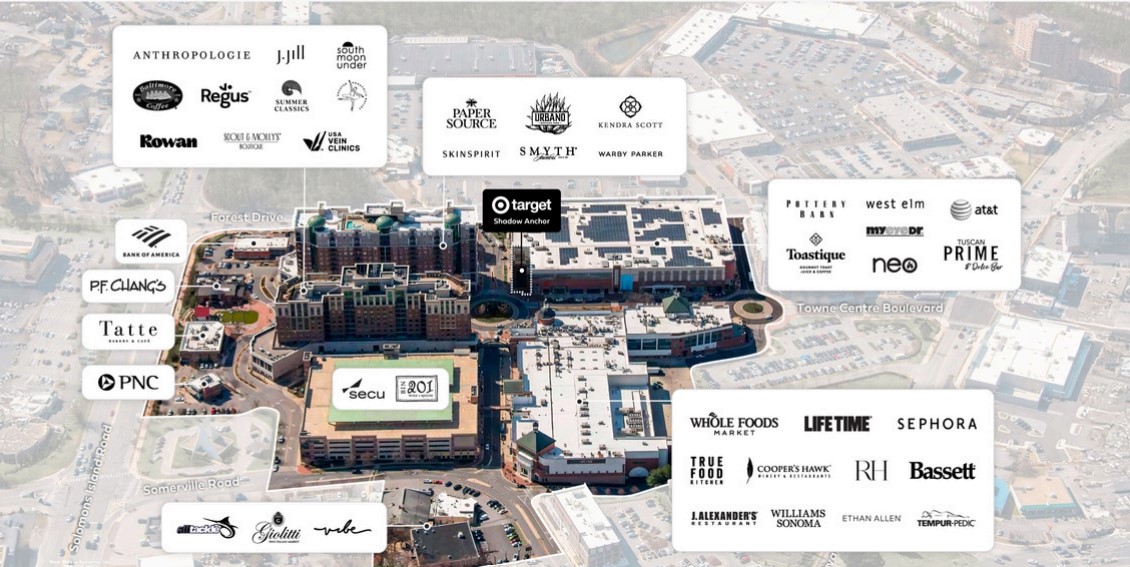
Tenants include a LifeTime athletic club and a mix of national brands, such as Anthropologie, Sephora, Restoration Hardware and Williams Sonoma. The property is roughly 30 minutes from both Washington, D.C. and Baltimore.
Anne Arundel is a high-income suburban D.C. county. At $117,650, its median household income is about 20 percent higher than Maryland as a whole, and 1.5 times the U.S. median income, according to Census Bureau data. Nearly 600,000 people live in the county.
READ ALSO: From Online to Onsite—Is Retail Ready?
Recently, the company acquired Town Center Plaza and Town Center Crossing, two open-air retail centers in Leawood, Kan., totaling about 550,000 square feet, for $289 million. In the months since the deal, Federal has landed 10 leases totaling 80,000 square feet (executed or in-process). These agreements included deals with Lego, Local Lime and a Coach location featuring the brand’s new café concept and reflecting broader retail industry trends toward experiential and lifestyle-driven leasing.
Federal Realty reported second-quarter 2025 funds from operations at $1.76 per share, which exceeded guidance and prior year. Comparable property operating income grew 4.9 percent, and leasing hit near-record levels, the company said. All together, Federal Realty’s 102 properties include about 3,500 tenants in 27 million commercial square feet, and about 3,000 residential units.
Federal Realty ramps up acquisitions
Federal Realty Investment Trust CEO Donald Wood said during the company’s most recent quarterly earnings call that “every property we acquire has to be in a bullseye location, measured by income demos, trade area reach, retailer desirability and economic constraints that assure (it) retains its best location status, protected from new supply.”
The only change the company is making to this criteria relates to geography, not quality, Wood added. “The playing field that we’re exploring is wider, similar to the way we expanded into Arizona a few years back,” he said. “We believe that we’ve been needlessly limiting our acquisition purview since COVID. Our tenants have told us that.”
The recently acquired centers meet all of the company’s real estate criteria, said Wendy Seher, Eastern Region president & COO, during the earnings call. For its part, Town Center Plaza and Town Center Crossing have a critical mass totaling 550,000 square feet, she noted, and the number-one dominant retail intersection in affluent Leawood, a suburb of Kansas City.
“The demographics speak volumes, with medium household incomes of $180,000 in Leawood, placing this market on par with the strongest markets we operate in currently,” Seher said. “Annual foot traffic puts this acquisition in the top 15 percentile of our portfolio and the top 2 percent of all shopping centers in the U.S.”
Federal Realty is also pursuing a disposition strategy, Wood said, with the candidate properties falling into two camps.
“First, a pruning of assets that we simply see as limiting our long-term growth potential,” Wood said. “It’s why we sold our Hollywood Boulevard retail portfolio in June for $69 million and are sheltering the gain through a 1031 exchange with the Del Monte Shopping Center acquisition made earlier in the year.”
“Also considered for disposition are certain assets that are a unique byproduct to Federal’s business plan,” Wood said. “Those are buildings, either residential or office generally, that are peripheral to our shopping centers and mixed-use communities, but that have to-of-the-market valuations.”





You must be logged in to post a comment.