

A Coworking Design in Harmony With Midtown Manhattan
Two Spectorgroup leaders share how Tishman Speyer’s flex space at this Rockefeller Center tower blends musical heritage with human connection.
Coworking design today is less about chasing trends and more about embracing adaptability. Spaces that prioritize flexibility—across layout, function and experience—are better equipped to evolve alongside the needs of both independent professionals and collaborative teams.
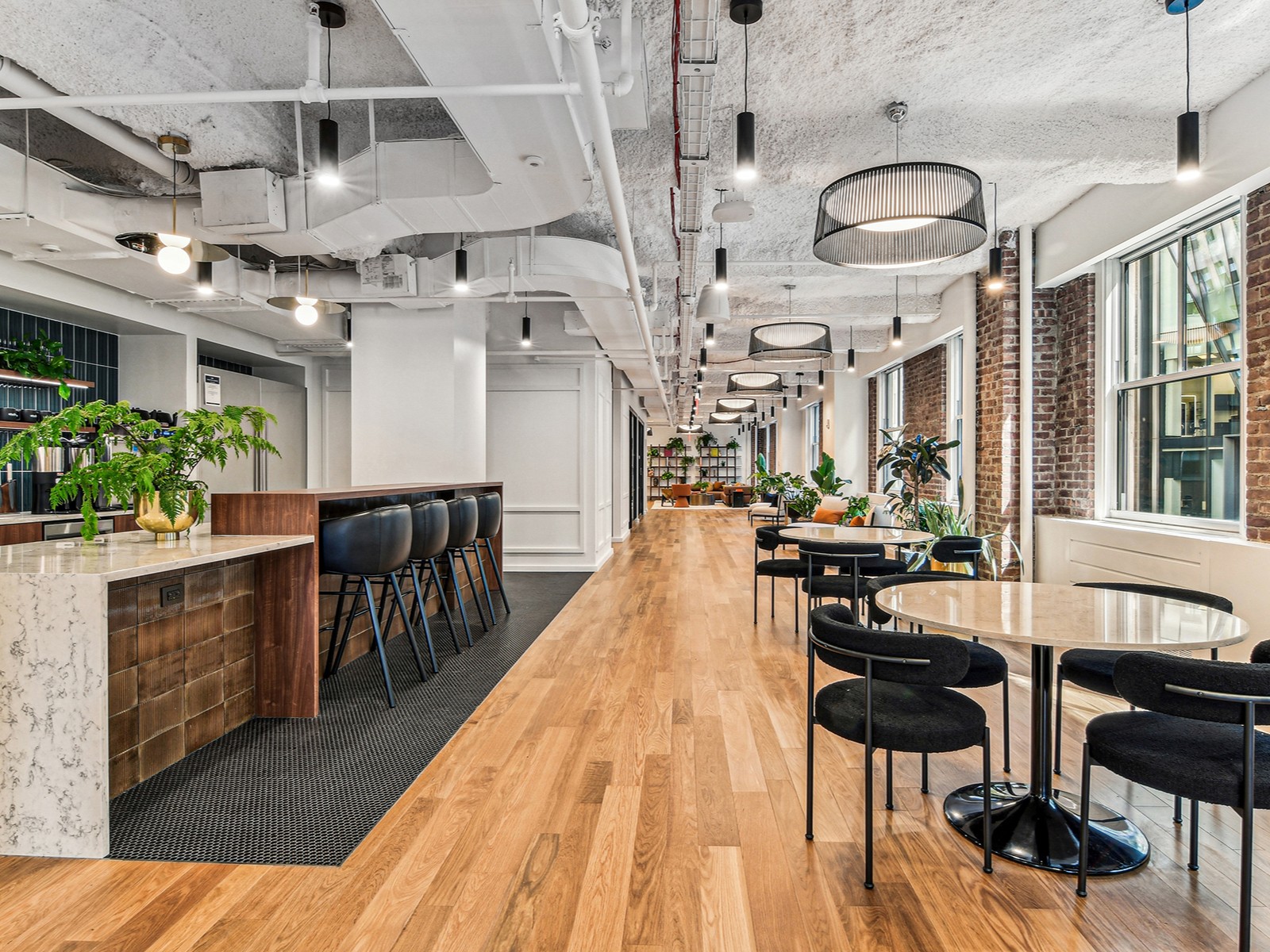
A prime example is Studio by Tishman Speyer at 1 Rockefeller Plaza, which approaches coworking through a distinctly New York City lens. Drawing inspiration from the city’s cultural landscape, particularly its musical heritage, the two-story location features private offices, meeting rooms, dedicated desks and vibrant communal hubs.
Spectorgroup, the design firm behind the project, combined natural light, skyline views and flexible workplace solutions to meet growing demand for professional environments that foster both productivity and community in Midtown Manhattan. With offices in New York City and Miami and more than six decades of global experience, the firm continues to shape dynamic workplaces across industries.
In this interview with Commercial Property Executive, Design Director & Senior Associate Steven South and Senior Project Manager & Senior Associate Simon Yeung discuss their vision for Studio by Tishman Speyer and share insights on what’s next for coworking design.
READ ALSO: Gensler’s Co-CEO on the Workplace of the Future
With growing demand for flexible workspaces and tighter return-to-office policies, how have your clients’ expectations around coworking space design changed? What are they asking for now vs. a few years ago?
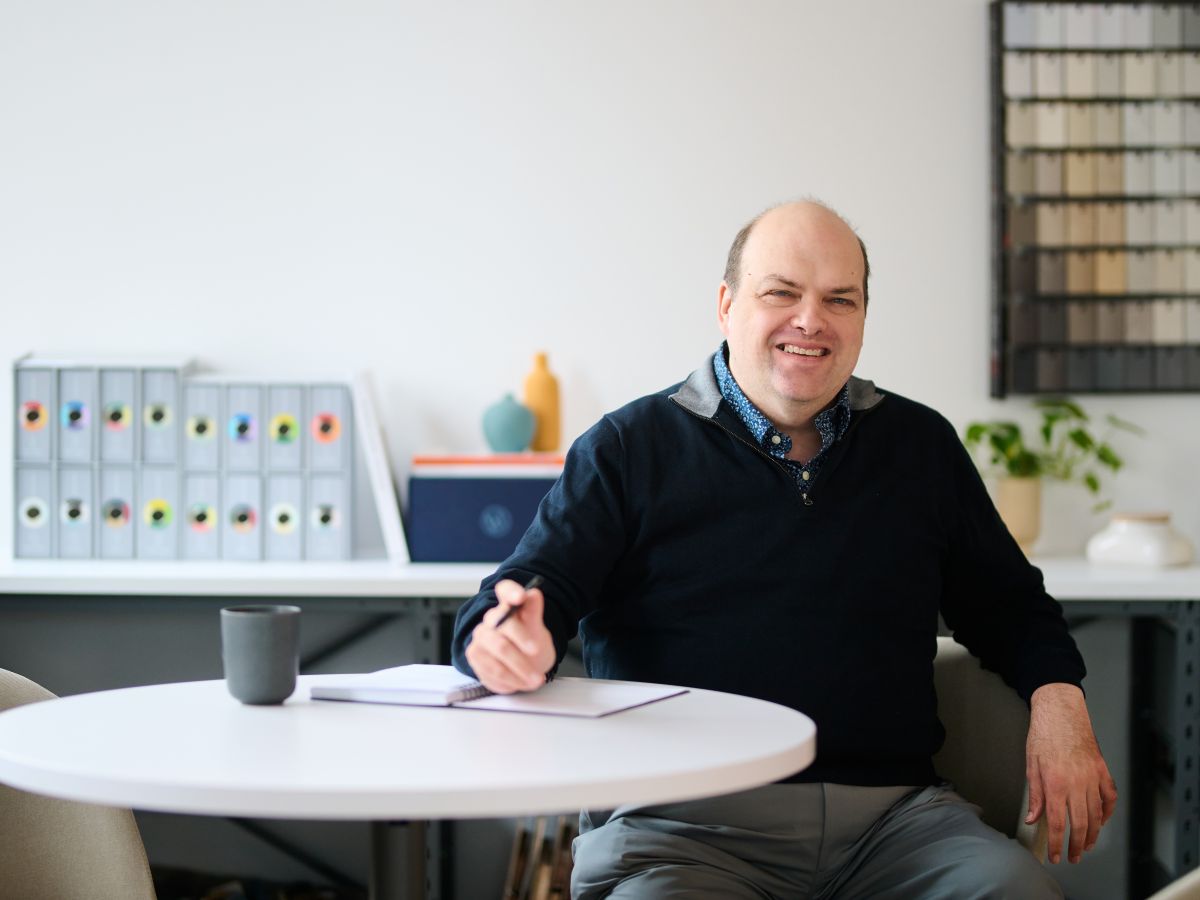
South: Coworking is a vital component of workspace solutions, as it provides flexibility for those who require it. The best coworking spaces today are flexible and modular, accommodating the shifting needs of independent workers and organizations.
Customers are now seeking out spaces that are professional and comfortable, with hospitality influence for a more inviting but ever-functional alternative to the traditional workplace. Shared amenities are now more valued than dedicated company rooms, and modular layouts offer more agile solutions for scaling up or down as needed in turbulent times.
Offices today need community-oriented features and unique draws. We’re even seeing an increasing desire for casual, cross-company engagement, which positions the modern coworking space as a means for fostering connection and the mixing of innovative ideas from organization to organization.
What design elements are becoming must-haves and which ones are fading away?
South: While hospitality remains a cornerstone of great coworking environments, we’re seeing a shift away from novelty amenities that don’t directly enhance how people work or connect. Features like beer taps and ping-pong tables once symbolized innovation—but today, we’re more intentional. The emphasis is on creating spaces that foster productivity, collaboration and lasting community.
Rather than adding more for the sake of it, we focus on what truly supports business growth and human connection—thoughtful communal spaces, flexible/movable layouts and design details that reflect the needs of today’s hybrid, coworking teams.
Walk us through the design process for Studio by Tishman Speyer at 1 Rockefeller Plaza. What were your main sources of inspiration?
South: Each Studio by Tishman Speyer location has a strong thematic connection to place, with meeting room names and design concepts drawn from landmarks, parks or neighborhoods. For this location, our client was looking for a New York City theme that would feel different and fresh. Ultimately, we developed a design concept based upon the city’s rich history of legendary musicians and iconic nightlife venues.
Beyond the initial concept, we really worked to evoke the feeling of music and energy rather than focusing on implementing literal representations. We avoided in-your-face photographs or neon signs, instead trying to express the diversity of artists through more subtle use of materials, lighting and color palettes.
One example is the Ella Fitzgerald-themed conference room, which centers on the use of textures and tones to create a feeling of warmth and elegance, while other rooms channel the intimate vibe of a jazz club or the edge of a rock venue.
This location’s identity as part of Rockefeller Center added another layer for our team to consider. The iconic campus’ history and cultural significance allowed us to create a design that is both authentic and rooted in New York, but also contemporary and welcoming for occupants.
Music became a lens for us to design to accommodate a truly diverse professional community, with spaces that encourage growth, creativity and connection. The final product is a more layered, inclusive environment where customers can find the areas that resonate with them individually based on their needs, from small suites to collaborative hubs.
READ ALSO: How an Old Louisiana Schoolhouse Became a Coworking Hub
What are some unique design elements that you opted for at Tishman Speyer’s coworking space? How has the elevated location influenced your design approach?

Yeung: From The Ronettes to Radio City Music Hall to The Velvet Underground, the design pays homage to New York City’s musical icons and venues through themed conference spaces and phone rooms. Each room subtly reflects its namesake with custom color palettes, bespoke wallpaper designs and thoughtfully curated furniture. This design concept reflects and celebrates (the coworking space’s) location at 1 Rockefeller Center, right in the cultural heart of the city.
We also focused on how the location above Midtown Manhattan shapes the user experience. We aimed to highlight views of the skyline and natural light, while sightlines throughout the interior prioritize flow and help to guide customers from communal hubs to private workspaces. Material selections, lighting and finishes were also curated intentionally to play off the balance of the city’s energy with the more calm, productive interior.
Gathering areas throughout encourage interaction across companies, while acoustically optimized private suites provide a place for focused work that yields a seamless balance of needs while also reflecting the dynamic spirit of New York.
How did you design for both focus and connection? What role did spatial layout, materials and lighting play in supporting that private-open space balance?
Yeung: The floor layouts are intentionally arranged to introduce communal spaces at the entrance, and private suites towards the sides and back. Sectioning the floorplans helps to adjust the acoustic needs for each area. We were very mindful of acoustics when making material selections, opting for fabric paneling in the conference rooms and treating all ceilings with SonaSpray or K-13 insulation.
In the conference and multipurpose rooms, there are also controllable drapes to adjust the privacy as needed. Lighting was also very important throughout the space—the decorative lighting fixtures add a freshness and warmth without feeling too ‘moody.’
We found that this arrangement is perfect for creating spontaneous connections in communal areas without overwhelming the quieter, focused environments—while still always providing access to either of these spaces …
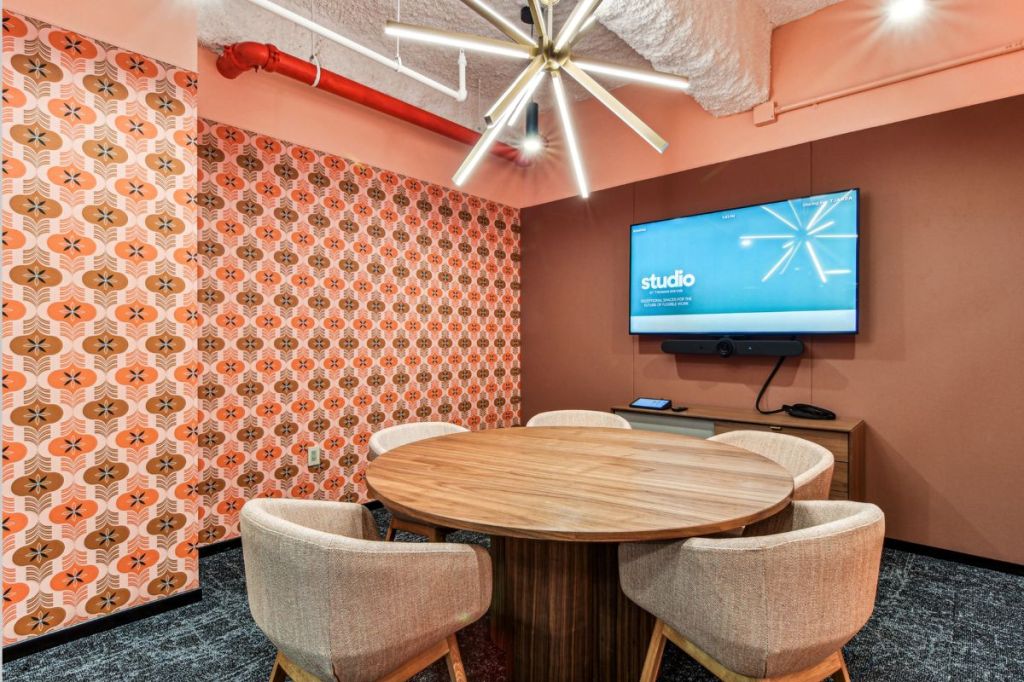
The design team drew inspiration from music legends such as the girl group The Ronettes, incorporating subtle elements into their approach. All images by Jeff Garlin, courtesy of Spectorgroup 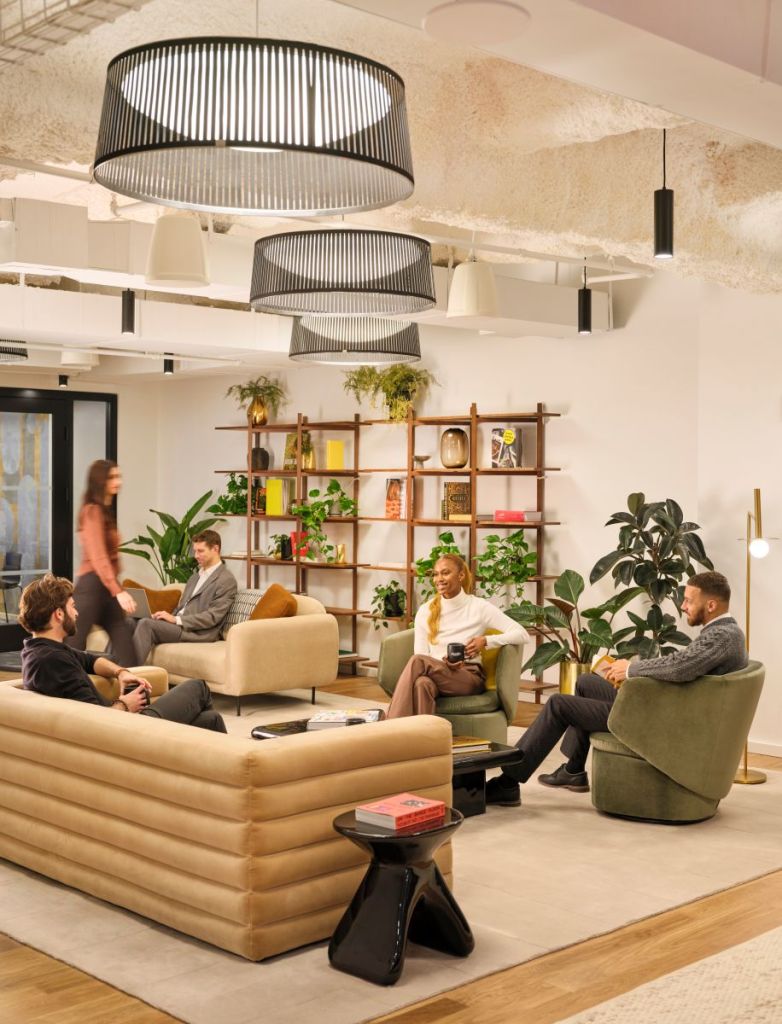
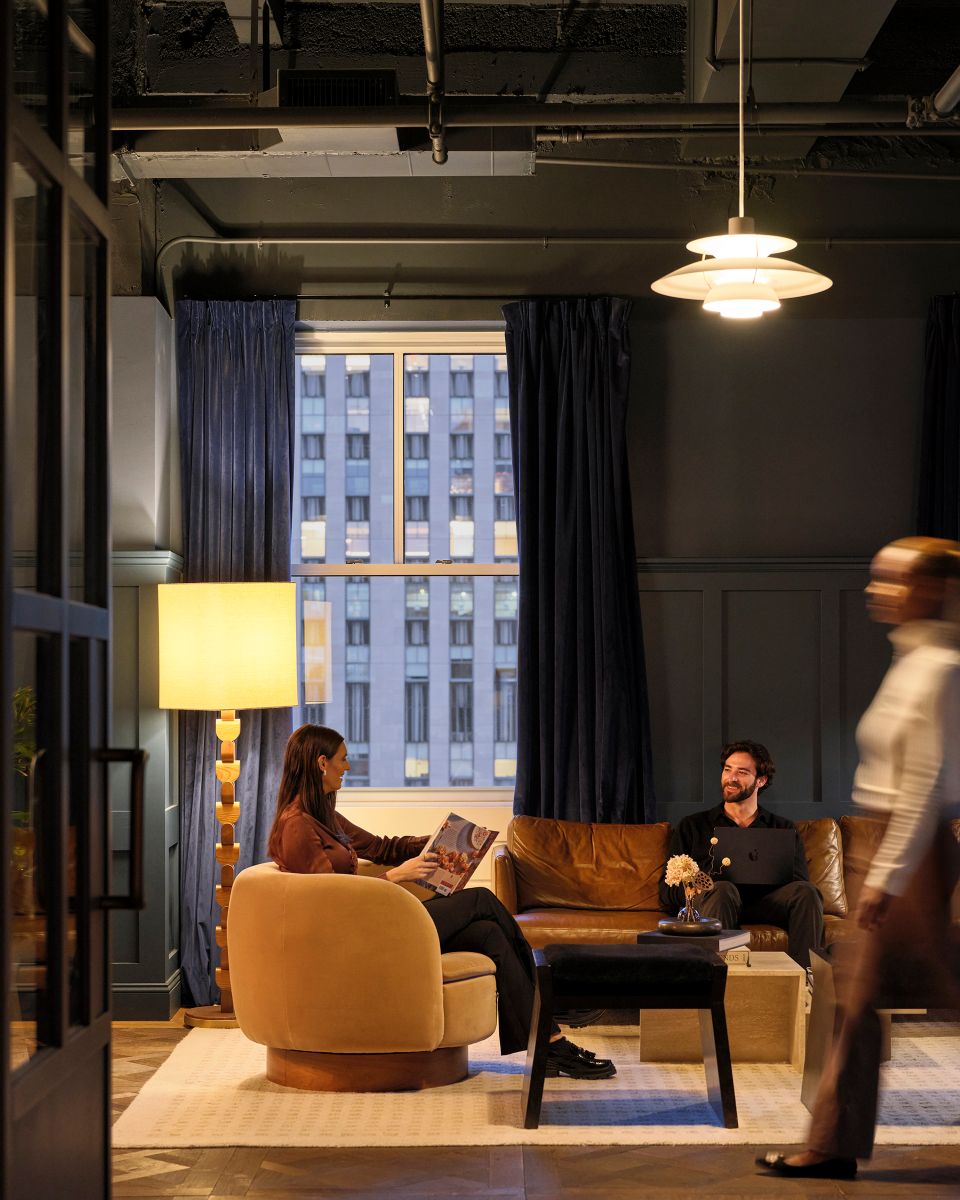
A communal lounge fosters casual conversations and connection in a relaxed setting. 
One of the meeting rooms was inspired by the mid-1960s rock band The Velvet Underground.
Tell us more about the subtle design details you incorporated in this space that appeal to modern workers.
South: One of the most important aspects of the design is the wide variety of settings that support the full spectrum of modern workers’ needs, from focused individual tasks to collaborative meetings to casual social gatherings. The open, communal pantry areas are intended to encourage informal interactions and help foster a sense of community among workers and organizations from various sectors.
Details that typically go unseen—think acoustic treatments, fabric wall panels, SonaSpray ceilings and even adjustable drapery—give occupants the opportunity to tailor their environments to their preferences.
READ ALSO: The Malin’s Design-Centric Approach to Flexible Workspaces
In the long run, how will coworking design influence the way people work?
Yeung: We will continue to see our coworking environments encourage cross-pollination of ideas. Our spaces are fuel opportunities for entrepreneurs, startups and established firms alike to drive collaboration and innovative thinking.
But coworking also allows small teams to have a presence, increasing scale and credibility, while inversely providing larger companies with the ability to stay nimble despite changing market conditions. This blend of community, flexibility and thoughtful design is the new standard for workplaces in general: Offices that are adaptable and conducive to creativity will continue shaping work culture while influencing the ways that organizations leverage their spaces for growth and innovation outside the confines of their own teams.

You must be logged in to post a comment.