
Top Projects That Will Reshape Los Angeles
Developers are pushing forward with creative projects transforming the city's skyline ahead of the 2028 Summer Olympics.
This article was originally posted on January 20, 2021, and updated on May 11, 2026, to include the latest information available.
Los Angeles continues to be a focal point for large-scale investments, maintaining its status as a nexus for development, particularly across mixed-use and infrastructure projects. In recent years, a wave of high-profile completions, from Downtown to the Westside, has redesigned parts of the city’s skyline.
Today, one of the most prominent buildings in the city’s core is The Grand, Related Cos.’ $1 billion mixed-use development, which officially opened in 2022. Designed by legendary architect Frank Gehry, it comprises a 39-story apartment tower, a 20-story Equinox Hotel and a mix of shopping, entertainment, culinary and outdoor components.
Another project that has moved from proposal to reality in the past few years is West Edge, developed by a joint venture of Hines, USAA Real Estate and Philena Properties. Delivered in 2023, the building has 200,000 square feet of creative office space, 600 apartment units and a transit-oriented mix of retail and public amenities in West Los Angeles.
On the infrastructure side, Metro’s Crenshaw/LAX line, now the K Line, began operation in 2022, including eight stations. Its airport connection became far more meaningful last year when the LAX/Metro Transit Center opened, linking the C and K lines with bus service near the airport. Another completed major civic project is the Sixth Street Viaduct. The new $588 million bridge opened to the public in July 2022, with the related Sixth Street PARC open-space improvements around and beneath the structure continuing as separate follow-on efforts.
Now, another wave of construction is underway. From mixed-use megaprojects to studio expansions, these projects are poised to transform key areas in Los Angeles in the years ahead.
1. The LAX Landside Access Modernization Program
Work has advanced substantially on the $5.5 billion project aimed at improving ground access to Los Angeles International Airport. After nearly a decade of planning, site preparation and construction, several components are now up and running.
Of the two Intermodal Transportation Facilities, ITF-West opened as LAX Economy Parking in 2021. On the east side, Metro’s LAX/Metro Transit Center opened in June 2025, with the ITF-East connection tied to LAWA’s SkyLink automated people mover (APM) set to open to passengers this year.
The 2.3-mile APM—the program’s centerpiece—will connect the central terminal area with the ITFs and the $1 billion consolidated rent-a-car facility that opened in March, bringing all 12 on-airport rental car operations together in one location. When functional, the APM will operate with nine trains, with rides taking roughly 10 minutes.
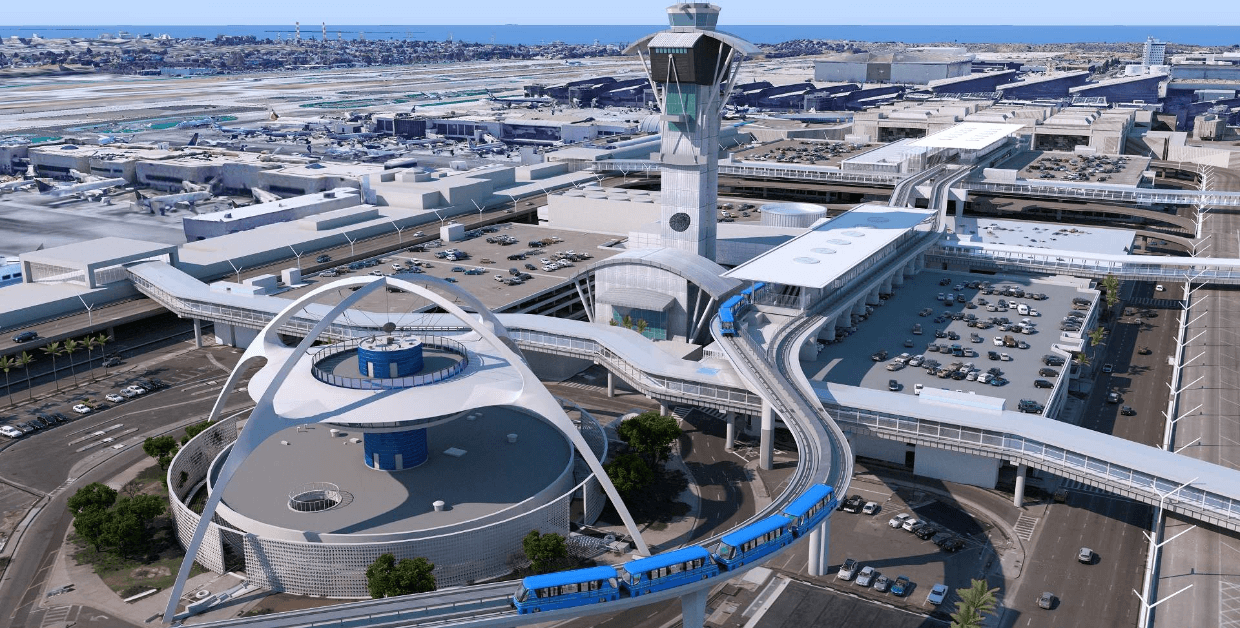
“With trains arriving at stations every two minutes during peak hours and with a yearly capacity of 87 million, the APM will move travelers in and out of the LAX CTA at a high frequency in a timely manner,” said Jake Adams, deputy executive director at Los Angeles World Airports & program executive for LAMP.
The APM is set to be connected to a $500 million light rail transit hub to be developed at the intersection of Aviation Boulevard and Arbor Vitae Street. Meanwhile, roadway improvements in the area include the widening of La Cienega Boulevard, Arbor Vitae Street and Century Boulevard, as well as the extension of 98th Street and Concourse Way.
“The contracts in place to build the future of LAX require a minimum 30 percent local-hire workforce on the APM and consolidated rent-a-car facility projects during the design and construction phases,” Adams said. “The contract also requires utilization of small and local businesses, minority-owned businesses, disabled veterans’ businesses and so on.”

2. The Metro Purple (D Line) extension
The much-anticipated Purple Line—renamed the D Line—subway transit project is considered the most complex engineering feat in the modern history of LA Metro Rail construction, traveling through some of LA County’s most densely urbanized neighborhoods and underneath some of the most challenging geologic conditions, according to Dave Sotero, director of communications for Los Angeles County Metropolitan Transportation Authority.
The multibillion-dollar project is split into three sections, with the first two segments already underway. The 9-mile total extension will include seven stations along Miracle Mile, Beverly Hills, Century City and Westwood, with full completion expected before the 2028 Summer Olympics.
The D Line extension recently reached a major milestone, adding new stations at Wilshire/La Brea, Wilshire/Fairfax and Wilshire/La Cienega, and extending the line by 3.9 miles. Construction activity continues at the remaining sections through Beverly Hills, Century City and Westwood.
According to Sotero, the extension to the planned Westwood/VA Hospital station will generate about 49,300 daily weekday boardings at the new stations. “There will be about 78,000 new daily trips on the full Metro Rail system because of the opening of this line,” he said.
At full buildout, it is projected to take about 25 minutes to travel between downtown and Westwood.
3. Lucas Museum of Narrative Art
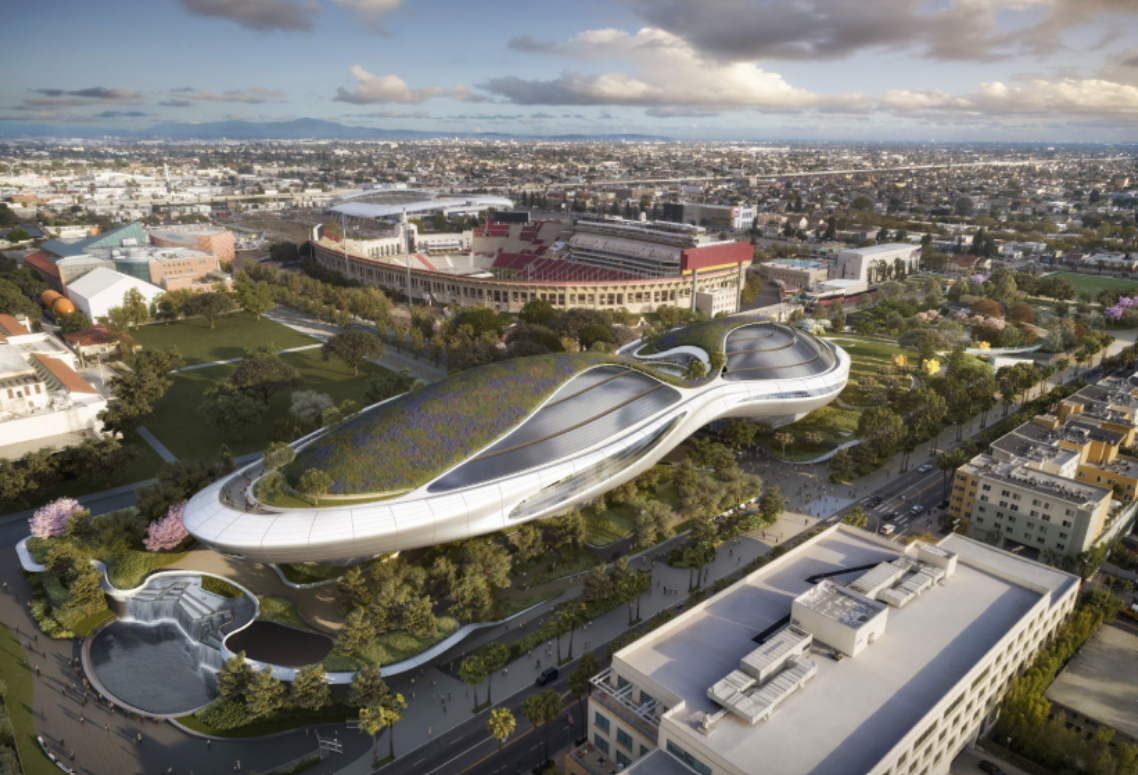
Work is still underway at George Lucas and Mellody Hobson’s $1 billion museum, rising in South LA’s Exposition Park, with an open date scheduled for late September 2026. Designed by Ma Yansong of MAD Architects, the highly anticipated project broke ground in March 2018. Plans call for a 300,000-square-foot building on an 11-acre site, surrounded by 6.7 acres of parkland and gardens designed by Studio MLA. Currently, the team is working to complete the campus and prepare it for operations and programming.
The founders oversee construction, collection and endowment costs for the project that’s estimated to generate some 1,500 construction jobs and 350 permanent positions when delivered later this year.
The five-story building will have dedicated exhibition space, a library, theaters, digital classrooms, event spaces, restaurants and offices. The Museum’s collection includes book and magazine illustrations, comic books and comic strips, paintings, drawings, photographs, posters and visual materials from the arts of filmmaking.
This is not the only project transforming the city’s cultural landscape. Los Angeles County Museum of Art’s Peter Zumthor-designed David Geffen Galleries opened on April 19, 2026, marking the latest phase of the museum’s long-running Miracle Mile transformation. Additionally, the Academy Museum of Motion Pictures is now open at Wilshire Boulevard and Fairfax Avenue.
Also in South LA, the $100 million outdoor museum dubbed Destination Crenshaw is continuing its phased rollout along a 1.3-mile stretch of Crenshaw Boulevard, with construction and art installations still advancing across the corridor, and Sankofa Park now expected to open later this year. Designed by Perkins + Will, the 1.3-mile open-air museum dedicated to public art celebrating Black history and culture will feature community gathering spaces and parks as well as landscape and streetscape improvements.
4. LA Convention Center (LACC) Expansion and Modernization Project
The $2.6 billion expansion and modernization of the Los Angeles Convention Center is one of the city’s biggest public infrastructure projects underway. Plans call for 190,000 square feet of new exhibition space that will connect the South and West halls, totaling more than 750,000 square feet. There will also be roughly 39,000 square feet of meeting rooms, as well as 95,000 square feet of multipurpose space.
Developed by AEG Plenary Conventions Los Angeles and built by a PCL/Webcor joint venture, with Populous as architect, the project is designed to make the facility more competitive for large conventions and citywide events. Expansion work started in October last year, with the first phase expected to be completed in spring 2028 before the Olympic and Paralympic Games and a full completion slated for 2029.
“The project will bring economic growth to the region, creating more than 15,000 jobs, adding $652 million in General Fund tax revenue over 30 years and drawing in over $150 million in additional visitor spending each year,” said LA City Tourism Department Chief Tourism Officer & Executive Director Doane Liu. “Since the approval of this project, several organizations announced that they will host their annual conferences at LACC because the expansion provides the amount of space they require for their event.”
5. West Harbor (San Pedro Waterfront)
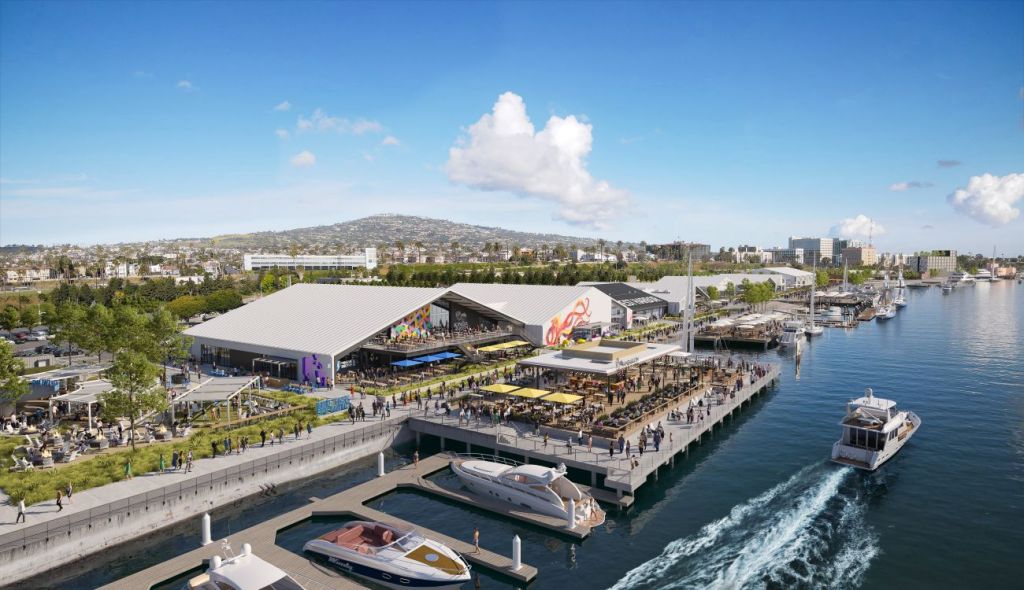
West Harbor is recasting San Pedro’s shoreline as a 42-acre waterfront district, with dining, entertainment and waterside experiences arranged around an expansive harborside promenade. All images courtesy of West Harbor 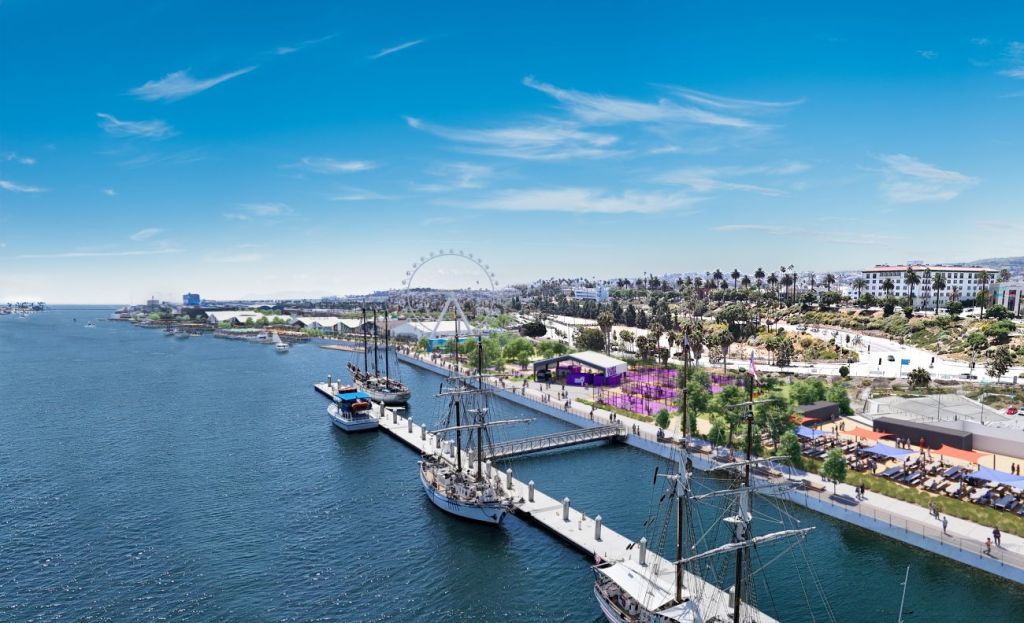
A future park-and-wheel attraction will join the mile-long promenade, direct waterfront access and family-oriented public spaces as the project continues to remake the former Ports O’ Call site. 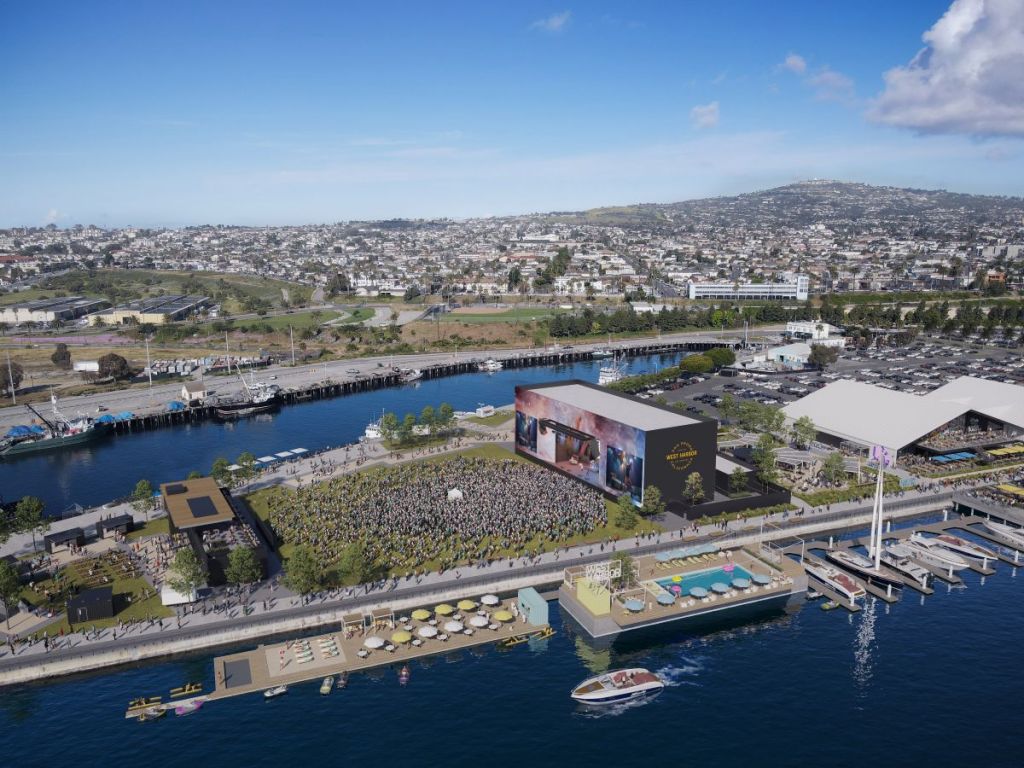
The 6,200-seat waterfront amphitheater is set to anchor West Harbor’s entertainment program, bringing large-scale concerts and events to the San Pedro waterfront.
On the San Pedro waterfront, West Harbor is reshaping a long-underused stretch of the Port of Los Angeles into a new dining, entertainment and recreation district. The $500 million mixed-use project, developed by The Ratkovich Co. and Jerico Development in partnership with the Port of Los Angeles, calls for the redevelopment of 42 acres into 300,000 square feet of commercial space, as well as a mile-long promenade along the waterfront.
“At its core, it’s about refreshing the community’s connection to the waterfront,” said Eric Johnson, senior project executive at West Harbor. “We were deliberate in curating a complementary mix of uses, ensuring each element of the project is unique, authentic and fun. The layout encourages people to move through the site, spend time there and experience the harbor up close.”
The destination is currently offering visitors a first look, after the developers secured $61.5 million in refinancing in 2025 to complete the project.
Some operations are already active on-site, including San Pedro Fish Market’s temporary location, The Landing, Harbor Breeze Cruises and Wheel Fun Rentals, while a series of openings and activations is expected to debut with West Harbor’s LA World Cup 26 Fan Zone scheduled for July 14, 15, 18 and 19.
6. One Beverly Hills
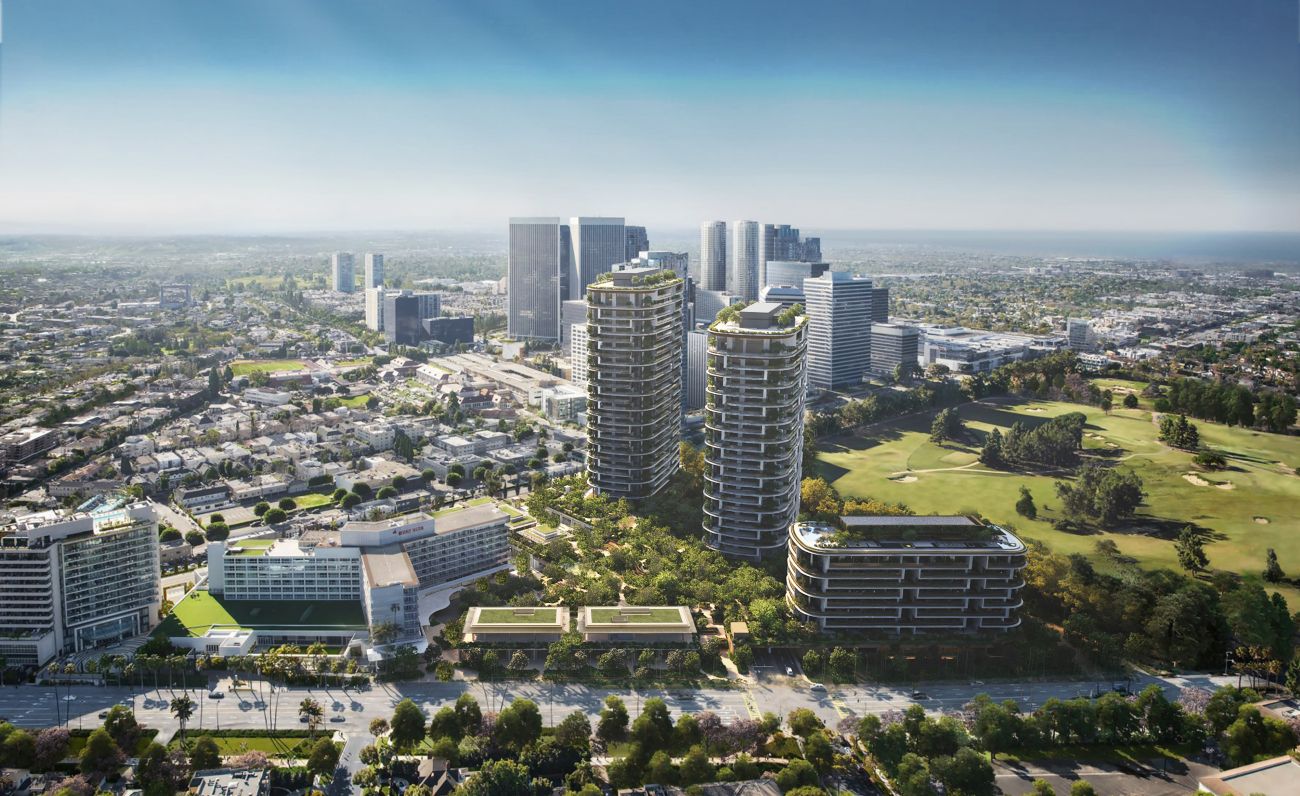
The $10 billion mixed-use development is one of the most ambitious projects in the metro. Spanning across 17.5 acres and developed by Cain and Eldridge Industries, One Beverly Hills will comprise two Aman-branded residential towers, rising 28 and 32 stories, along with a 10-story, 78-key hotel and a 100,000-square-foot private club and retail, dining and wellness space.
With new hospitality, branded residences, gardens and high-end retail planned in one integrated setting, One Beverly Hills is intended to create a new mixed-use district at one of the city’s most prominent edges.
“Master-planned by Foster + Partners, One Beverly Hills will introduce acres of botanical gardens and open space, creating a seamless, walkable environment for the local community and visitors,” said Larry Green, senior managing director at Cain Development.
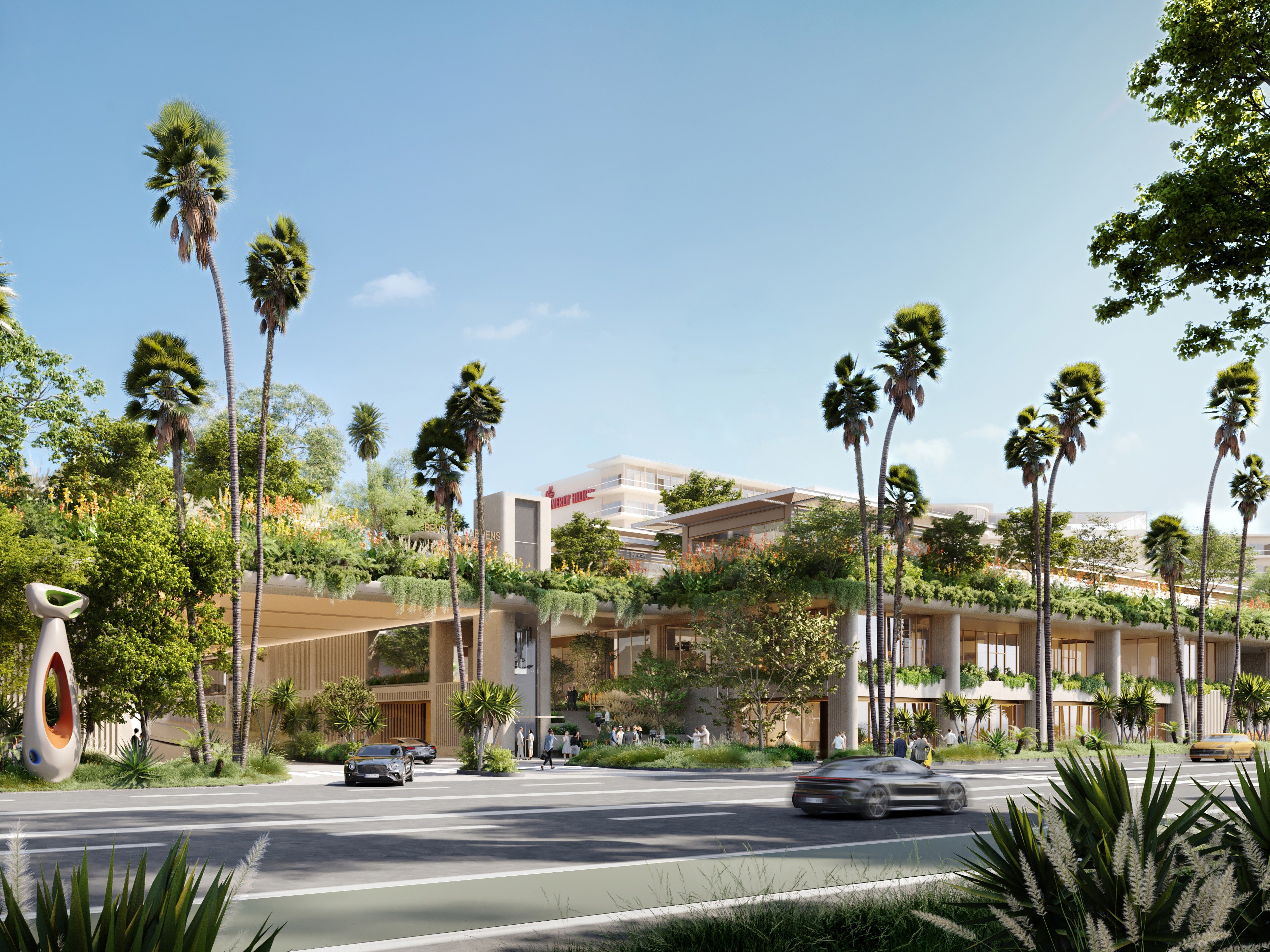
Plans call for two miles of walkways and trails, water features and more than 200 species of native and adaptive plants.
The project has been in the works since 2018, when Cain and Alagem Capital paid $445 million for the site at 9900 Wilshire Blvd. Construction started in 2024, with the first phase expected for completion in 2028. Today, the development is being led by Cain in partnership with OKO Group.
Recently, the developers obtained $4.3 billion in financing—a $2.8 billion loan from J.P. Morgan for the mixed-use development and $1.5 billion in mezzanine debt from VICI Properties for the Aman-branded residential condominiums.
“What distinguishes One Beverly Hills is the ability to deliver this level of integration at a scale not currently seen in Beverly Hills,” said Green. “Combined with measurable community benefit, including $40 billion in projected economic impact and $100 million in public benefits, the project is positioned to play a meaningful role in Beverly Hills’ continued evolution ahead of the 2028 Olympics.”
7. Echelon Studios
Los Angeles also has several creative office and production-related projects underway, including Echelon Studios, a roughly 600,000-square-foot studio campus being developed by BARDAS Investment Group and Bain Capital Real Estate at 5601 Santa Monica Blvd. in Hollywood. Described as the first purpose-built studio lot developed in Hollywood in more than 50 years, the project broke ground in May 2024 and is slated for completion later this year. Recent construction updates show concrete work rising above grade at the site.
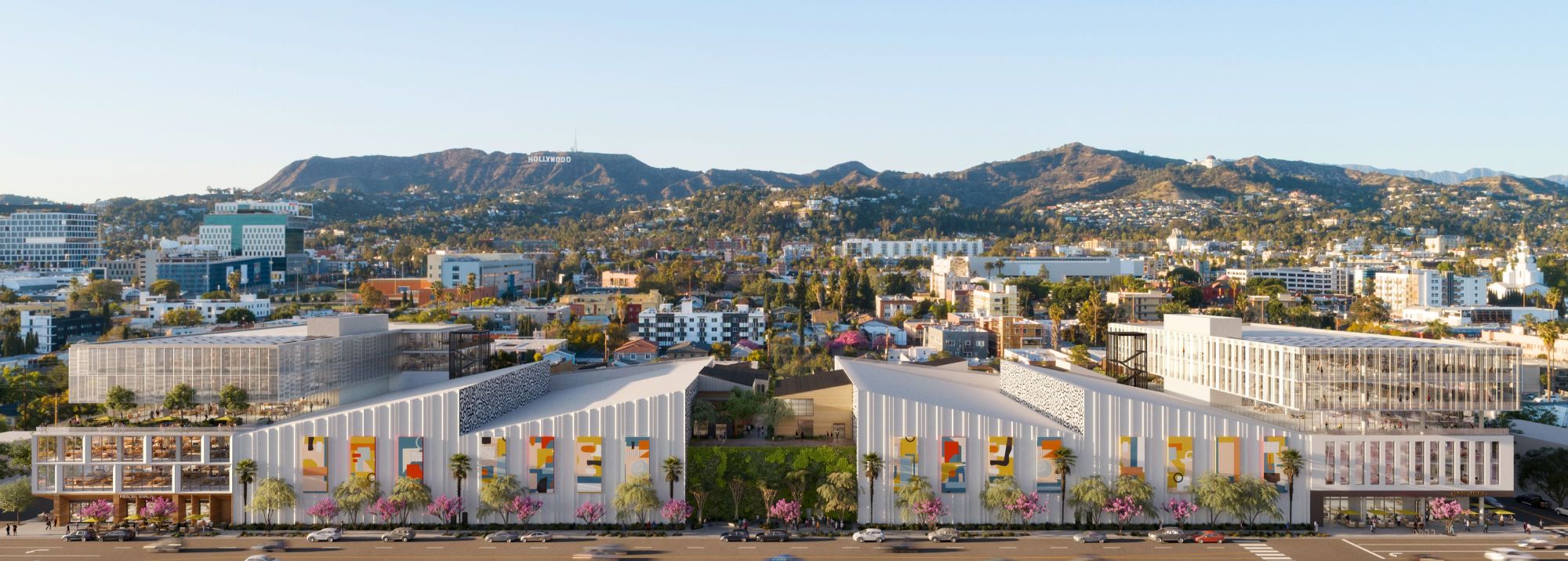
The joint venture previously secured $300 million in construction financing for the $450 million development from Blue Sky Servicing. Replacing a former Sears site that spans a full city block, the campus will include 110,000 square feet of production studios and support space, more than 388,000 square feet of office space, a 15,000-square-foot flex stage, more than 12,000 square feet of ground-floor restaurant space and two subterranean parking levels with 981 spaces.
Designed by RIOS, Echelon Studios is also set to include four 19,000-square-foot soundstages along Santa Monica Boulevard with office buildings on the east and west sides featuring terraces and a 15,000-square-foot flex stage. Meanwhile, smaller villa-like structures to the north blend in with the adjacent residential neighborhoods.
8. Television City modernization
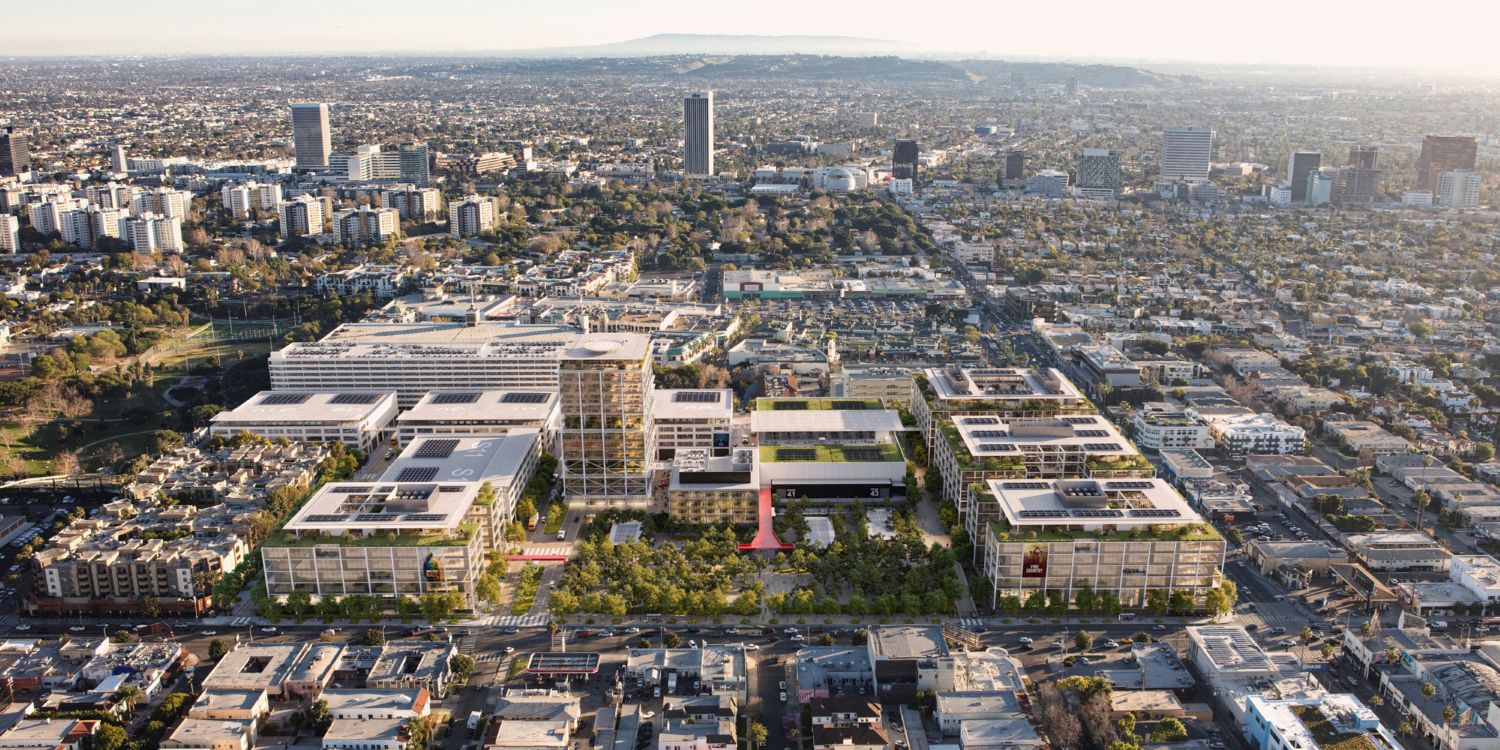
The $1 billion Television City modernization project is another production-related masterplan in the works in Los Angeles, intended to reenvision the historic 25-acre campus at Beverly Boulevard and Fairfax Avenue. Hackman Capital Partners is the developer of the 1.7-million-square-foot project, which will comprise almost 240,000 square feet of sound stages, 550,000 square feet of office space, 20,000 square feet of retail and more than 900,000 square feet of production offices and support space.
The site is one of the most important in Los Angeles’ production history. Originally designed by William Pereira and opened in 1952 as CBS Television City, the studio hosted broadcasts such as The Carol Burnett Show, The Ed Sullivan Show and American Idol, among others. Hackman Capital Partners intends to maintain that legacy, as the modernization project will rehabilitate the Historic-Cultural Monument on the property, including the Beverly Boulevard facade, rather than replacing the campus outright.
The developer paid $750 million for the site back in 2019, previously owned by CBS, which remained a tenant on the property. The initial plan called for almost 1.9 million square feet, but was revised in April 2024 before winning City Council approval in January 2025. Hackman removed a 15-story west tower and 150,000 square feet of office space from the master plan, lowered building heights and expanded landscaping to better align with the surrounding neighborhood.
Foster + Partners, along with RIOS and Adamson Associates, worked on the low-rise, multimodal campus redevelopment. The team also included pedestrian boulevards, pocket parks and courtyards in the project, meant to soften the campus and tie its components together.
A public completion date has not yet been announced.
Check out our other recent articles in the series to discover the top projects reshaping Nashville, Raleigh, Miami, Chicago, Seattle and Boston.
You must be logged in to post a comment.