


4 Digital Infrastructure Investment Risks for REITs
Can they turn current trends into sustainable growth?

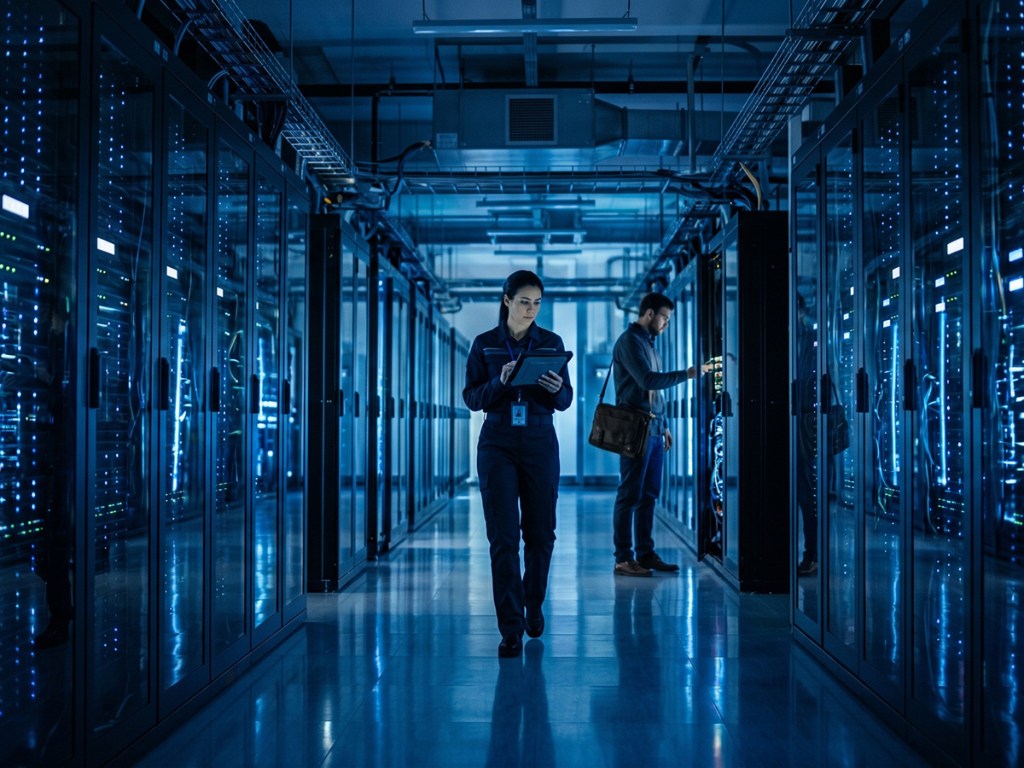
As technology looms ever larger as a key driver of the global economy, the sector’s physical infrastructure becomes increasingly attractive to real estate investment trusts. Hyperscale data centers that support next-generation AI models are an obvious example, but everything from payments and enterprise systems to health care and energy companies require facilities to accommodate data storage, cloud services and high-density computing networks. These complex property, hardware and services investment opportunities now include edge facilities, power and cooling systems, fiber connectivity and digital operations contractors and service providers.
Digital infrastructure’s potential for robust, long-term growth has not gone unnoticed by REITs. According to Nareit, in the first quarter of 2026, data centers alone comprised 18.5 percent of equity REIT assets under management, the second-largest allocation among property sectors. As appealing as this space may be, digital infrastructure investments require careful attention to four special and often intersecting categories of risk. Managing these risks, especially in a holistic way, can allow REITs to protect the economic viability of these projects and safeguard sustainable returns.
Digital infrastructure opportunities should be considered in their entire complexity, which often extends well beyond that of many traditional real estate assets. Investment outcomes can be materially affected by risks in four critical areas: power, water, labor, and catastrophe. These may directly impact on site selection, development timelines, and operational resilience—any of which could meaningfully change the return profile of an investment.
1. Securing adequate power
Data centers are famously energy-intensive, requiring a power supply reliable enough to support continuous operations and flexible enough to scale with tenant needs. Pew reported in 2024 that U.S. data centers already consumed more than 4 percent of the country’s electricity, and demand is expected to double in the next few years. With speed to market paramount and strict service-level commitments prevalent, even modest delays due to power constraints can create potentially uninsurable downstream financial pressures. More owners and developers are exploring alternatives in the form of on-premises solutions and renewable and hybrid models. While promising, these approaches introduce their own operational, regulatory and contractual challenges.

2. Accessing water
As more computing power is packed into each server rack or data center, the equipment generates more heat, requiring more sophisticated and energy-intensive cooling systems—many of which can consume substantial amounts of water. When access to this resource is constrained, contentious or difficult to scale, it creates material operating challenges that may weaken investment economics. Due diligence in the site-selection process can, therefore, become critical as factors such as drought conditions, existing local demand and regulatory pressures must be weighed against other considerations.
3. Recruiting and retaining skilled labor
Specialized workers are critical to every phase of a digital infrastructure project. Construction requires electricians, HVAC professionals, fiber-optic specialists, plumbers and others. An up-and-running operation needs a smaller but permanent cadre of facilities managers, network engineers and cooling systems specialists. The boom in digital infrastructure and its attendant demand for skilled workers comes at a time when the labor market is already constrained and competitive, with the Center for Strategic and International Studies projecting a need for 140,000 additional skilled laborers by 2030. Concerns around poaching, wage inflation and delivery delays are often magnified in the rural areas that might otherwise offer attractive sites.
4. Planning around natural catastrophes
To succeed, digital infrastructure facilities must provide near-continuous service. Their service-level agreements often allow for mere minutes of downtime each year, with severe penalties even for brief outages. But catastrophes, including wildfires, hurricanes and tornadoes, can trigger extended downtime by directly damaging facilities, disrupting utility service or impairing access. These failures can have devastating effects on revenue, tenant relationships, asset valuations and refinancing prospects. Therefore, site selection should include a detailed analysis of catastrophe exposures, probable maximum loss studies and broad resilience reviews to give investors a realistic assessment of the higher costs a site could entail.
A holistic risk approach to investment decisions
Despite the risks inherent to issues of power, water, labor, and catastrophe, digital infrastructure remains an attractive area of investment for REITs. A first step in mitigating these risks is to adopt an ecosystems approach to understanding them. The components of a digital infrastructure asset operate in an interconnected way, where a weakness in one area might ripple through the network. A labor shortage could both delay construction and compromise maintenance. Water constraints could increase costs and limit cooling capability. A hurricane could damage buildings while disrupting staffing levels and utilities.
When exploring these investment opportunities, REITs should conduct extensive due diligence using this ecosystem-wide approach. The resulting comprehensive analysis of threats can be used to help REITs review insurance programs to determine whether they effectively mitigate and transfer risks. They can also help investors better understand the resiliency measures that are most likely to improve financeability, inspire tenant confidence, create value, and position the REIT for sustainable growth.
Duncan Ellis is U.S. & Canadian real estate and hospitality industry leader for Marsh. Previously, he led the transformation of AIG’s retail property practice and U.S. & Canadian retail distribution.




You must be logged in to post a comment.