

Will Deregulation Turbocharge Tokenization?
Sales employing this process are expected to reach $4 trillion globally by 2035.

By now, you’ve probably heard about real estate tokenization, but you might not know exactly what it is. Or, you may know what it is, but have your doubts that it’s ever really going to take off.
Tokenization is a relatively new real estate platform built on blockchain technology that converts physical or financial assets into bite-size digital representations. These “tokens” can be securely traded or owned in fractional portions on a digital platform.
While the level of tokenized real estate represents a very small share of sales volume today, a report from Deloitte noted that the real estate tokenization market globally is expected to hit $4 trillion by 2035.
This growing real estate niche is among the many types of transactions undergoing digitalization and recorded by blockchain, according to Ed Nwokedi, founder, CEO & director of sales at RedSwan, a brokerage firm specializing in tokenized real estate sales. Launched in 2018, RedSwan, which sells tokenized shares of industrial, multifamily and hotel assets, was a pioneer in real estate tokenization and continues to be a leader in this sector, with nearly $200 million worth of tokenized assets currently for sale on its platform.

“It may look niche today, but that is how every major shift looks in the early innings,” said Chris Loeffler, CEO & chairman of the board for Caliber, a real estate fund manager with $2.6 billion in managed assets that is applying tokenization directly to funds and assets within its platform. “Tokenization has the potential to be the most important innovation in finance because it touches the basic mechanics of ownership, fundraising, reporting and liquidity across nearly every asset class.”
In addition, tokenized funds are more efficient to operate, offering a better operating margin for sponsors and an enhanced investor experience for the token holders, he added.

“Tokenization has the potential to revolutionize how real world assets, such as real estate, private equity and venture capital, are owned and transacted,” said Barry DiRaimondo, chairman & CEO of Steelwave. His company has recently spun off Steelwave Digital, a tokenization real estate management firm led by Mitch DiRaimondo, Barry’s son.
Under the current traditional financial ecosystem, ownership interests in privately held assets are generally illiquid unless those interests are sold concurrently with the sale of the underlying asset. Tokenization allows individual asset shareholders to sell their shares in an asset via a fully regulated digital exchange or directly peer-to-peer without selling the asset.
Tokenization eliminates transaction fees
Tokenized real estate is not only paving the way for new markets and products but it also offers real estate organizations an opportunity to overcome challenges related to operational inefficiency, high administrative costs charged to investors and limited participation.
Since tokenization changes the shareholders of the LLC, not ownership of the asset, Nwokedi pointed out, it, along with blockchain, increases transaction efficiencies and eliminates excess fees associated with real estate sales, including title fees, attorney fees, brokerage fees and the underwriting analyst fee, noting that these fees add up to 7 percent on average.
“So you have all these gatekeepers who are getting paid from one single transaction, which means the buyer is paying more for the asset and getting a little bit less return because of the acquisition costs,” Nwokedi said.
Even REITs charge a load and exit fee, usually 7 percent and 4 percent, respectively, he pointed out. “At the end of the day, if you’re trying to make an average of 12 percent from the REIT, it has to really perform above par in order to make sure you get your target yield.”
What’s stifling growth
Nwokedi suggested that investors have been slow to accept tokenized real estate because they associate the technology with cryptocurrency, which has resulted in millions in losses for investors. He believes this will change as investors come to understand tokenization is a safe, secure real estate platform that offers many advantages currently unavailable in the traditional real estate marketplace.
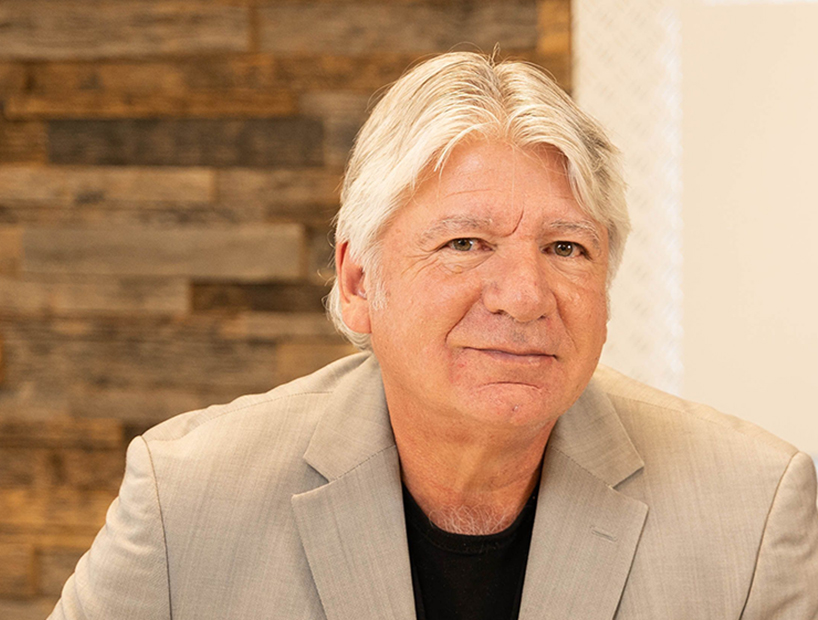
DiRaimondo also cited regulatory challenges limiting the growth of tokenization, noting most products listed on digital exchanges are anything but institutional in nature. In fact, privately held institutional assets of scale currently don’t exist on any digital exchange in the U.S. because the regulatory framework that governs what you can and can’t legally list on a digital exchange isn’t fully established.
“Once this is in place, all of the compliance rules and requirements will fall into place—licensing, reporting and disclosure and so forth,” DiRaimondo said. “Until the regulatory and compliance cake is fully baked, you won’t have wide-scale adoption, and the ecosystem play is only on the fringe.”
Adoption has been gradual because early growth was constrained by regulatory uncertainty, a lack of standardized market infrastructure, integration challenges with legacy financial system and the inherently conservative risk posture of institutional investors—not because the value proposition is unclear, added Prashant Kher, digital assets strategy & transactions leader for EY-Parthenon. He suggested that a minimal viable ecosystem of mature market infrastructure is needed to see tokenization scale.
Cryptocurrency also has a reputation for use by “bad actors” for criminal purposes, such as money laundering. However, the Securities and Exchange Commission does have rules for how tokenization companies approve new investors. And both Nwokedi and DiRaimondo emphasized that their companies have safeguards in place designed to protect against such criminal actions.
Safety is inherent to the process used to transact on RedSwan’s platform, Nwokedi noted. “Firstly, we check the suitability of potential buyers,” he said. “We want to know who they are, what they’re capable of, and what they’re trying to do. Then they have to go through a ‘know your client’ process. This involves a screening process using their passport or driver’s license to discover if they’re on any kind of ‘bad actor’ or criminal list.”
Secondly, once the transaction is completed, RedSwan is always involved in the movement of those shares, he said. For example, token holders cannot simply sell their shares to relatives or friends, but, like stocks, have to sell through a brokerage to a third party who bids on the shares. “This eliminates bad actors because anybody who tries to buy has to go through the KYC process,” Nwokedi said, noting that they also have to be income accredited.
“The bad acting in any financial ecosystem is usually because there is a complete lack of agency oversight with rational regulatory and compliance standards,” suggested DiRaimondo. “Bad acting almost always finds a void and exploits it, but today there is much less bad acting than 10 to 12 years ago.
How safe is the blockchain?

An open-source blockchain, DiRaimondo said, creates true transparency around how an asset is moved from point A to point B. And it not only provides transparency but it is also a safe transaction vehicle, providing proof of trust because no one can modify it.
While even the biggest banks are regularly hacked when moving capital around, Nwokedi pointed out that it is impossible to hack a blockchain, noting that a blockchain consists of multiple computers linked together on the same platform. “It’s like trying to hack into 52 different computers at the same time,” he said. “It hasn’t ever been done. It’s really immutable, which makes it safer than anything else that we have on Earth today.”
Tokenization also minimizes counterparty and settlement risk by ensuring transactions complete only when all conditions are met, said Kher. Combined with enhanced auditability and end‑to‑end traceability across ownership, payments and servicing, blockchain reduces reliance on paper‑based workflows and disconnected systems, resulting in greater operational resilience and trust across the transaction lifecycle, he noted.
Advantages of tokenizing assets
Yields for RedSwan tokenized shares average between 6.5 to 7.5 percent for value-add properties such as hotels and between 5.25 and 6.0 percent for large institutional funds. “Yields are intended to pay investors a pretty stable and consistent amount of dividends every quarter, as opposed to traditional real estate, where you buy in and you have to wait for the property to stabilize because you’re kind of overpaying that 7.5 percent (fees),” Nwokedi pointed out.
“And you have to wait until the property is sold, which may be four years later, to get your returns back and measure what your IRR is going to be,” Nwokedi added. “We’re totally bypassing IRR with tokenization because the investor’s IRR is whatever he decides to sell, what he gets from his sale plus what he’s generating from his consistent quarterly income,” he added, noting that, rather than IRR, RedSwan focuses on cash-on-cash.
Tokenization was initially viewed as a liquidity solution for limited partners, allowing one partner to sell their share of a project without forcing other partners to buy them out, said Dave Borsos, vice president of capital and student housing at the National Multifamily Housing Council. He noted that liquidity still is among its greatest advantages: “Tokenizing your equity shares facilitates the transaction and creates liquidity for a relatively illiquid asset.”
But tokenization also democratizes real estate investment, expanding the pool of potential investors by fractionalizing assets into smaller shares and provides total transaction transparency and a very safe, ledger-based process for buying, selling and trading assets,” he added.
When a transaction takes place on the blockchain, it’s recorded for all to see, DiRaimondo said. “It’s a great system to track the chain of title. Transaction timelines are compressed, there are way fewer intermediaries involved, there are significantly less formation and transactional costs and you can trade your interests 24 hours a day, seven days per week.”
According to reports from Deloitte, PwC, CB Insights and the World Economic Forum, tokenization also enables mortgage professionals to structure more flexible deals and connect real estate assets to a wider pool of capital in ways that traditional financing alone cannot. The Deloitte report pointed out, for example, that tokenization allows for capital generation across the capital stack, including debt, equity and hybrid funding on a single platform.
Tokenization also can improve investor decision‑making by increasing the quality, timeliness and transparency of information available across the investment lifecycle, added Kher. Near real‑time visibility into asset performance, cash flows and covenant compliance enables proactive monitoring and risk management, while standardized, auditable data can support data‑driven valuations, he said.
Additionally, fractional exposure can improve portfolio construction and diversification analysis and immutable records of ownership, liens and servicing activity can reduce information asymmetry, Kher noted.

“Together, these dynamics enable more dynamic secondary‑market pricing signals, giving investors clearer insight into market sentiment and liquidity,” he suggested.
Tokenization also provides real asset values that can then be used by an investor to sell their share or for a lender to offer leverage against a share of the fund, said Loeffler, noting that it improves the speed, efficiency, cost and breadth of fundraising, so investors around the world can more easily access private funds.
What next?
According to DiRaimondo, every major financial institution today is building out their digital securities teams and building internal protocols for tokenizing their products in anticipation of the SEC deregulating digital transactions. “But this world can only move as fast as the regulatory side of things allows,” he added, noting that tokenization of privately held assets will continue to be stuck in limbo until the regulatory world gets its act together.
“Today, it is unclear what you can or can’t do legally,” DiRaimondo mentioned. “The good news is that this administration is very supportive of seeing the new financial ecosystem move forward.”
Tokenization is not a side story to alternative finance, Loeffler stressed. It is the future direction of all finance. “New terms like tokenization will eventually normalize, and the technology will simply become ‘how we do things.’”
Caliber is both implementing and investing in the technology. It established a treasury that integrates with the Chainlink oracle network to manage digital assets associated with real estate funds.
Loeffler believes this will give Caliber and its investors the advantage of practical exposure to that future shift, while building the deep network, operational knowledge and positioning the firm seeks as tokenized real estate becomes more mainstream.







You must be logged in to post a comment.