
What Makes a Commercial Property Worth Coming Back To?
It's not a large or high-tech amenity package.

As work becomes more flexible and people have more choices about where they spend their time, commercial real estate faces a deceptively simple question: Why would someone want to come here?
If people can work from almost anywhere, the physical workplace has to offer something beyond a desk and Wi-Fi. For owners and developers, that means creating experiences people cannot replicate from home or through a screen. Connection, collaboration, community and a sense of belonging can help make the workplace feel like a destination rather than simply a place people must go to work.
In multifamily environments, connection often grows out of everyday routines, such as grabbing coffee, picking up a package or running into a neighbor. Commercial environments offer similar opportunities, but the motivations are different. The workplace needs to provide workers with a reason to stay, interact and return.
READ ALSO: Why Versatility Is the Best Office Amenity
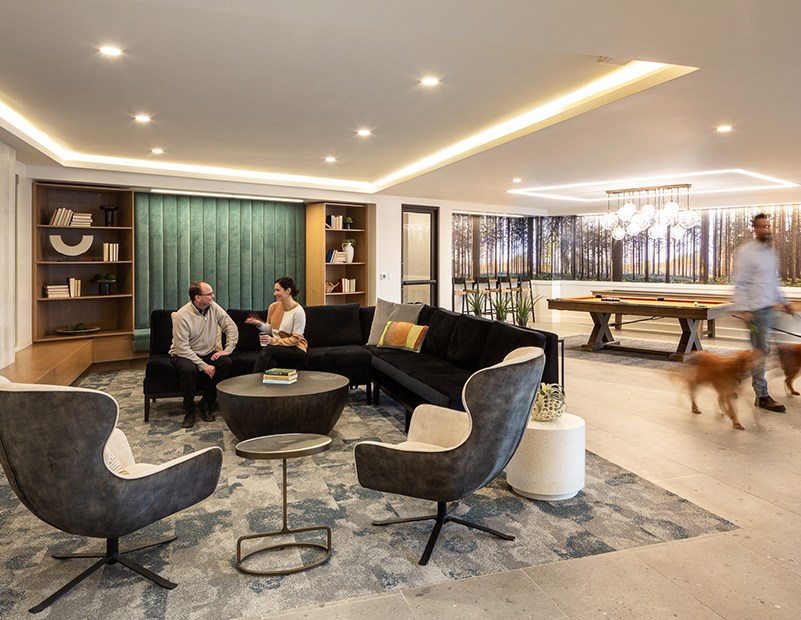
This does not require a large or high-tech amenity package. Cafés, shared lounges, collaboration areas, outdoor spaces, stairways and even comfortable seating can become little invitations to connect. The strategy starts with understanding how people naturally move through a property and identifying places where design can encourage them to pause or interact.
One idea I find especially interesting is designing for the “accidental hello.” It’s that quick moment when you run into someone you know, stop for a minute, catch up and perhaps learn something you wouldn’t have otherwise. Those interactions may seem small, but they can have a surprisingly big impact on how connected people feel towards one another.
Choice is equally important. Maybe someone wants to collaborate, sit quietly with a laptop, or grab a coffee and talk for 10 minutes. The best shared spaces can support all those experiences without feeling overly programmed.
Make connection part of the business strategy
For commercial owners and developers, these spaces offer value beyond a pleasant environment. Shared spaces that feel comfortable, useful and enjoyable can strengthen the tenant’s experience and create a more compelling leasing story.
When people associate a building with community, energy and positive experiences, this adds value beyond the individual square footage. In a market where tenants have choices, the experience of being in a building can help differentiate one property from another.
I’m seeing a growing recognition that shared spaces need to earn their square footage. Clients are asking better questions about how spaces will be used and whether an amenity provides meaningful value rather than simply checking a box.
Instead of assuming a conference room, lounge, café, or outdoor area has one use, owners and developers can consider how those spaces contribute to the property throughout the day.
Design for the reasons people come together
There’s also an interesting counterbalance happening with technology. As workplaces become more digitally connected, there’s a growing appreciation for physical environments that encourage people to look up from their screens and connect.
Flexibility is a big part of that equation. Tenants don’t necessarily want a space that performs one function all day. They want environments that can shift with them, from focused work in the morning to collaboration in the afternoon and a gathering or event later in the day.
This doesn’t mean designing technology out of the workplace. Technology can support how people use a space, but it shouldn’t become the experience itself.
For owners and developers, thinking about how their shared spaces perform, a few questions can help guide the strategy:
Why would someone want to come here? What does the physical environment offer beyond a desk and Wi-Fi?
Where are people naturally likely to cross paths? Can circulation, coffee areas, lounges, outdoor spaces, or other everyday destinations create opportunities for an accidental hello?
Does the space give people choices? Can someone work independently, collaborate, socialize, or simply pause without the environment feeling overly programmed?
Is the space earning its square footage? Can it shift throughout the day and support different needs rather than serving only one function?
Ultimately, I think tenants look for places that feel human, comfortable and a little bit unique. They want flexibility, but they also want personality, community and opportunities for connection—from planned gatherings to simply an accidental hello over coffee.
For commercial owners and developers, this creates an opportunity to rethink what makes shared space valuable. It might be a welcoming lobby, a great coffee area, access to daylight, comfortable places to work alongside others or flexible spaces that change throughout the day.
The goal isn’t simply to create spaces that look good on a floor plan. It’s to create places people want to be a part of.
When that happens, connection becomes more than a design goal. It becomes part of the tenant experience, part of a property’s leasing story and another reason for people to come back.
Kelsey Loverro is a senior associate and interiors project manager at LRS Architects.
You must be logged in to post a comment.