

Uncategorized


The Price of Air
New York City ponders fair value for right to develop taller buildings.
The Lineup
A number of states have developed green banks as a means to bridge the gap in financing for clean energy retrofit projects, while others are considering it. Following are details on what’s been established so far.
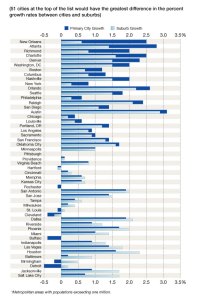
City vs. Suburban Growth: How Does Your Metro Stack Up?
For more on the state of the suburbs and opportunities in replanning them, see “Remaking the Suburbs” in the November 2013 issue of Commercial Property Executive.
The Lineup: California
California voters last year approved game-changing Proposition 39, aimed at financing activities helping the Golden State reduce overall annual energy consumption by at least 40 percent by the year 2020. Over the coming five years, this will entail a total of as much as $550 million pumped into a new Clean Energy Job Creation Fund. As the fund would be dedicated to job-creating activities that boost energy efficiency or generate sustainable power, it would likely capitalize a proposed state green bank still in the conceptual discussion stage – and potentially consolidating several of California’s many energy finance programs under one…
The Lineup: Alaska
After Alaska’s legislature spent much of two years structuring a revolving energy efficiency loan facility, Gov. Sean Parnell signed legislation last year establishing a new loan-participation fund to be administered by the state’s development finance corporation, the Alaska Industrial Development and Export Authority (AIDEA). The Sustainable Energy Transmission and Supply (SETS) development fund’s initial capitalization is $125 million, appropriated from state revenues. Eligible projects include commercial building energy retrofits as well as clean-energy generation projects. When SETS loans directly to property owners or other project sponsors, it will typically fill capital stack gaps while covering as much as one-third of…
The Lineup: Hawaii
In May, the Aloha State’s legislature passed a bill authorizing an innovative structure for financing commercial and residential energy-efficiency equipment upgrades and on-site generation installations with low-cost debt through a Green Infrastructure Loan Program. It involves investment-grade bond financing – credit-enhanced through Hawaii’s clean-energy systems benefit charge (a dedicated utility surcharge) – along with on-bill repayment capabilities. As interest payments on the green infrastructure bonds come from loan payments by participating businesses – via the dedicated surcharge – they should command triple-A ratings, translating to low-interest loans for retrofits and renewable generation projects. And the bonds don’t entail a general…
The Lineup: Vermont
Gov. Peter Shumlin in June signed legislation establishing a pair of energy-efficiency loan participation programs, along with a related loan-guarantee program to be administered by the Vermont Economic Development Authority (VEDA). VEDA can borrow as much as $10 million from Vermont’s State Treasury to fund activities associated with the new Vermont Clean Energy Loan Fund, which aims to facilitate 90 percent funding. The Commercial Energy Loan Program and Small Business Energy Loan Program allow VEDA to lend as much as 40 percent of project costs for energy retrofits or on-site generation at non-residential properties. Participating banks and other lenders are…
You must be logged in to post a comment.