
PropertyCon Special Report: What’s Next for Office Management?
In a rapidly changing industry, adaptation and flexibility will be crucial.
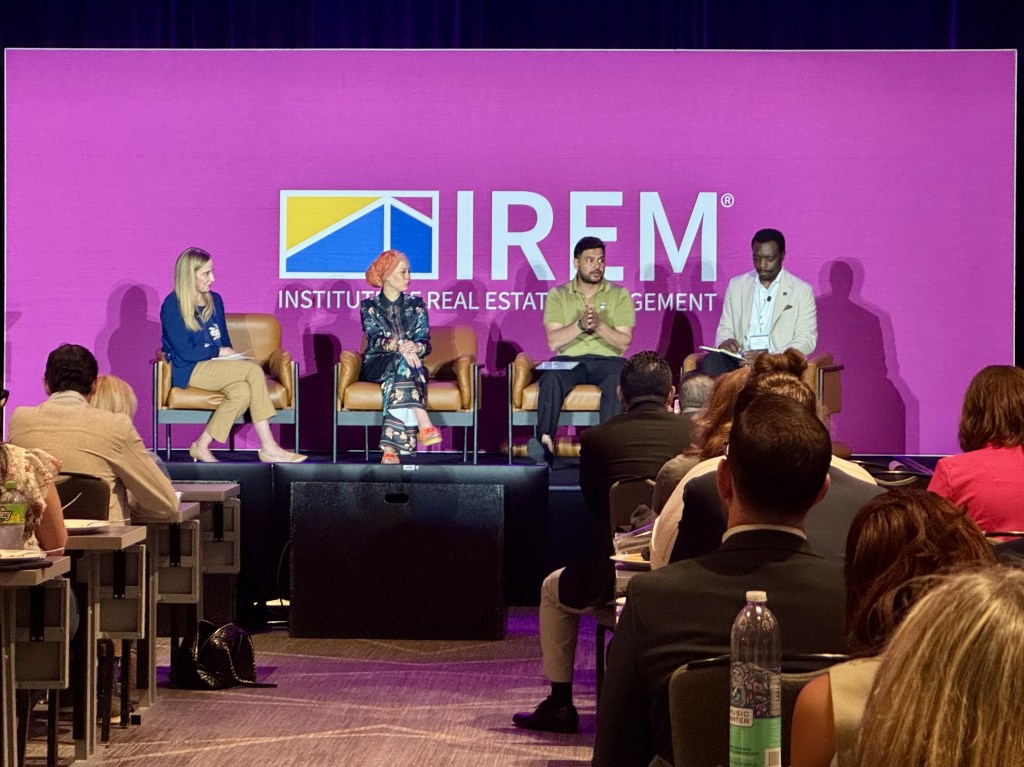
At the Institute of Real Estate Management’s PropertyCon conference in Austin, Texas, speakers and panelists offered insights into the changing world of office property management and what the future holds for the field.
Patty Nooney, a former executive of CBRE and Avison Young, gave a talk called the “Future of Office,” where Nooney noted the challenges the industry is facing in attracting tenants to fill their space. In the post-Covid landscape, it can be a challenge to incentivize workers to make the commute to their office building.
“We’re no longer building operators,” Nooney said. “We are now experience curators.”
READ ALSO: Why the Future of CRE Should Include Reverse Mentoring
Tenants want an experience in the office that they cannot get at home, she argued. For operators, this means that amenities like fitness centers with instructors, relaxation rooms and outdoor gathering spaces with internet connectivity are crucial.
There’s also been a shift towards spec suites and shorter leases, reflecting the desire for flexibility in the market. Even with potential penalties, tenants want the ability to downsize, relocate and adapt quickly to business changes, especially in the world of hybrid work. Still, differentiation from competition is key.
“It’s very important to have modern spaces ready to go, looking at what size space is popular in your immediate area,” she said. “And you build the spec suites of the size that three other buildings don’t have.”
Repositioning office assets
Owners and operators, Nooney said, have four options for moving forward with their office properties:
- Upgrade and renovate existing buildings
- Reconfigure space
- Recapitalize
- Repurpose
While modernizing amenity and tenant spaces can help with adapting to market demand, some office assets will face no other choice but to reposition in some way. This could come in a conversion to multifamily or a transformation into a mixed-use property.
In a session on managing medical and life science properties, for example, speakers noted how certain office buildings may be capable of using existing suites for medical office tenants, though this may come with its own set of challenges.
“They are constantly having patients,” noted Christie Clenney, senior property manager at Remedy Medical Properties. “It’s not like an office where they come, they go to work, they leave for lunc, and they come back. Your elevator usage is going to go up.”
Other considerations include whether elevators can fit a gurney for medical emergencies or the need to have more frequent fire drills to comply with regulations for medical properties. While it may be tempting to fill vacant office space with medical tenants, Clenney added, sometimes the additional costs required can be too high to justify.
The continuing importance of sustainability and energy efficiency
The relationship between property manager and sustainability and energy efficiency is continuing to evolve, according to the speakers in a panel discussion on global property management perspectives.
Increasingly, tenants will demand real-time insights into a building’s energy consumption, water usage and emissions, and they will not be satisfied by monthly or quarterly reports, said Patrick Katabua, managing director at KATAFRICA Strategic Solutions.
Additionally, Muhammad Jawad, founding president of the IREM United Arab Emirates chapter, argued that making buildings adaptable to the changing climate will be crucial moving forward, especially in areas susceptible to extreme weather events like floods or fires. Meeting commonplace energy efficiency standards will no longer be enough to satisfy market demand for climate-friendly assets.
“We have been (saying), ‘Let’s change the bulbs, let’s go for the LEED certifications,’” Jawad said. “I think that chapter is about to be closed or is closed.”
You must be logged in to post a comment.