


Navigating Opportunity, Risk as 2025 Winds Down
As prices reset, it's important to pick your spots and your capital stack wisely.

As we head into the final stretch of 2025, the commercial real estate industry stands at a pivotal moment. After several years of upheaval—from pandemic disruptions to aggressive Federal Reserve rate hikes and lasting shifts in how people live and work—the sector is entering a new phase.
For real estate investors, the picture is mixed: Opportunities are emerging as prices reset, but elevated borrowing costs and macro uncertainty continue to challenge traditional investment assumptions. This is a market that will reward patience, precision and adaptability.
Interest rates remain the single biggest force shaping real estate returns today. The Federal Reserve cut its benchmark rate to 3.75 percent to 4.00 percent in October 2025—the second cut of the year. Yet despite these moves, the central bank has indicated that there may not be further rate cuts this year. After that announcement, the US Treasuries actually ticked up a bit. The 10-year Treasury yield is still hovering around 4.1 percent, keeping financing costs high compared to the ultra-cheap capital that fueled the last real estate boom.
LIKE THIS CONTENT? Subscribe to the CPE Capital Markets Newsletter
For investors, that means the math has changed. Commercial mortgages are still running 200 to 300 basis points above Treasuries, and borrowing costs that once seemed extraordinary are now the “new normal.” Underwriting assumptions, return expectations and leverage models all require recalibration.
The ripple effects are significant. Nearly $1 trillion in commercial real estate loans will mature over the next few quarters, forcing property owners to refinance at much higher rates. That refinancing wave will expose overleveraged deals and distressed assets—creating potential openings for well-capitalized buyers to step in with rescue financing or acquire properties at discounted valuations.
The market has split sharply across property types, with clear leaders and laggards.
Sector snapshot: winners and losers
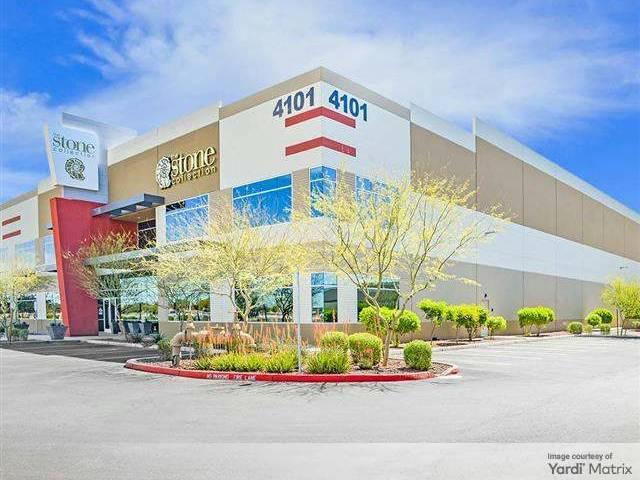
Industrial and logistics properties continue to lead the pack. The ongoing expansion of e-commerce— now projected to reach $7 trillion globally in 2025—has fueled relentless demand for warehouses and distribution hubs. Rents are more than 60 percent higher than pre-pandemic levels and have held firm even as vacancies tick up slightly. While cap rates have compressed, long-term fundamentals remain strong.
Multifamily housing has also proven resilient. Even with a surge in new supply, underlying demand remains robust, particularly in the affordable housing segment. Expanded Low-Income Housing Tax Credits and demographic pressures provide a solid foundation, though investors must navigate rent control measures and high construction costs.
Senior housing and health-care real estate are emerging as compelling opportunities. With roughly 64 million baby boomers between the ages of 61 and 78, demand for assisted living, memory care and medical facilities is growing faster than supply. These assets offer exposure to long-term, necessity-based income streams that tend to hold up well in inflationary environments.
Office properties remain the most challenging segment. National vacancy rates are at record highs above 20 percent, and many older Class B and C buildings face an existential question: What comes next? Still, the picture isn’t uniformly bleak. High-end, amenity-rich Class A spaces in top locations are seeing vacancies near pre-pandemic levels at around 8 percent. For strategic investors, this creates a “barbell” opportunity—either acquire distressed assets for conversion and repositioning or buy prime properties at temporarily depressed pricing.
Retail has surprised on the upside. While e-commerce keeps growing, well-located experiential retail, grocery-anchored centers and entertainment-focused venues are performing strongly. The key is selectivity—understanding which formats serve enduring consumer behaviors versus those in secular decline.
Capital markets and liquidity
Deal activity is recovering. Transaction volume is expected to climb about 10 percent in 2025 to roughly $437 billion—still below pre-pandemic averages but trending higher. The gap between buyers and sellers has narrowed as expectations reset, though overall liquidity remains tighter than in past cycles.
For real estate investors, this has important implications. Direct ownership continues to offer control and tax advantages, but it’s become harder to exit quickly. Public REITs, while liquid, still trade at steep discounts to underlying asset values.
Meanwhile, private credit is filling the lending void left by traditional banks. Non-bank lenders are active, but their capital comes with higher rates and tighter terms. For investors with patient capital, lending through mezzanine debt or preferred equity structures can offer attractive risk-adjusted returns with meaningful collateral protection.
Institutional appetite also remains strong. Roughly 82 percent of wealth managers plan to increase private real estate exposure over the next three years, suggesting continued competition for quality assets—and a valuation floor for best-in-class properties.
Tax and structural advantages
Real estate investors continue to benefit from a favorable tax environment. The 2025 tax package preserved 1031 exchanges and bonus depreciation, both powerful tools for deferral and long-term wealth preservation.
In addition, Opportunity Zones and expanded Low-Income Housing Tax Credits remain in place, supporting tax-advantaged strategies for investors willing to commit to longer holding periods and compliance requirements.
Finding the right entry points
Are valuations attractive? In many cases, yes. Cap rates have widened from historic lows and appear to be stabilizing. For quality assets in strong markets, spreads over borrowing costs are finally reasonable again —allowing levered returns to pencil out more attractively than in recent years.
Historically, the best returns tend to come from acquisitions made shortly after cap rates peak. If borrowing costs decline modestly from here, as many analysts expect, now may represent a smart window to begin deploying capital selectively.
That said, caution is still warranted. Uncertainty around inflation, trade policy and geopolitics could easily disrupt the “soft landing” narrative that underpins current optimism.
Strategy for 2025 and beyond
Sophisticated investors are navigating this market by leaning on a few guiding principles:
-
- Prioritize quality and location- Flight-to-quality remains the dominant trend. The best-located, highest-quality assets continue to outperform.
-
- Use conservative leverage- Interest rate volatility isn’t going away soon. Conservative capital structures protect both flexibility and downside.
-
- Seek inflation protection- Properties with shorter leases or built-in rent escalations offer better hedges against inflation than long-term fixed leases.
-
- Diversify intelligently- The commercial real estate cycle is increasingly segmented. Sector and geographic diversification are key.
-
- Pursue value-add plays- Dislocation breeds opportunity. Repositioning or improving underperforming assets can drive returns independent of macro trends.
The bottom line
Commercial real estate in late 2025 is neither an easy market nor a broken one. The speculative excesses of the zero-rate era have faded, replaced by a more disciplined, fundamentals-driven landscape.
For real estate investors with patience, long time horizons and operational savvy, the opportunities are real. The key is to stop comparing today’s deals to yesterday’s metrics. A 6 percent cap rate on a quality asset may now represent a genuinely strong, risk-adjusted return.
Success in this cycle will depend less on financial engineering and more on insight, execution, and adaptability. Those who recognize this shift—and lean into it. Use conservative leverage. Interest rate volatility isn’t going away soon. Conservative capital structures protect both flexibility and downside are likely to emerge as the next generation of market leaders.
Stephen A. Sobin is president & founder of Select Commercial Funding LLC, a nationwide commercial mortgage brokerage company. He is a member of the Inter-Capital Group and the Commercial Finance Broker Network, both nationwide alliances of commercial mortgage professionals.






You must be logged in to post a comment.