


Manhattan’s Office Sector Defies National Slowdown
The borough remains a benchmark for core market fundamentals, Yardi Matrix data shows.
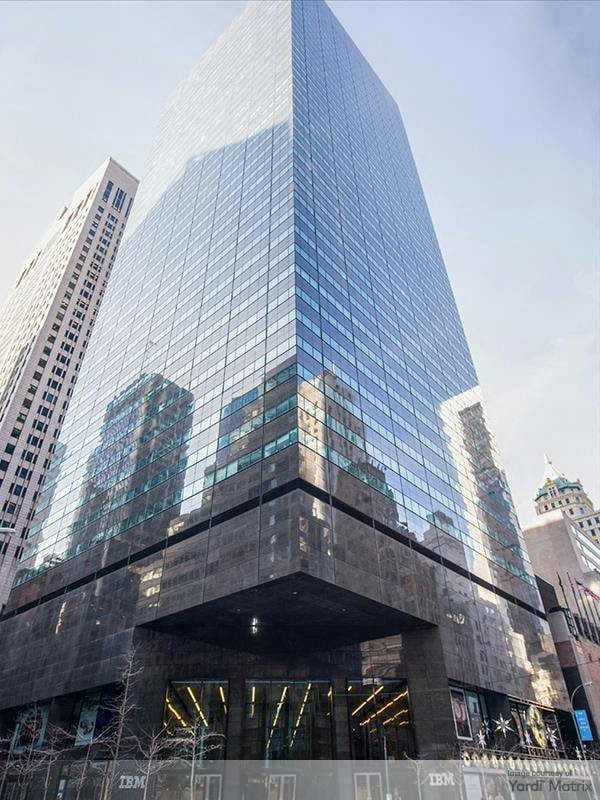
As of September, Manhattan’s office sector continued to defy national trends, Yardi Matrix data shows.
While many U.S. metros are grappling with elevated vacancies and a slowdown in space absorption following years of heavy construction, the borough’s vacancy rate remained below the national average.
The nation’s biggest office metro also continues to lead in office investment volume, sale prices and rents. Meanwhile, ongoing large-scale development activity signals enduring demand for traditional and amenitized office space.
Notably, 2025 brought another major addition to Manhattan’s pipeline—a more than 1 million-square-foot project—underscoring the market’s long-term resilience and stability.
Strong investor appetite keeps Manhattan on top
Investor appetite in Manhattan surged, marking a 111.9 percent year-over-year increase as the metro recorded $5.5 billion in sales, with properties trading at $530 per square foot—the highest average among the nation’s top 25 office markets.
Other gateway metros with high prices were San Francisco ($309 per square foot) and Los Angeles ($295 per square foot), while Chicago maintained the most affordable average at $61 per square foot.
Manhattan also retained its leading position for office investment volume nationwide. Other gateway markets that followed included Washington, D.C. ($3.2 billion), Los Angeles ($2 billion), and Boston ($1.1 billion), while on the opposite end was Seattle ($506 million).
One of the largest office transactions was RXR’s $1.1 billion purchase of 590 Madison Ave. The company’s intention to buy the asset was first revealed in May, and the sale officially closed in August. The deal marked the first office sale in New York City to surpass the $1 billion threshold in three years. The State Teachers Retirement System of Ohio, which owned the asset since 1994, sold the 1 million-square-foot high-rise for $1,048.54 per square foot.
Another significant transaction was the $572.3 million acquisition of 1177 Avenue of the Americas, which closed in September. Norges Bank Investment Management acquired the 1 million-square-foot Plaza District building from the California State Teachers’ Retirement System and Silverstein Properties, at a considerable discount compared to the 2007 sale price of $1 billion.
Big projects sustain steady pipeline
As of September, Manhattan’s office sector had 5.8 million square feet of competitive space under construction across 10 properties, representing 1.2 percent of its existing stock—above the national average of 0.8 percent. This marked the second-largest pipeline among gateway cities, with Boston maintaining the top spot at 6 million square feet of competitive space underway. In contrast, Washington, D.C. had the smallest pipeline, with only 761,971 square feet.

The largest office project in the metro as of September was the $3 billion, 2.5 million-square-foot 270 Park Ave. JPMorgan Chase’s high-rise broke ground in 2020, topped out in 2023, and opened on October 20 of this year as the company’s new global headquarters. Also known as JPMorgan Chase Tower, the property is now the sixth-tallest building in the city and will accommodate 10,000 employees of one of New York City’s largest employers.
The second-largest office development is 70 Hudson Yards, a 1.1 million-square-foot skyscraper developed by Related Cos. Construction began this year, with completion scheduled for late 2028. In May, Deloitte signed a lease for 800,000 square feet at the 60-story project, which is part of the Hudson Yards neighborhood.
Year-to-date through September, developers completed three properties totaling 440,649 square feet, marking a 68.4 percent year-over-year drop in office deliveries. As demand for office space softens and many markets continue to absorb new supply delivered over the past decade, Yardi Matrix recorded no construction starts in Manhattan.
Manhattan’s office sector shows steady leasing activity
The borough’s office vacancy rate stood at 12.8 percent as of September, representing a 400-basis-point year-over-year decline—the largest decrease among the top 25 office markets.
Manhattan’s rate remained below the national average of 18.6 percent. Among gateway markets, Miami recorded the lowest rate, also at 12.8 percent, while elevated values persisted in San Francisco (26.7 percent) and Seattle (27 percent).
READ ALSO: Most Popular Return-to-Office Policies Surprise Experts
Asking rates for Manhattan office space averaged $66.27 per square foot—well above the national average of $32.79 per square foot—keeping the metro the priciest office market in the country. Other expensive averages included San Francisco ($64.17 per square foot) and Miami ($56.45 per square foot), while Chicago remained one of the most affordable, at $28.15 per square foot.
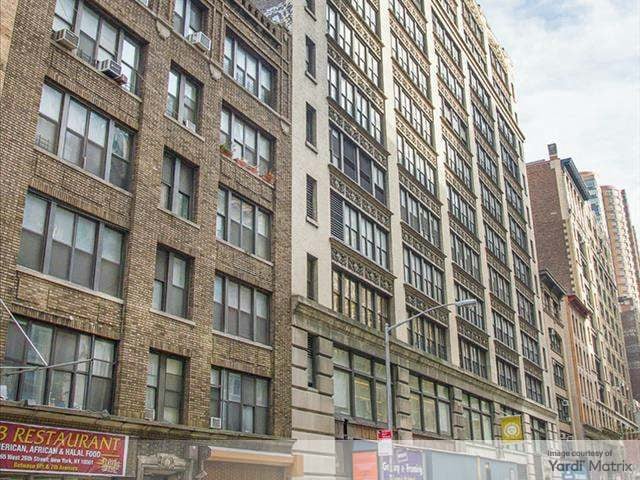
Notable leasing activity included Swedish Institute Inc.’s 17,610-square-foot deal at 151 W. 26th St. The agreement expands the tenant’s footprint to more than 57,000 square feet within the 197,336-square-foot building owned by Rosen Equities.
In September, Brookfield Properties extended the ground lease for its 9.4 million-square-foot office and retail complex in Lower Manhattan. The new lease, extended through 2119, is expected to generate $1.5 billion in revenue for the City of New York and the Joint Purpose Fund.
Coworking’s strong foothold concentrated in Manhattan
As of September, Manhattan’s coworking sector comprised 12.1 million square feet across 287 locations—the largest inventory in the nation, according to CoworkingCafe. The borough’s share of coworking space accounted for 2.4 percent of total leasable office space, above the national average of 2.1 percent and on par with Los Angeles and San Diego.
Other gateway markets followed with smaller inventories: Chicago (8.8 million square feet), Los Angeles (7.2 million square feet), and Washington, D.C. (7.1 million square feet).
The list of Manhattan’s top five flex office providers remained unchanged, with WeWork maintaining the largest footprint, totaling 2.3 million square feet across 28 locations. Other leading operators included Industrious (1.4 million square feet), Grand Central Offices (848,640 square feet), Studio by Tishman Speyer (753,350 square feet) and Regus (697,950 square feet).
WeWork recently added 55,000 square feet to its portfolio in the metro. In August, the company signed a lease at 245 Fifth Ave., replacing an expiring 108,000-square-foot lease at another location. The new space is slated to open in 2026 and marks WeWork’s second New York City lease since emerging from bankruptcy last year.



You must be logged in to post a comment.