


Industrial Report: Industrial Market Moves Closer to Balance
Industrial fundamentals are stabilizing as e-commerce and large logistics demand support new construction.
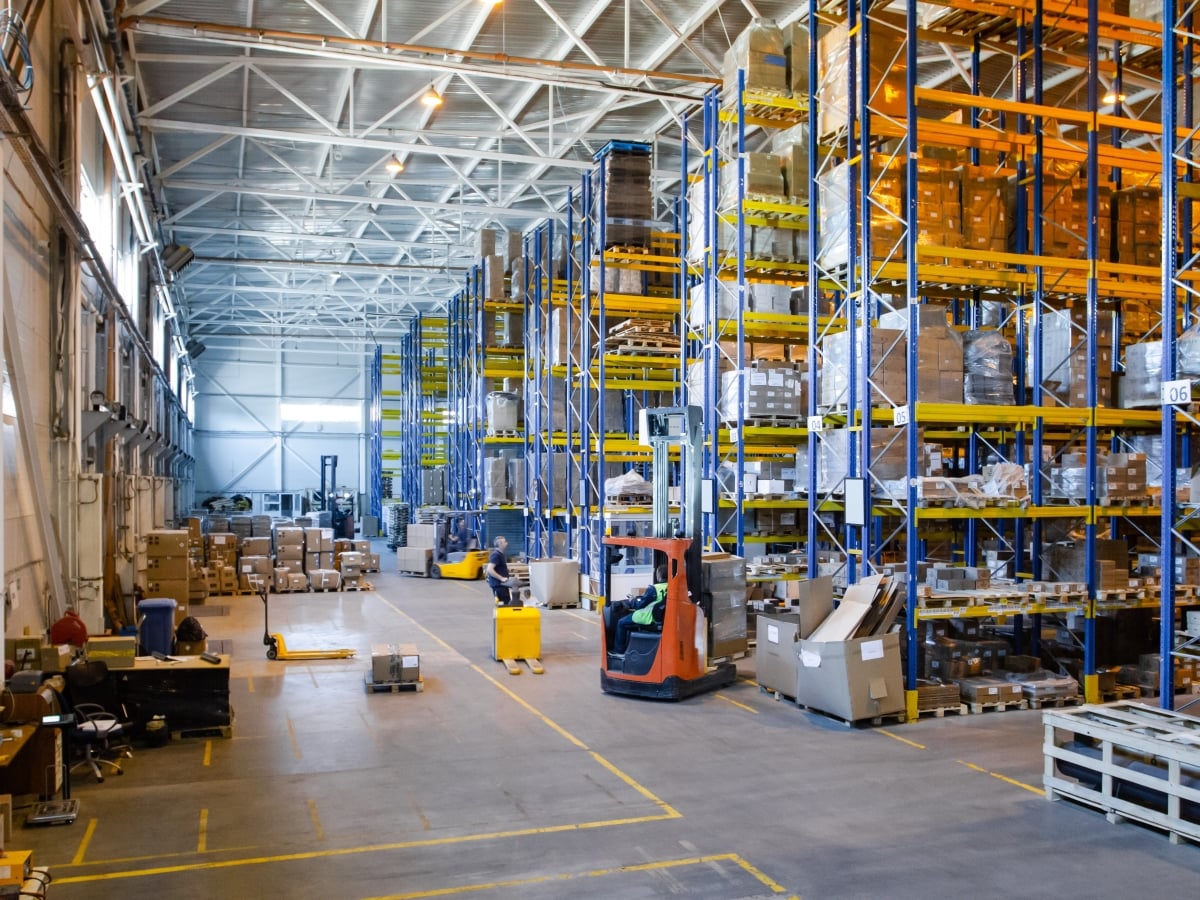
The U.S. industrial market is moving toward a more balanced phase after several years dominated by record development and rapid rent growth. Demand has remained resilient despite tariffs, economic uncertainty and higher energy costs, while developers have become more selective as rising construction costs, slower rent gains and elevated vacancy temper speculative activity.
At the same time, industrial development is beginning to pick up again. According to Yardi Matrix data, 230 million square feet of industrial broke ground through August, putting 2026 on pace for the largest volume of new starts since 2022.
The composition of that pipeline is also changing. Through August, 49 properties larger than 1 million square feet had broken ground, compared with 37 during all of 2025. Those massive facilities account for more than 32 percent of square footage started this year, the highest share since 2020. E-commerce, third-party logistics and manufacturing demand are supporting the trend, while automation can require more space rather than less.
READ ALSO: How TSMC’s Phoenix Expansion Is Creating a New Industrial Growth Engine
Rent growth holds as market performance diverges
National in-place industrial rents averaged $9.31 per square foot in August, six cents higher than the previous month and up 5.4 percent year over year. Atlanta led major markets with 7.9 percent annual growth, followed by New Jersey and Miami at 7.6 percent each and Dallas at 7.5 percent.
Vacancy held at 9.3 percent nationally, unchanged from July but 60 basis points higher than a year earlier. Conditions remain uneven by market. Seattle illustrates the lingering impact of the supply boom: vacancy has increased 500 basis points over the past two years to 13.6 percent after 44.2 million square feet of new space was delivered since 2020. Development there has since slowed significantly, giving the market time to absorb recent additions.
The premium tenants pay for newly signed leases has also narrowed. Leases executed during the past 12 months averaged $10.19 per square foot, 88 cents above the national in-place average. That spread was $1.43 a year ago and $2.45 two years ago. Still, some markets retain substantial premiums, led by Bridgeport at $3.52 per square foot, Boston at $3.02 and Miami at $2.97.
Large pipelines return as capital remains active
Industrial construction totaled 446.9 million square feet in August, equivalent to 2.1 percent of national stock. Dallas had the largest pipeline at 37.3 million square feet, followed by Phoenix at 31.1 million and Houston at 21.8 million. Phoenix stood out on a proportional basis, with construction equal to 6.8 percent of inventory.
Investment activity also remained substantial—industrial transactions reached $60.5 billion through August at an average of $138 per square foot. Dallas led volume with $4.1 billion, while Los Angeles recorded $2.6 billion and an average sale price of $297 per square foot. The market’s largest transaction was Netflix’s $400 million purchase of CBS Studio Center in Studio City.

You must be logged in to post a comment.