


Detroit Retail Demand Strengthens, Investment Slows
The metro’s retail market recorded falling vacancy and accelerating rent growth, according to the National Association of Realtors.
Detroit’s retail market strengthened in the third quarter of 2026, with improving demand driving vacancy lower and rent growth accelerating, according to recent reports from the National Association of Realtors. Investment activity remained subdued, however, as sales volume declined both quarter-over-quarter and year-over-year.
The metro ranked third nationally for trailing 12-month retail net absorption, with approximately 2 million square feet, NAR’s November Commercial Real Estate Market Insights report shows. Dallas-Fort Worth led with 4.2 million square feet, followed by Phoenix with 3 million square feet.
Quarterly net absorption reached 990,390 square feet as of September, reversing the second quarter’s 221,522 square feet of net occupancy losses. The total also marked a 29.1 percent increase from the 767,433 square feet absorbed in the third quarter of 2025.
READ ALSO: Retail Industry Trends in 2026
Trailing 12-month absorption increased 14.3 percent to 2 million square feet from June, when it stood at nearly 1.8 million square feet. The annual comparison showed a more pronounced turnaround, as Detroit had recorded 509,864 square feet of net occupancy losses in September 2025.
Vacancy declines, rent growth picks up
Retail vacancy fell to 4.8 percent in the third quarter, down 30 basis points from June and 60 basis points year-over-year. Inventory expanded only slightly, reaching nearly 264 million square feet. That represented an increase of approximately 147,000 square feet from the previous quarter and 371,000 square feet from a year earlier.
Annual market rent growth accelerated to 1.7 percent through September, up from 0.4 percent through June and 1.5 percent a year earlier. Market rents remained approximately $19 per square foot across all three periods.
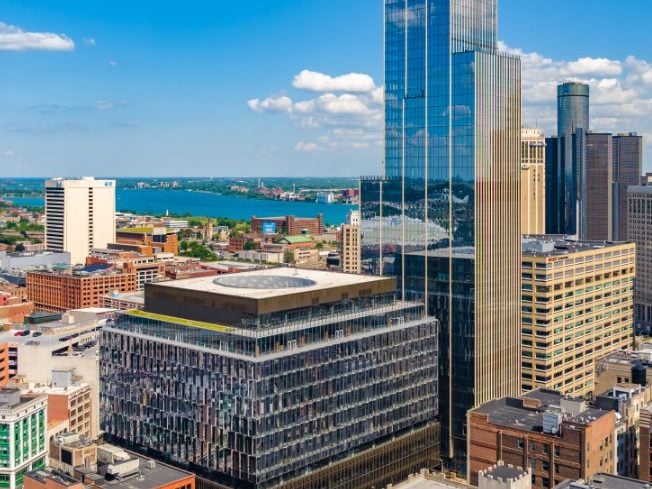
Redevelopment along Detroit’s waterfront could create new opportunities for local retailers. Dan Gilbert pledged $1 billion to establish a nonprofit organization to redevelop the Renaissance Center and East Riverfront area. Plans for the 35-acre district include dedicated space for Detroit-based small businesses, affordable housing and 18 acres of public space, potentially expanding the customer base for nearby stores and restaurants.
Nationally, stronger demand narrowed the gap between retail absorption and deliveries during the third quarter. Vacancy held near historic lows, although new supply continued to outpace demand and rent growth moderated. General retail led absorption, while neighborhood centers, malls and power centers also recorded positive demand.
Sales volume drops despite higher pricing
Detroit retail investment volume totaled $88 million in the third quarter, down 31.7 percent from $128.9 million in the previous quarter. Sales fell 63.6 percent compared with the $241.6 million recorded a year earlier.
Transaction pricing increased to $153 per square foot, up 19.5 percent from the second quarter’s $128 per square foot and 13.3 percent from $135 a year earlier. Changes in the mix of properties sold during each period may have also influenced the overall price increases.



You must be logged in to post a comment.