

CREW Special Report: Using AI in Everyday CRE Practice
What are the best ways to implement the technology for routine tasks? Experts weigh in.
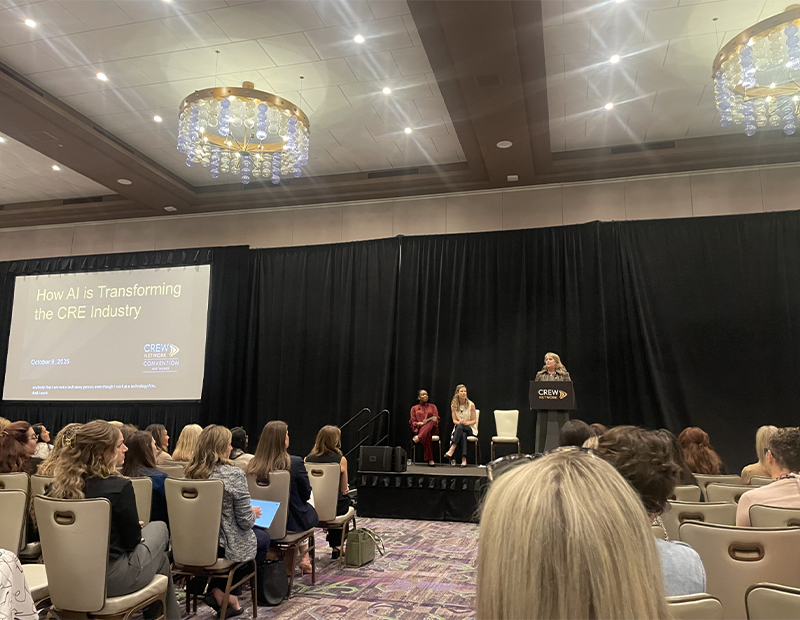
AI has become one of the fastest adopted technologies to date and was a hot topic at the 2025 CREW Network Convention. A discussion led by Dianne Crocker, research director at LightBox and featured other speakers, Yatina Katunga, emerging technology analyst and product owner with Cushman & Wakefield and Vered Tal, head of product, global realty at Amazon, shared insights on how using AI in the commercial real estate industry can be helpful, streamline processes and become second nature as the software continues to be normalized.
Crocker started off the mega session on a light note, talking about her experience with AI and prefacing that she is not a tech person. In a short period of time, Crocker grew from very rarely using AI, occasionally plugging in a prompt, to constantly having ChatGPT opened on her second monitor, sharing that she personally has found that it improves the work that she does daily.
AI and repetitive tasks
The use of AI in commercial real estate has evolved. On the commercial side, using this technology is a way to streamline processes, enhance learning for the user and the software, as well as identify trends and predictions you may have missed otherwise.
Katunga said in the session that using AI makes the most sense for daily and repetitive tasks. The mundane tasks can be streamlined with the use of AI technology. Her example for using this in real estate was for lease brokers and lease data entry.
“It isn’t about replacing expertise, it’s about building solutions that can help our users apply their expertise across a broader scope of work,” Tal expressed in the session.
By using generative AI for these repetitive tasks, the software will continue to learn and improve itself based on data and trends. The more data services like ChatGPT, Copilot and others are fed, the better they will perform and give people the opportunity to use their thinking where it matters.
The more unbiased data the technology interacts with, the better it will be at predicting, modeling, optimizing and providing real-time risk management. For leasing brokers, this can help with extracting key points in lease agreements, predicting leasing season trends and even looking toward the future to plan out a strategy.
Integrate it into the system
Data and documents are at the core of commercial real estate and this is where AI can really help optimize processes. Both Tal and Katunga expressed that when using AI, the idea needs to be well-integrated and embedded into processes to work well. Just placing it on top of a process doesn’t work as “adoption is everything”, as Tal put it. Katunga used a cake analogy to describe the integration process. It is not a cake topping, as AI needs to be baked into the cake to work to its full potential.
Katunga also recommended being as straightforward as possible. Narrowing the noise of your prompts and cutting the fat will provide the best results. AI holds a lot of opportunities across professional and personal uses, from creating a market survey, to taking notes and brainstorming ideas. “You don’t have to build the tool, but spot the opportunity,” Katunga said



You must be logged in to post a comment.