


Charlotte Office Sales Rise Amid Slow Development
See how the key metrics are performing compared to other major metros.
Charlotte’s office sector presented a mixed picture through July, according to Yardi Matrix data.
Investment increased substantially compared to the same period last year, generating a total dollar volume that ranked fifth among comparable markets. Pricing also surpassed that of several peers, placing the metro ninth in the U.S.
Although construction activity remained above the national average relative to existing inventory, the Queen City’s pipeline ranked in the bottom half of the peer set. Deliveries dropped considerably, in line with broader office building trends, declining by more than 90 percent year-over-year. Meanwhile, vacancies increased significantly, with the rate rising 180 basis points over the past 12 months.
Investment picks up pace at high prices
Charlotte’s office sales totaled $595 million in the first seven months of 2026, up 80.8 percent over the year. Among peers, the Queen City outperformed Nashville, Tenn. ($532 million) and Tampa, Fla. ($188 million). Austin led among similar markets with $1.4 billion in transactions.
Charlotte office buildings sold at $237.25 per square foot, above the $197.97 per square foot national average. The value placed the metro on the ninth spot in the U.S., surpassing the per-square-foot figures recorded in San Diego ($208.40), Atlanta ($157.54) and Tampa ($153.94). Nashville ranked third in the nation, with properties trading at $465.24 per square foot.
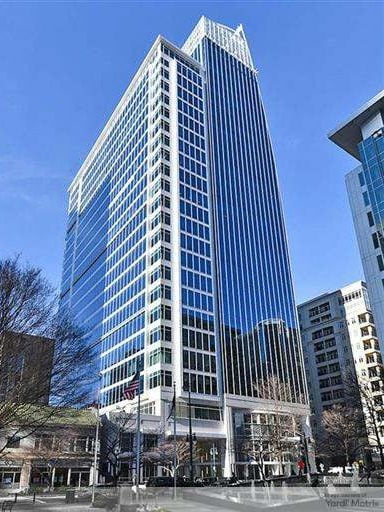
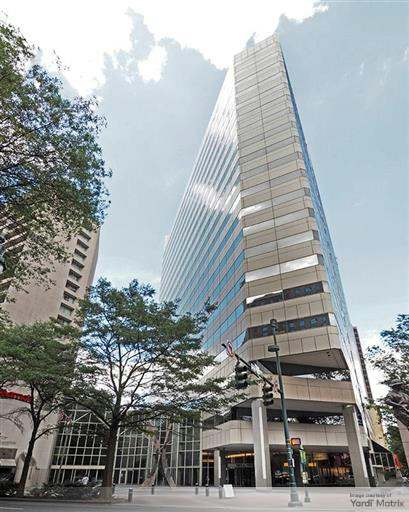
The largest office sale in the metro was Cousins Properties’ $317.5 million acquisition of 300 South Tyron, a 638,000-square-foot office building in the city’s central business district. Barings, which is also the property’s anchor tenant, sold the asset in February.
In another notable deal, Anchor Health Properties paid $59.5 million for Azalea Building, a 147,050-square-foot medical office asset in the SouthPark submarket. The Harris Land Co. sold the property that has been anchored by Novant Health for nearly two decades.
Charlotte’s limited pipeline mirrors U.S. slowdown
As of July, Charlotte’s office development pipeline comprised 590,754 square feet of competitive space, representing 0.7 percent of the existing stock—above the national average of 0.4 percent. The Queen City ranked 14th in the U.S. for pipeline size.
San Diego lead among similar markets at 1.3 million square feet, followed by Austin (1.2 million square feet). Meanwhile, Charlotte surpassed Atlanta (380,000 square feet) and Tampa (238,000 square feet).
When also taking into account planned projects, the Queen City’s share reached 1.7 percent—above the 1.2 percent national average and on par with San Diego, Phoenix and Tampa.
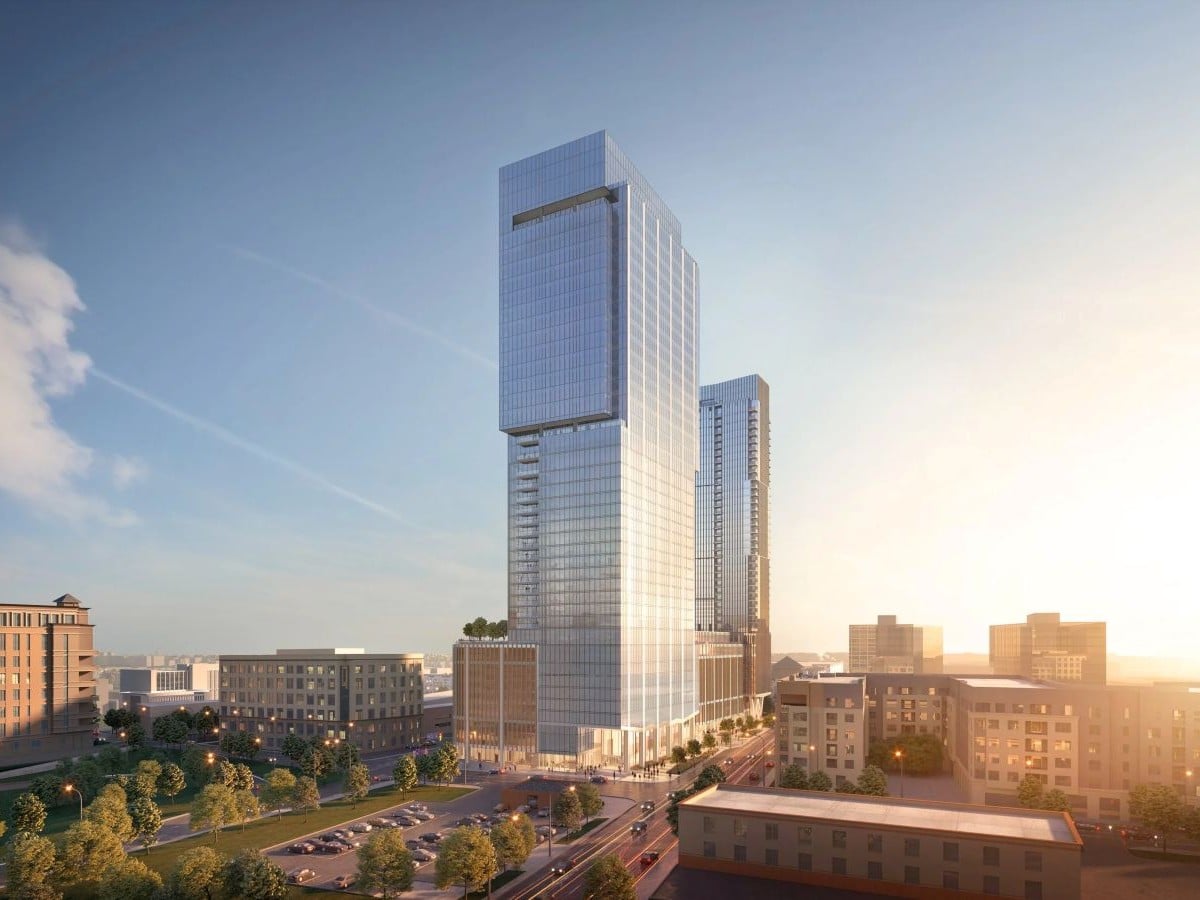
The largest project currently underway is the second tower of Queensbridge Collective, a $750 million, mixed-use project in the Midtown South End submarket. Riverside Investment & Development broke ground in February 2026 on the 43-story high-rise estimated to come online in 2028. Upon delivery, it will include 356,000 square feet of office space across the top 17 floors and 346 multifamily units. Moore & Van Allen, the largest law firm in the city, leased 206,000 square feet at the property.
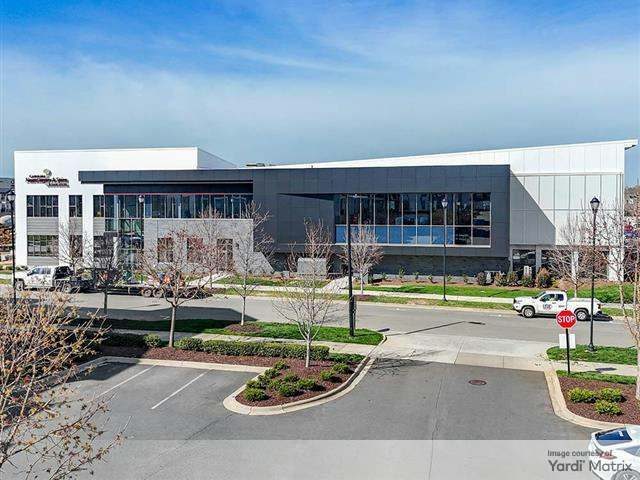
Year-to-date as of July, Charlotte developers completed only a 71,835-square-foot project, marking a 93.2 percent year-over-year drop in office deliveries. Carolina Sports Medicine Center came online in January at 11415 Golf Links Drive and developer Taylor Capital is already working on a $30 million, 30,210-square-foot second phase.
Charlotte vacancy rises, rents remain competitive
Charlotte’s office vacancy rate clocked in at 19.5 percent in July, above the national average of 17.7 percent. The index marked an 180-basis-point increase year-over-year, placing the metro eight among the U.S. markets with elevated figures.
Austin’s 24.5 percent rate also stood out among the highest rates nationally and in the peer set, followed by San Diego (23.1 percent). Lower values among similar markets were recorded in Orlando, Fla. (17.4 percent), Phoenix (16.9 percent) and Tampa (14.3 percent).
Average listing rates for Charlotte office space stood at $32.2 per square foot in July—below the $33.6 per square foot recorded on average nationally. Peer markets with more affordable rents included Nashville ($31.88 per square foot), Denver ($30.51 per square foot) and Tampa ($30.16 per square foot), while more expensive rents were registered in Austin ($46.77 per square foot) and San Diego ($42.94 per square foot).
A significant leasing deal closed in May, when Capital Group committed to nearly 197,000 square feet for 16 years at One Independence Center, a 565,694-square-foot office building in Charlotte’s central business district. The space will serve as the firm’s East Coast headquarters. Crescent Communities owns the Class A, 20-story property at 101 N. Tryon St.
Coworking sector maintains its footprint
Charlotte’s coworking sector comprised 1.8 million square feet across 116 locations as of July, according to CoworkingCafe. The footprint accounted for 2.2 percent of the metro’s leasable office inventory—below the 2.4 percent national average.
Among peers, Charlotte’s share was on par with Orlando’s and outperformed Austin’s (2.1 percent). Nashville led all similar markets with a 3.3 percent coworking share, followed by Raleigh-Durham, N.C. (3.2 percent) and Atlanta (2.8 percent).
Regus remained the largest flex office operator in Charlotte, with 258,991 square feet across 13 locations. Companies that followed included Souder Properties (151,844 square feet), WeWork (96,916 square feet), Spaces (82,200 square feet) and CoCoTiv (76,500 square feet).


You must be logged in to post a comment.