


AI’s Early Impact on CRE
It won’t transform the industry overnight, but signs of change are already there, writes Ryan Severino.
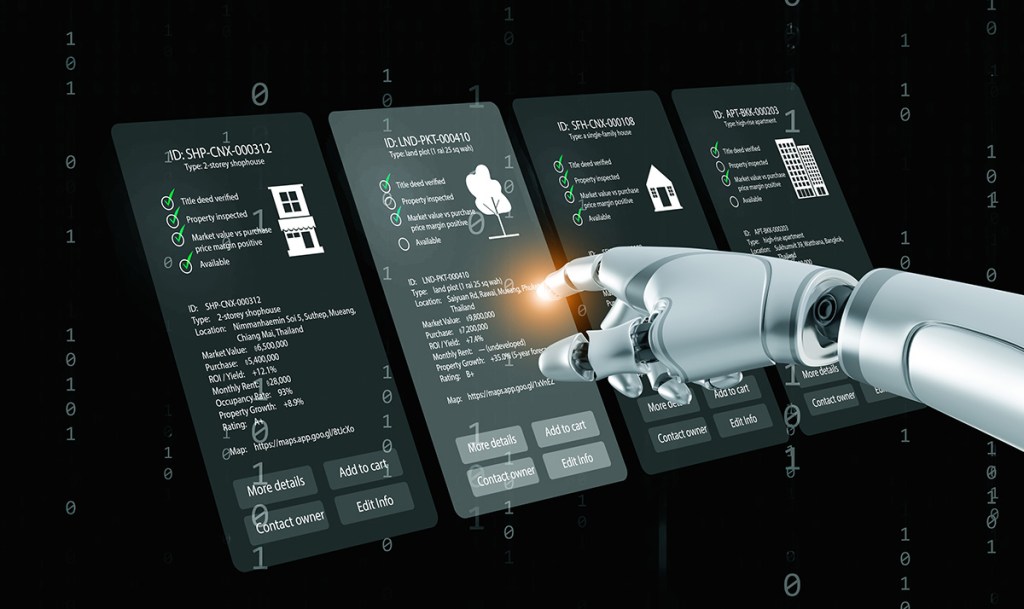
Many people would like to link artificial intelligence utilization directly to results they see in the commercial real estate market, looking for evidence of outsize gains. Unsurprisingly, at this early stage of adoption, they are struggling to do that effectively. Thankfully, there’s a cleaner way to think about AI’s potential impact on CRE. Start with the places where recent productivity gains already show up in the economy, connect those gains to CRE and then look for evidence of AI’s impact. This keeps the discussion grounded in observable changes and avoids forcing every conclusion through an AI lens. The recent productivity backdrop looks constructive, even if the improvement remains uneven. Output per hour continues to move higher as companies work through higher labor costs, mixed demand and rapid technology adoption. But where do we most directly see the connection to CRE? Two notable examples are already showing up.

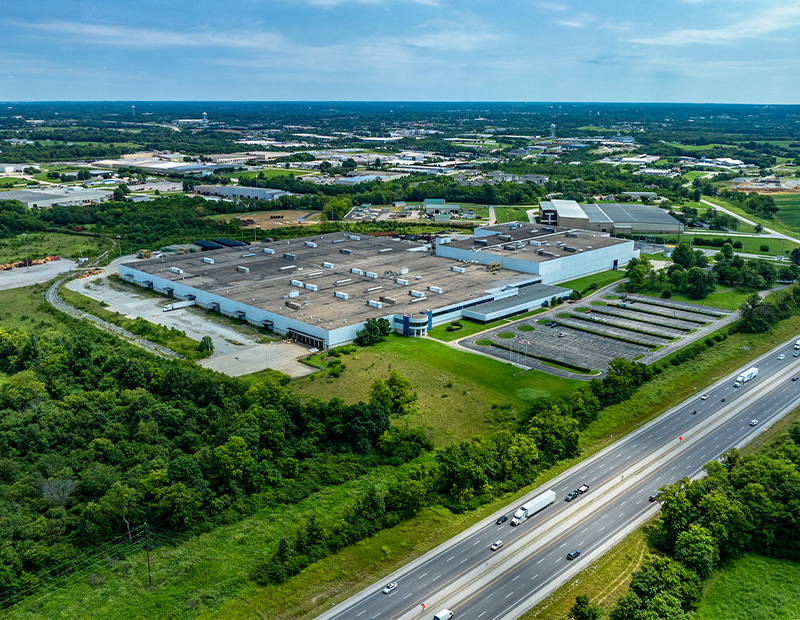
First, manufacturing, somewhat shockingly, gives us one of the clearest recent signals. Manufacturing productivity has struggled to grow over the last two decades, making it an unlikely place to look for AI’s impact. Yet recent data shows manufacturers producing more while keeping labor input roughly contained. Durable manufacturing looks particularly relevant because it ties directly to machinery, equipment, electronics, infrastructure and other capital-intensive parts of the economy. For CRE, this points directly to industrial, including advanced manufacturing. The industrial story becomes more tied to cutting-edge technology and processes. And these more productive techniques need better, newer facilities. The building becomes part of the productivity equation. A generic facility and a modern industrial asset built for advanced production and sophisticated logistics have very different value propositions.
Ultimately, if we want to understand the impact of AI on CRE, we must follow the productivity signal, at least for now.
Productivity growth raises the value of operational capability. It favors assets that help tenants produce more, move and distribute goods faster, reduce labor friction and connect more efficiently with suppliers and customers. But exactly how was this accomplished? Manufacturing productivity is accelerating due to increased adoption of advanced technologies such as AI, robotics and digital simulation, alongside massive capital investments in software and R&D. This follows decades of only modest improvements in many of these technologies. This mirrors the pattern from the 1980s through the 2000s when adoption of computers and telecommunications technology caused manufacturing productivity growth to accelerate.
Where else should we look for an impact? Data centers themselves might show the clearest connection. Growth depends on land, power, advanced equipment, logistics and construction capacity. Vacancy rates remain low, demand remains strong and new supply faces real constraints. But where does AI fit into this? AI is playing a critical role in the design, construction and operation of data centers themselves, particularly as the industry shifts toward high-density “AI factories.” AI is used to optimize layouts, speed up construction and manage complex power and cooling requirements.
AI is playing a critical role in the design, construction and operation of data centers themselves, particularly as the industry shifts toward high-density ‘AI factories.
What about other property types? So far, the data is either inconsistent or it’s possibly too early to make direct connections. This could change as companies redesign workflows around AI and embed the tools more deeply into daily operations. But today, the stronger CRE story sits in manufacturing and data centers. Ultimately, if we want to understand the impact of AI on CRE, we must follow the productivity signal, at least for now. CRE value will increasingly flow to assets that help companies produce more, move goods faster, use labor more efficiently and solve infrastructure constraints. And AI will play a key role in the process over time, across more property types. Industrial and data centers already provide examples to follow.
Ryan Severino is the chief economist & head of research at BGO, where he is responsible for global and regional economic research, analysis and forecasting as well as property market research, insights and forecasting. Additionally, he is an adjunct professor at Columbia University and New York University. Severino holds a master’s degree from Columbia University, a bachelor’s degree from Georgetown University, and is a CFA charterholder.






You must be logged in to post a comment.