


How Alterra Institutionalized Industrial Outdoor Storage
It’s the largest owner, but how long can its lead last?
Industrial outdoor storage used to be a locally operated commercial real estate niche. Small private owners and families laid claim to most of the open-air logistics, shipping and vehicle storage properties that lie near highways, rail lines, air and seaports.
But this dynamic has changed considerably since Alterra Industrial Outdoor Storage’s entry into the space in 2017. The Philadelphia-based commercial real estate investment firm, historically a builder of multifamily and mixed-use properties, is now the nation’s largest owner of IOS assets.
Alterra Industrial Outdoor Storage (formerly Alterra IOS) lords over a portfolio spanning 400 properties across 39 states and counts more than $2.5 billion in transactions. This year alone, the company has secured more than $700 million in financing across three separate portfolio transactions.
That level of consolidation and those dollar amounts were unprecedented for this asset class a few years ago, as were the name-brand capital sources that have backed Alterra and co-invested with it. The firm counts J.P. Morgan Asset Management among its earliest fundraising partners, and it has sourced hundreds of millions of dollars from firms including Blackstone, Blue Owl, PGIM, Truist and KeyBank as well as pension funds, endowments and family offices.

Alterra’s founders and senior executives attribute the firm’s ability to draw institutional capital to an otherwise unglamorous asset class to its proprietary, data-driven investment strategy, one that flies under the radar of heavyweight industrial owners.
“Our ability to access the market at the scale that we do allows us to find asymmetric upside where we can have significant rental increases,” explained Matthew Pfeiffer, co-managing partner & CIO. “We believe that our existence as an institutional platform within this asset class is what’s really resonating with investors.”
The secret sauce
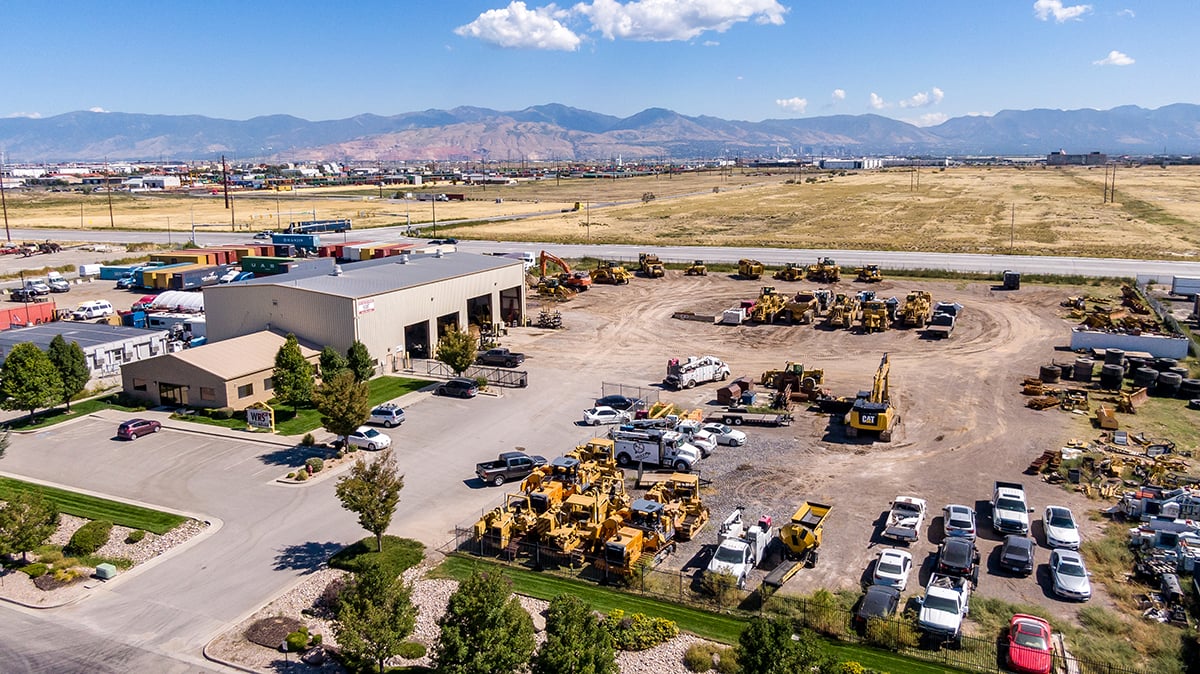
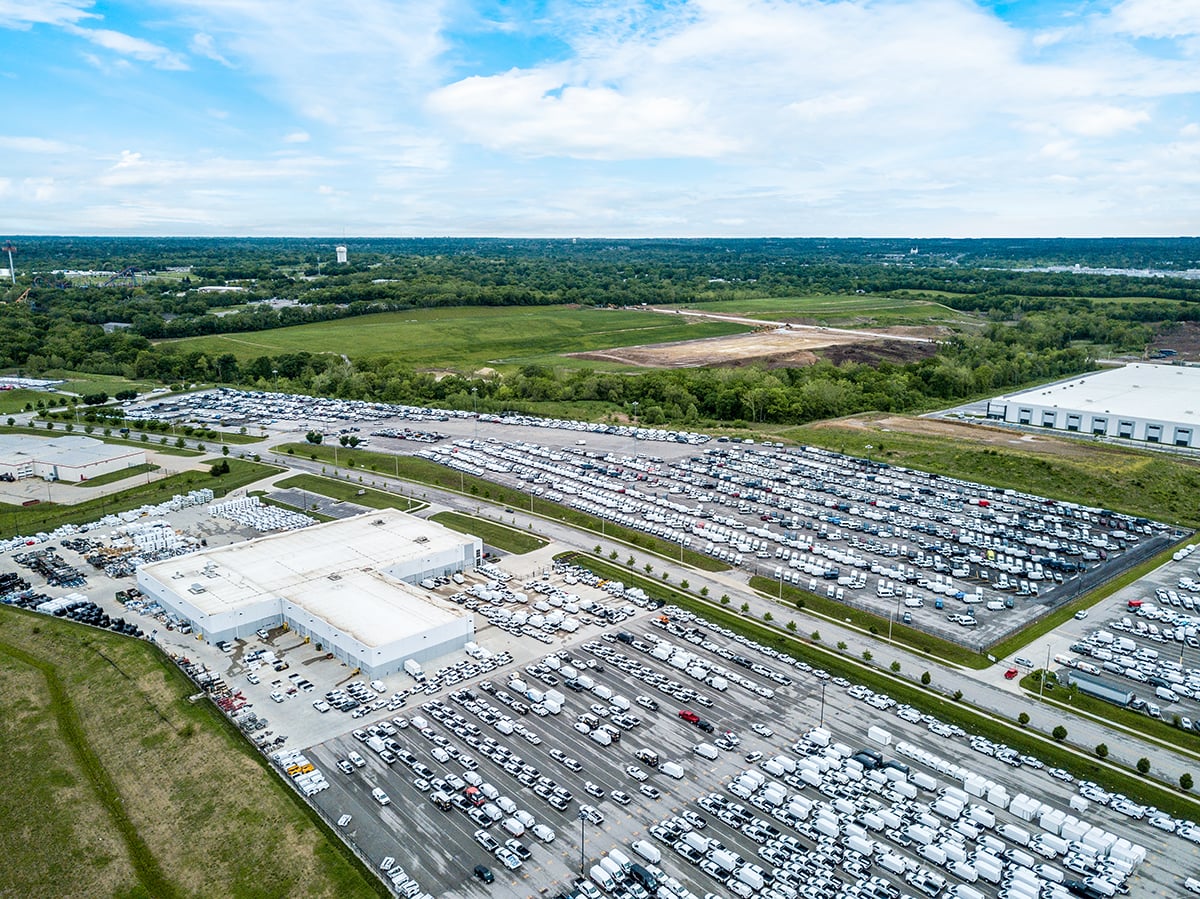
The IOS property photos on Alterra’s website, mostly showing fenced infill sites with truck parking stalls, shipping containers and small buildings, give no indication that average rent growth for these assets far exceeds that of traditional industrial warehouses and logistics facilities.
According to data from CBRE, rent premiums increased 17.9 percent over other industrial subsectors at the end of the fourth quarter of 2025 alone. The icing on the cake is that new supply is virtually nonexistent and incredibly difficult to build. In 2025, new supply under construction accounted for approximately 0.1 percent of the entire industrial sector’s existing inventory.
“For investors, (the) value proposition actually starts with scarcity,” explained Leo Addimando, a co-managing partner & CEO at the company. “We often describe it as infrastructure real estate hiding in plain sight because these sites support e-commerce fulfillment, freight movement, construction, utility maintenance, public infrastructure and, more recently, digital infrastructure.”
Transactions usually range from $5 million to $15 million on an individual asset basis, a range that often doesn’t pique the interest of many of Alterra’s would-be competitors. In contrast to nearly every other commercial real estate sector, much of the value comes from the land itself rather than buildings.
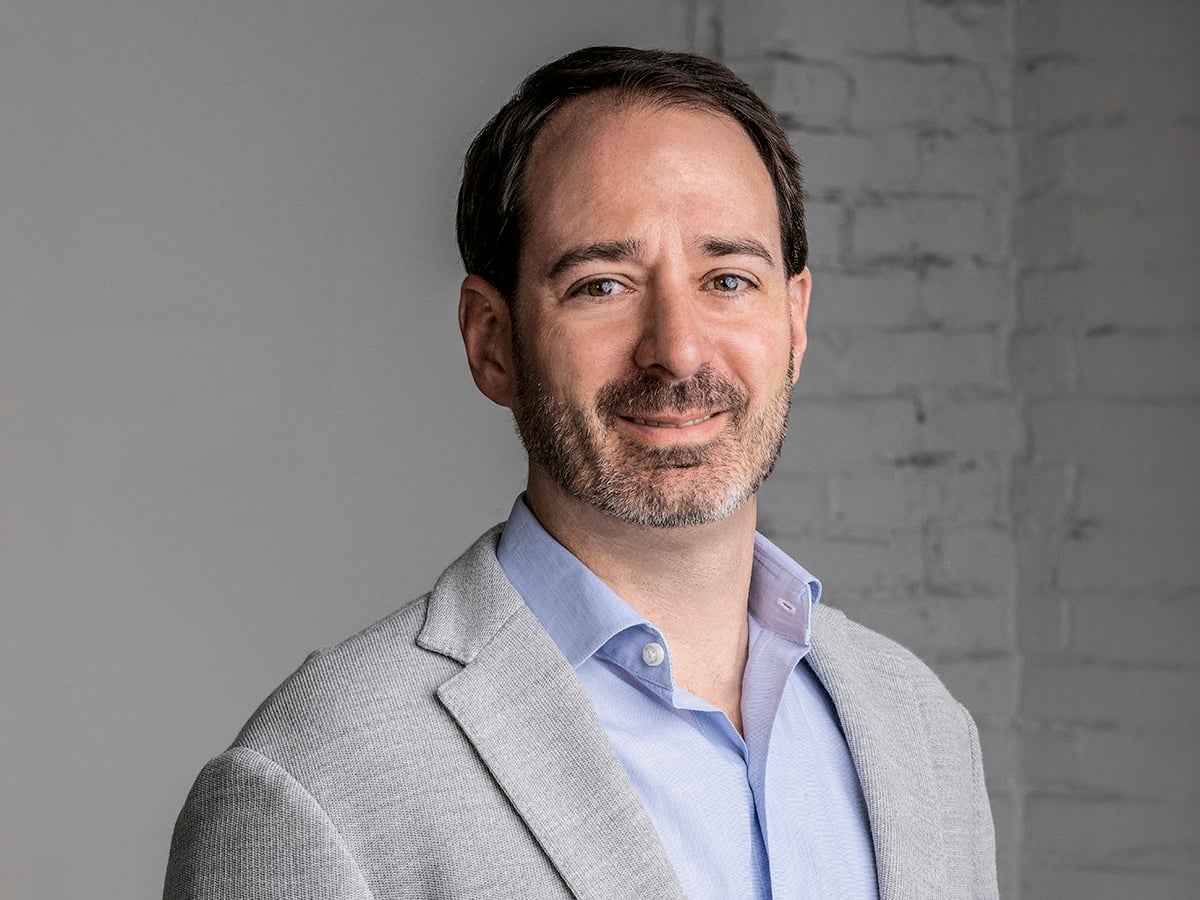
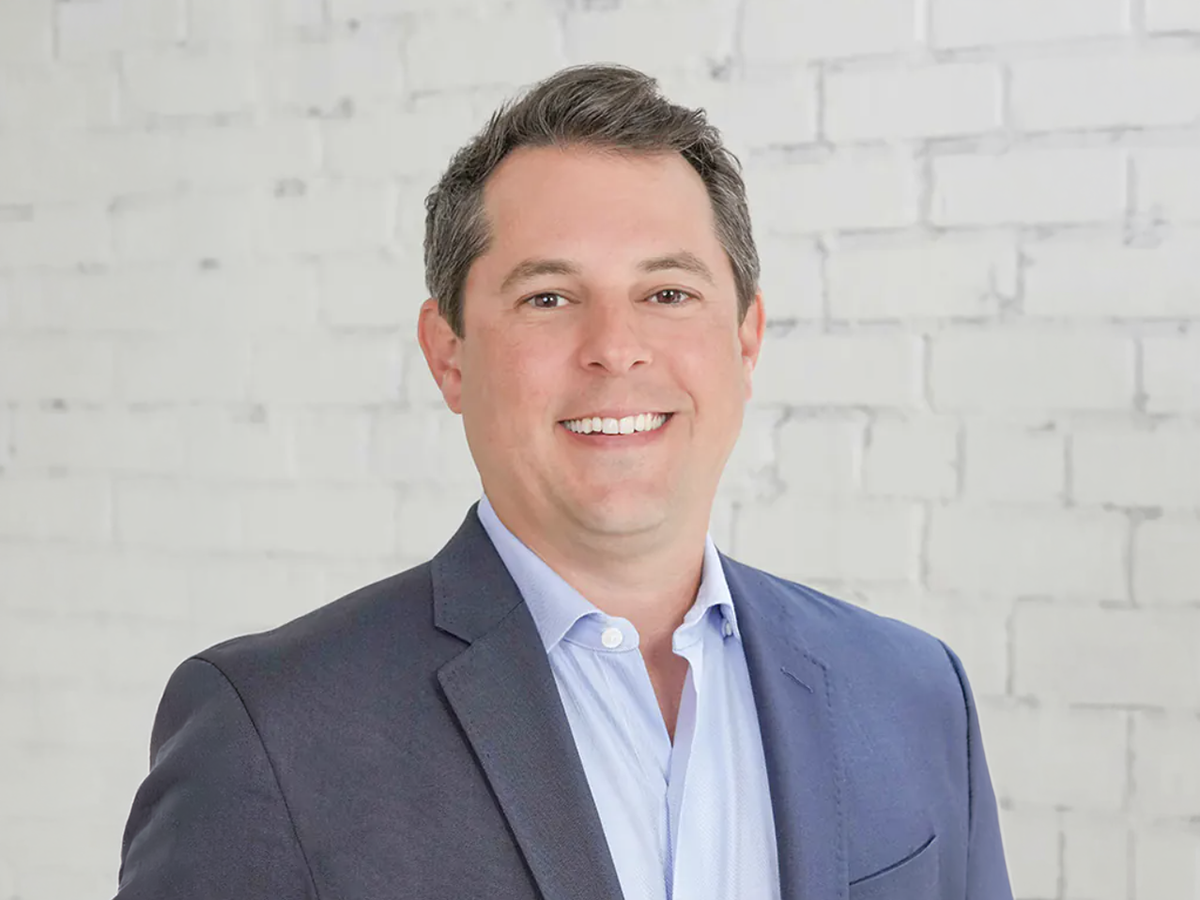
Pfeiffer, who joined the firm from CenterSquare Investment Management following the establishment of its IOS arm, said location is the biggest driver for acquisitions.
“You have credit tenants in the space that are sticky (and) that need to be in these infill locations that are near major highway infrastructure, ports, intermodals and major (metros), while you have virtually no new supply or even negative supply,” he said.
The firm’s 500-plus IOS acquisitions over the last decade, has allowed it to build both a base of market knowledge that it uses for much more than due diligence. According to Addimando, the company’s database consists of more than 15,000 lease and sale comps, all of which are regularly scrutinized by an in-house data team that’s developing a series of artificial intelligence-powered analytics tools. The company currently acquires two to five assets a week.
“Bottom line, we’re assessing what the right market rents are for these assets and incorporating them into our underwriting is one of the primary drivers of our valuations,” said Scott Whittle, partner, CFO & chief compliance officer. “It not only allows us to evaluate new acquisition opportunities but also to value our internal portfolio, using that same knowledge for our leasing efforts, as well.”
This knowledge ecosystem extends beyond the digital realm. In addition to smaller transaction sizes, zoning can be another turnoff for some IOS investors. Many otherwise industrial-friendly municipalities are reluctant to approve new sites, and no real standardization akin to traditional industrial exists for the asset class.
“Ironically, that’s also one of the greatest sources of value,” Addimando observed. “A site that is properly zoned, well located and difficult to replace often becomes indispensable to the tenant.”
But Alterra isn’t letting unfriendly zoning get in the way of its growth strategy. The company works with more than 55 law firms, sculpting a roster of savvy local counsel with zoning expertise and those that have the best relationships with approval boards. “It’s not black and white like some other asset classes, so that experience and knowledge is a really meaningful thing that lets us attack these more acute challenges,” Whittle told Commercial Property Executive.
Overlooked no more
The circumstances that led Alterra to IOS were as unexpected as the institutionalization of the asset class. Addimando started the multifamily and mixed-use development company in 2005, following previous roles in consulting with hotel booking company Orbitz.
Co-founder & Partner Jeff Pustizzi joined the company in 2010. The company would grow from two employees to 140 over the next decade or so. “We really hit it off,” Pustizzi reflected over a Friday afternoon phone call. “I thought Leo was the smartest person that I had ever spoken to in real estate, and I had just so happened to be looking to get into the development side of things.”
In 2017, a friend of Addimando’s, an executive at crane rental company Maxim Crane confided that the company needed a new outdoor storage site due to an impending lease expiration in Boston’s Back Bay neighborhood.
A decade ago, most of the conversation revolved around explaining what IOS was.
—Leo Addimando, Managing Partner & Co-Founder, Alterra
Today, most institutions understand the asset class, and the discussion has shifted from education to execution.
Addimando was not familiar with Boston’s industrial market, but he did his best to do right by his friend by buying, retrofitting, leasing and eventually selling a new home to Maxim at a 30,000-square-foot transit-adjacent property in Revere, Mass.
“It started as a simple favor,” Addimando told CPE over an email exchange while travelling. “We quickly realized that the industry was largely overlooking these properties, really because people were focused on warehouses and buildings rather than the land itself.”
Pustizzi also recalled that aha moment. “We looked at the deal and said, ‘well, that was interesting,” he said. “We quickly realized that this wasn’t just a crane company issue, and that this could be more of a business than a trade.”

One deal with Maxim eventually turned into a 17-property sale-leaseback transaction with Alterra partnering with a local family office for capital. By 2019, Alterra was working with JPMorgan on an equity joint venture, which deployed following a $300 million close in 2021—the first of its kind capital raise for IOS.
Two years later, Alterra would register as an investment advisor with the U.S. Securities and Exchange Commission, closing two more funds valued at nearly $1.5 billion by the end of 2023.
According to Addimando, the JPMorgan capital raise was a mix of effective communication and real-world returns. “A decade ago, most of the conversation revolved around explaining what IOS was,” Addimando said. “Today, most institutions understand the asset class, and the discussion has shifted from education to execution.”
Alterra executives see the company as an advisor to both tenant and capital partners alike. “In a way, we’re a sort of an outsized real estate consultant for them,” Pustizzi reflected. ““For instance, once we understand what our major national tenants are paying in rent, that informs our decision-making when talking to investors.”
Along for the ride
Having transformed the asset class, Alterra executives say communicating the merits of IOS to capital partners is an easier lift today.
“The sector offers strong fundamentals, triple-net lease structures and relatively low capital expenditure requirements,” Addimando detailed. “These are mission-critical locations for tenants, yet rent typically represents a small, single-digit percentage share of their overall operating costs.”
Alterra’s IOS story doesn’t always include rosy rental projections. The company plans for every possible outcome in its acquisition strategies. “We’re looking at about 10 different potential uses every time we go to buy a property, the reason being that we’re always looking to protect the downside,” Pustizzi explained. “If a tenant leaves, we’ve already explored seven or eight of our (other) typical uses that are permitted to occupy the site by right.”
Alterra also looks to minimize risk as it expands. In July of this year, the company structured a $400 million refinancing for a portfolio of 99 assets under an equity pledge framework, rather than refinancing them on an asset-level mortgage basis.
While reducing the complexity of the fundraising, the structure also streamlines the company’s hyperactive acquisitions pace and saves a significant amount on legal fees to boot.
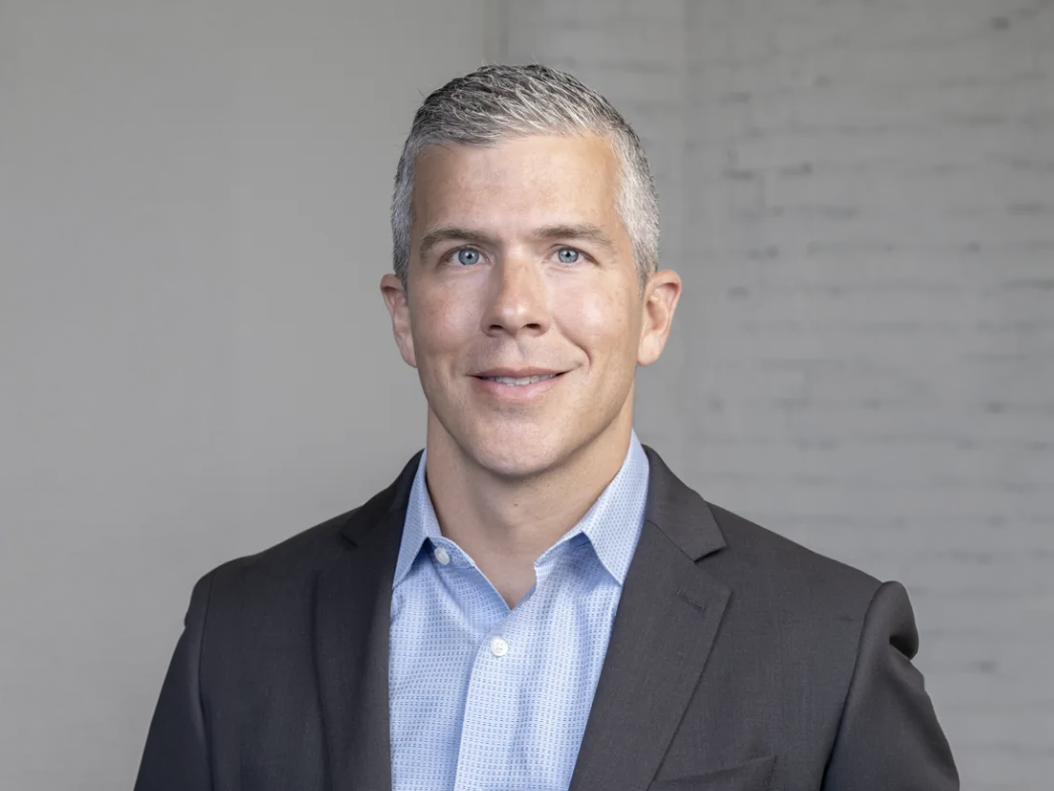
“Because we’re buying two to five assets a week that all need financing, that structural change that we achieved is really a meaningful milestone for not just Alterra but for the institutionalization of the space in general,” Whittle observed.
The lenders are also comfortable with the arrangement. “These deals are common in open-end funds and acquisition facilities, but this one is a market-setting structure, even without the fund-level guarantee,” said Nadia Mahmoud, managing director of real estate corporate & investment banking at Truist Securities. The bank provided $225 million for the $400 million facility in addition to $343.6 million for a closed-end fund encompassing 64 properties.
In a way, lenders are more attracted to the scale of the platform than individual assets. “It’s not only this diversification of assets and locations but what Alterra is able to do with them,” Mahmoud noted. “It’s large enough of a platform and large enough of a portfolio where we’d feel comfortable doing a pledge of equity without a full guarantee structure from the fund.”
Room for improvement
The jury’s still out on how long it will take for Alterra to hold its lead. “Other groups have the capital to grow, and the gap could narrow as they gain experience,” said Ryan Butler, regional managing director of Northmarq’s net lease and sale-leaseback group. “Alterra’s head start helps, but the company still has to make the numbers work on each acquisition.”
Its distinct advantages, however, that would be hard to replicate. “Because they are so well-capitalized, they are often regarded as higher-quality buyers in the market, particularly when compared with smaller groups whose LPs may also have decision-making authority,” said Will McCormack, senior director at JLL Capital Markets. “They also have an understanding of market data that many competitors find difficult to replicate, as their own portfolios provide robust data sets to drive statistics off of.”
Alterra’s executives know the writing is on the wall: “Even though large pools of capital can’t presently enter the space, going forward these assets will continue to trade in portfolios, where an institutional operator like ourselves curates a national pool,” Pfeiffer predicted.
In the meantime, Alterra doesn’t plan to change any aspect of its strategy. Rather, the firm’s leaders will continue to improve the platform internally in what Pustizzi equates to a race.
“We’ve invested significantly in our tech platform, and we continue to attract people from the real estate, private equity and (occupier) backgrounds, which makes us more informed on both ends,“ he said. “Our main focus is investing in our company in a way that will allow us to lengthen that lead.”







You must be logged in to post a comment.