


SIOR Special Report: Zeroing In on Office’s Bright Spots
Investors' insights into staying competitive and finding opportunity in key markets.
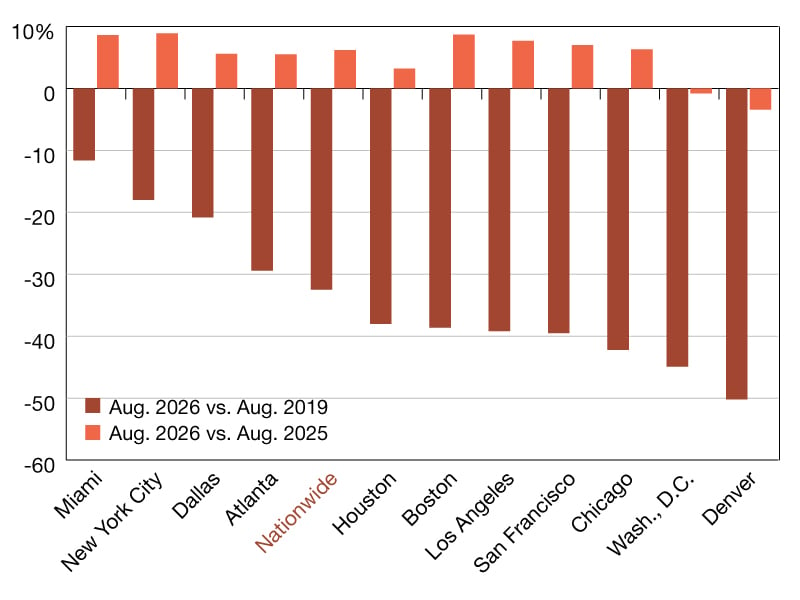
At a moment when the office sector is in a major transition, investors at SIOR’s fall conference this week offered insights into the opportunities in the markets that have jumped ahead of the pack.
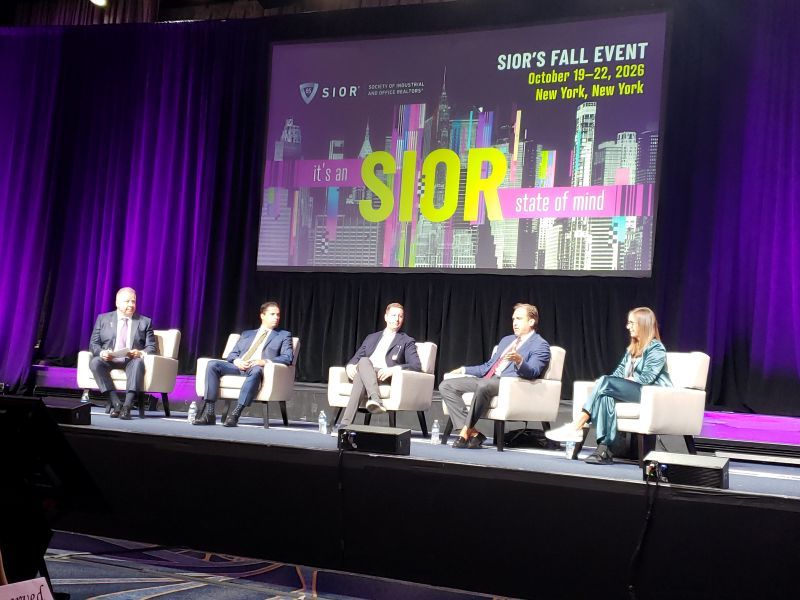
“The marketplace has been massively bifurcated,” noted Brandon Huffman, managing principal & CEO of Tourmaline Capital Partners. Yet in the best-performing markets, the dearth of new product, the return-to-office trend and multifamily conversions that take obsolete buildings off the market all favor owners. Meanwhile, “the capital markets have not yet caught up to leasing fundamentals,” Huffman added.
In a telling moment, the panel’s three office owners reported that they intend to be buyers in 2027, rather than sellers. Aaron Medeiros, director of acquisitions at Time Equities, noted that the northern New Jersey component of the company’s portfolio is upward of 90 percent occupied.
In that market, the company is buying Class B product at about $60 per square foot, well below replacement cost. High-yield, distressed and value-add properties are high on the company’s radar. Time Equities is also looking outside the U.S., notably the United Kingdom and the Netherlands, which Medeiros called “one of the strongest markets in Western Europe.”
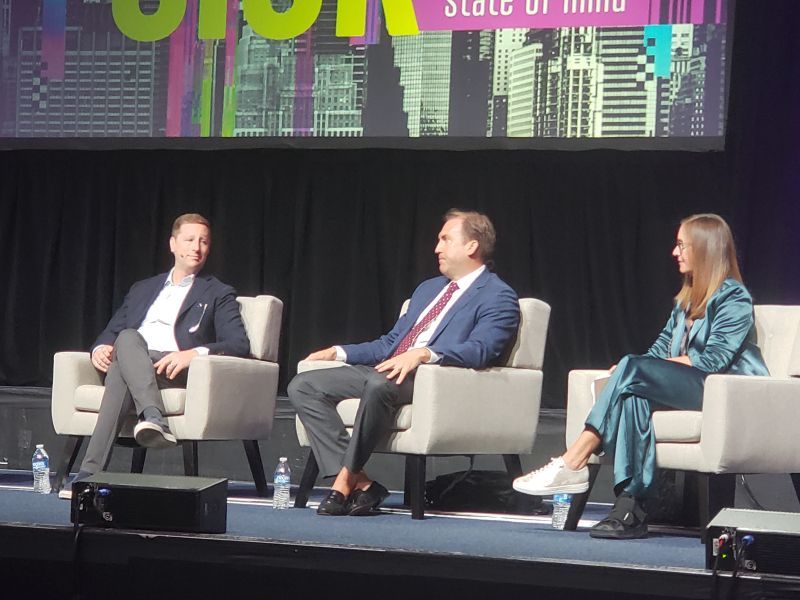
Panelists were upbeat about opportunities in the New York City market. “We’re super optimistic about the future,” said Eric Meyer, principal at Meyer Equities. The company is focusing on Class B product, which comprises about 300 million square feet of Manhattan’s office inventory. “We think there’s a lot of elasticity for rents to grow,” he said, adding that Class B rents are approximately where they were six years ago. An upside to the capital markets’ skepticism about Class B office is that it creates an opportunity for buyers.
Conditions in Miami are owner-friendly, as well. According to Huffman, the key factor is the lack of new construction. Replacement costs have jumped 60 percent in the last few years, which means that Miami’s already premium rents would have to rise another 20 to 30 percent for new construction to pencil out. The good news for Miami office owners, Huffman said: “I think you’re going to have a lot of pricing power.” In a sign of that clout, owners are engineering tenant move-outs so space can be re-leased at higher prices, he noted.
Designs and dollars
One of the office market’s biggest inefficiencies is the recurring expense of remaking office space every few years when a tenant relocates or a lease expires, as Huffman noted.
Also complicating the transition between occupants is that “when a tenant designs, they tend to overdesign,” observed Melanie Jackson, a senior director for office brokerage at Cushman & Wakefield, who co-moderated the panel with Joseph Larkin, president of First Realty Advisors.
In a competitive market, what are the strategies for attracting and keeping tenants? Part of the answer is building solid relationships with brokers. That translates into paying generous commissions, bringing brokers into every vacant space and sponsoring broker events, “even when we don’t have vacant space,” Meyer said.
Being proactive in engaging existing tenants is essential, as well. In the Class B space, that can help offset the fact that those tenants tend to be less credit. “If you have a personal relationship, the odds of paying on time tend to be better, the odds of renewal tend to be better,” Meyer said.
Meyer’s properties tend to attract creative tenants, and “most of our tenants don’t move that often,” he said. The company also pre-builds all vacant space between 3,000 square feet and 25,000 square feet. Prebuilding saves on construction outlays, and “once it’s built, we pretty much rent it,” Meyer said.
Owners are incorporating plenty of small touches to make their properties competitive, as well. As Time Equities’ Medeiros put it, “We try to do things that make us a little more differentiated.”
And at Tourmaline’s office buildings, one of those touches is a signature scent. “When we added it to the overall program, it made a difference,” Huffman reported.




You must be logged in to post a comment.