
Greenbuild Special Report: Recasting the Message on Sustainable Design
Today, the business case carries more weight than the desire to do good.
The demand for green design and construction remains strong, but the language architects and engineers use to pitch clients has changed considerably.
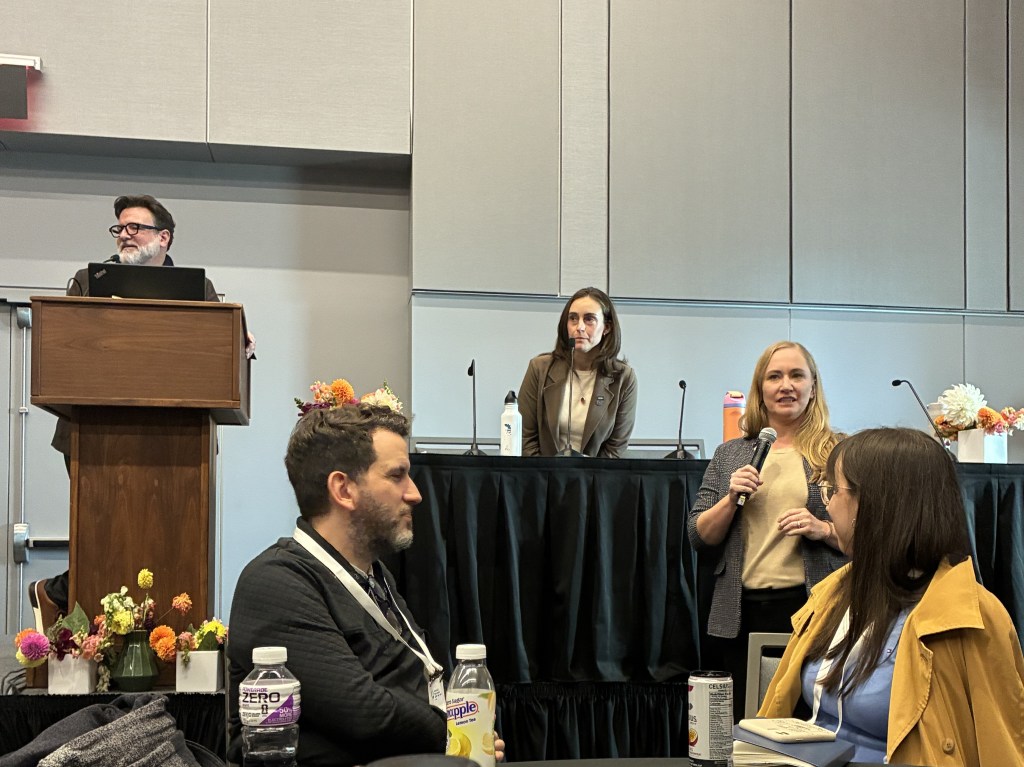
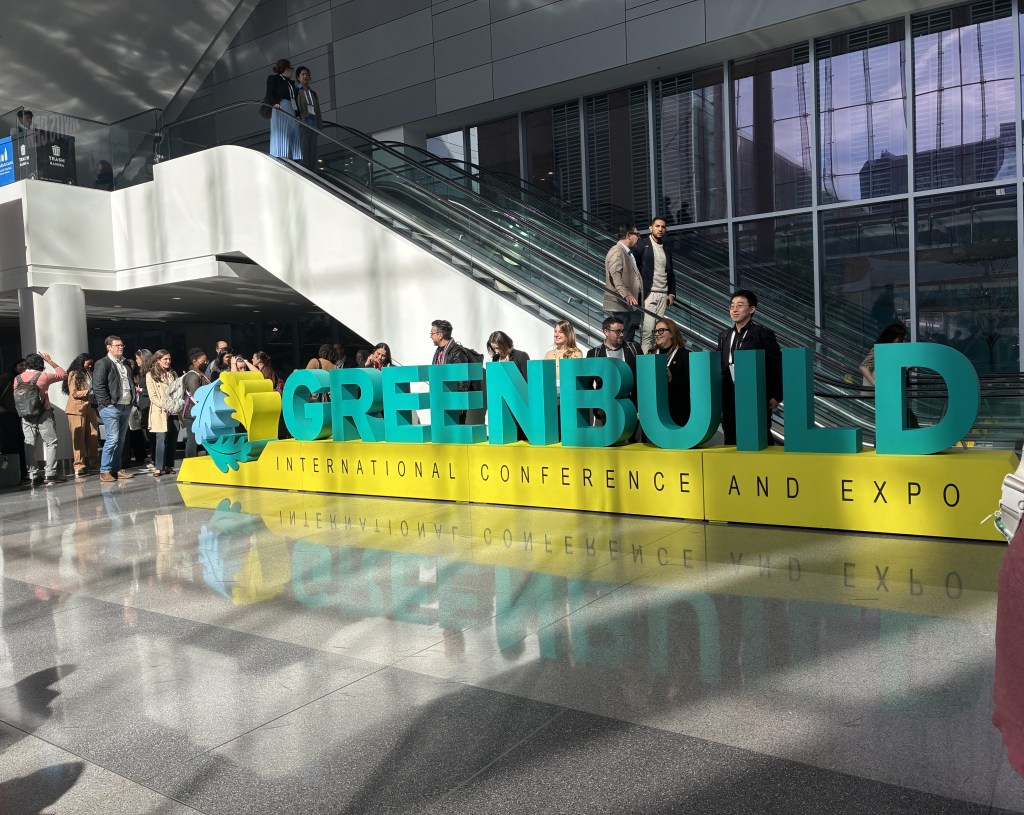
That was the gist of a panel titled “Lead, Don’t Plead: How to Make Sustainability the Default Design” at Greenbuild 2026, being held this week at the Jacob Javits Center in Manhattan. The annual conference brings together executives from a broad spectrum of the green building community to discuss fresh innovations, demonstrate successes and network. The theme of this year’s conference is “Invest for Impact.”
LISTEN ALSO: Sustainability Street: It’s Go-Time for CRE
Changes in the lexicon around sustainability strategies stem largely from the current administration’s skeptical view of climate change and the withdrawal of billions of dollars of Biden-era clean energy funding. Such terms as sustainability, ESG, decarbonization, and environmental justice have fallen out of favor for many corporate and institutional clients.
However, the business case for sustainability is increasingly stronger, allowing architects and engineers to use other terms: resilience, improved asset values, energy efficiency and measurability.
Despite the changes in the lexicon, many companies have maintained or increased their sustainable investments, with 90 percent of the Fortune 500 still reporting on sustainability, according to panelist Jim Schneider, executive director of PCI Mountain States. “It’s just we’re not talking about it in the same way,” he said. “What we have right now is an opportunity to shift how we approach this and come at it from the real practical business side of things, rather than trying to appeal to people’s altruism.”
Currently, he said, three “pillars” guide sustainability conversations: economic value, risk management and human well-being.
“Buildings are awesome—buildings are cool,” Schneider said. “We can get caught up in the engineering whiz-bang piece of it, but ultimately they are for people. Communities are for people. So how do we bring the focus back to that?”
Messaging for external engagement
Sustainability features may show up in RFPs, but they don’t always make it to the construction phase, particularly if sustainability isn’t part of the client’s typical design mandate, remarked panelist Annie Kell, sustainability services lead for Burns & McDonnell.
“If it is viewed as an add-on, it is the first to get cut,” she said. “We try to have sustainability built into the design rather than bolted on afterward.”
Kell said her firm’s goal is to have all the disciplines on a project use sustainability as their baseline design or standard of care: “If we can integrate sustainability and the value that it brings into standard design … we can achieve the goals and move the needle in the way that we’re hoping to.”
To match the right sustainability proposal to the client, Kell said, Burns & McDonnell stresses getting to know all stakeholders on a project to find out their values and pain points.
According to the Yale Climate Opinion Maps that Kell cited, a surprising 63 percent of U.S. adults are worried about climate change, and 50 percent believe it is caused by human activity. Yet only 44 percent believe it affects them.
That, she said, is a communication challenge, which is compounded by the inability to talk about climate change in the frankest terms. But architects and engineers can lean into the evidence from what is now decades of sustainable construction.
There is, however, a silver lining, Kell noted: “There is an era of greenwashing coming to the end. People are not using words for the sake of using them.”
Internal conversations
Patti Mason, climate action strategist at DLR Group, said that conversations with clients about sustainability would also be more productive if they started earlier, so clients could help shape sustainability goals.
As for internal engagement, Mason noted that each project at DLR gets a “climate strategy meeting” regardless of size or whether the lead designer thinks the client will be agreeable. Sometimes, she said, she has to “sell” internal clients on how sustainability strategies will benefit their clients’ projects, and sometimes her language has to be adjusted depending on her colleagues’ locations and projects.
Mason also asks DLR’s designers to talk about their clients’ drivers so the firm can align its values with those of its clients.
When communicating her company’s internal values, Mason said, she needs to acknowledge that outside forces may shift priorities or delay progress toward some goals. Recently, her firm has been focusing on preparing for the potential passage of SB 261 in California.

You must be logged in to post a comment.