

What’s Next for Sacramento’s Semiconductor Sector?
Bosch’s investment could deepen the region’s chip cluster.
This article first appeared in the CPE Sneak Peek Newsletter. Subscribe now for early access to exclusive content, in-depth analysis and key trends!
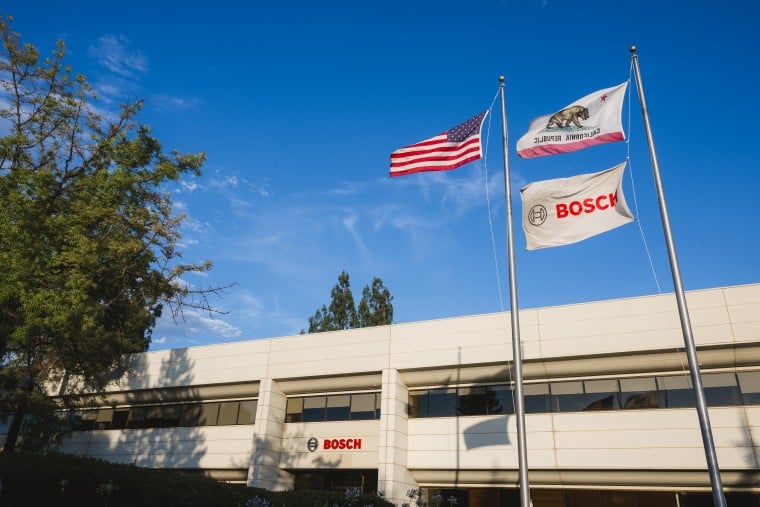
Earlier this summer, Sacramento’s semiconductor sector reached another major milestone. Technology and automotive supplier Bosch secured up to $225 million in direct funding from the Department of Commerce’s CHIPS Program Office. The financing supports Bosch’s $2 billion investment to transform its facility in Roseville, Calif., for the production of silicon carbide semiconductors. Sample production is already underway, with commercial production expected to begin this year.

The Roseville facility already had the necessary infrastructure, including cleanrooms, and a four-decade history of producing semiconductors for automotive and industrial applications. This established foundation allows Bosch to expand its silicon carbide manufacturing capacity in North America, a Bosch spokesperson told Commercial Property Executive. The Roseville workforce collectively brings more than 3,700 years of semiconductor manufacturing experience.
When Bosch first acquired the Roseville site in 2023, the company planned to invest more than $1.5 billion in its transformation. A year later, Bosch signed a preliminary memorandum of terms under the CHIPS and Science Act with the U.S. Department of Commerce, bringing its planned investment to roughly $1.9 billion. The Governor’s Office of Business and Economic Development had also approved a $25 million California Competes Tax Credit to support the redevelopment and investment.
The federal funding is part of a much larger public- and private-sector push to expand U.S. semiconductor manufacturing capacity, alongside broader manufacturing reshoring efforts. But for Greater Sacramento, the more immediate question is what an investment of Bosch’s scale means for a region that already has an established semiconductor base.
Building on an existing cluster
Greater Sacramento is home to nine global semiconductor companies, including Micron, Samsung and Solidigm. Its semiconductor activity spans manufacturing, engineering and R&D, along with supply-chain operations and new-product commercialization.
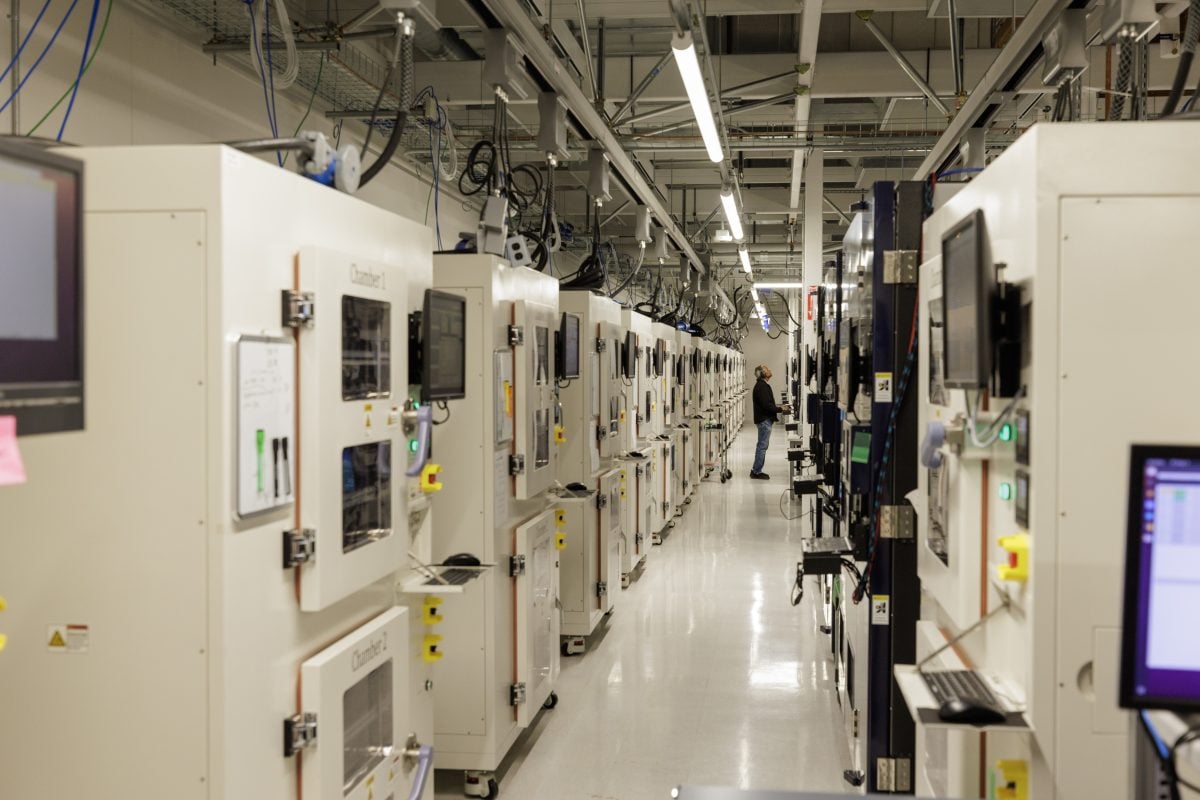
Earlier this year, Solidigm announced an expansion of its Greater Sacramento operations. Headquartered in Rancho Cordova, Calif., the enterprise data storage company has exceeded its initial $100 million commitment to regional R&D facilities. Solidigm has invested $75 million in local laboratories and more than $5 million in a NAND lab and R&D center.
As Solidigm has grown, its local facility strategy has evolved to include modern office, laboratory and collaboration spaces that support increasingly complex R&D activities, according to Ashraf Abdelwly, the company’s head of corporate services. The focus is on flexible, high-performance workplaces that enable cross-functional collaboration and provide the infrastructure needed for next-generation storage and AI technologies.
“We remain committed to the region and to collaborating with local education, business and community partners to help strengthen the area’s technology ecosystem and talent pipeline,” Abdelwly said.
Bosch similarly builds on the region’s long history in semiconductors. Its Roseville site was formerly operated by TSI Semiconductors. Intel has maintained a significant engineering and R&D presence in Folsom, Calif., for decades, and Samsung operates a DRAM design lab there. In nearby El Dorado Hills, Calif., Blaize also develops semiconductor hardware and software for AI applications.
While Bosch is not introducing something completely new to Sacramento, its scale and global presence could deepen the existing ecosystem, according to Barry Broome, president & CEO of the Greater Sacramento Economic Council.
However, substantial government funding and private investment alone do not guarantee regional economic transformation. The long-term impact of the CHIPS Act also depends on how state and regional leaders put that funding to work, engage private-sector partners and coordinate local investments, according to Brookings research, which examines the link between industry growth and economic mobility.
The firm used Central New York as a case study, where Micron’s planned $100 billion semiconductor complex was treated as more than a standalone economic development win. Regional leaders paired the project with strategies for workforce development, innovation and infrastructure to support a broader semiconductor ecosystem.
That distinction is relevant for Sacramento as Bosch moves toward production. Broome said Greater Sacramento is already seeing interest from companies seeking to invest in the region, while a facility of its size will require local vendors, equipment maintenance and specialized services.
READ ALSO: Industrial Investment Maintains Momentum in 2026
Workforce development efforts are also taking shape around the project. Bosch partnered with Sierra College on an accelerated, customized mechatronics certificate program for workers at the Roseville manufacturing site. Broome also pointed to Sacramento State, UC Davis, Sierra College and Los Rios Community College District as important parts of the broader regional talent pipeline.
“Investments like Bosch’s are helping create the scale and opportunity needed to retain top talent and attract new talent in this region, just east of Silicon Valley,” Broome said.
A more mature example of semiconductor-driven spillover can be seen in Phoenix. TSMC’s total planned U.S. investment has reached $265 billion, with the bulk centered on its Arizona manufacturing complex. The investment has fueled demand for specialized equipment and supplies, power and water infrastructure and skilled labor, alongside industrial space. Workforce growth has also increased demand for housing, hospitality and retail.
Sacramento is at a much earlier stage of that trajectory. Still, the distinct real estate needs emerging around Bosch and Solidigm show how semiconductor and technology growth can affect multiple property types. Bosch is focused on transforming and fully utilizing an existing manufacturing facility and its cleanroom infrastructure, while Solidigm’s growth has required specialized laboratories, R&D facilities and high-performance office environments.

The workforce constraint
Despite the opportunities associated with strengthening domestic semiconductor supply chains, one of the industry’s main challenges is finding enough skilled workers. A study by the Semiconductor Industry Association and Oxford Economics projected a shortage of roughly 67,000 technicians, computer scientists and engineers in the U.S. semiconductor industry by 2030, alongside a much larger technology workforce shortage across the broader economy.
In Greater Sacramento, these challenges affect two key workforce groups. Semiconductor firms face a shortage of specialized engineers proficient in integrated circuit and system-level design, advanced packaging, verification and yield optimization, UC Davis Professor Saif Islam noted. Manufacturers also need more technicians for microfabrication cleanrooms and factory-floor operations, including testing, packaging and equipment support.
“Without expanded regional training pipelines, apprenticeships and close coordination between local universities, community colleges and industry partners, these workforce deficits risk slowing the region’s emergence as a key microelectronics hub,” Islam said.
The Sacramento metro area already has a workforce in occupations relevant to semiconductor operations, although the Bureau of Labor Statistics figures encompass employment across all industries rather than semiconductor companies specifically. As of May 2025, the metro had roughly 1,420 electrical engineers and about 900 electronics engineers, excluding computer engineers. The region also had an estimated 460 electrical and electronic engineering technologists and technicians.
Several factors make these positions difficult to fill. For hands-on technician roles in testing, packaging, assembly and equipment maintenance, employers must balance regional living costs with global competitive pressures, according to Islam. While Sacramento remains more affordable than Silicon Valley, California’s cost of living requires employers to offer competitive wages to skilled operators and maintenance workers.
At the same time, domestic semiconductor firms compete with outsourced assembly and test facilities overseas that operate at substantially lower costs. That cost gap puts pressure on employers seeking to attract and retain technicians while remaining globally competitive, Islam noted.
Nevertheless, efforts are being made to combat some of the shortages, as local institutions are working to expand the talent pipeline. Since 2024, the Bosch Community Fund has awarded $200,000 in grants to schools and nonprofits to advance science, technology, engineering and math education initiatives in the Roseville area. The Sierra College Foundation in Rocklin, Calif., also received a grant for its Career Technical Education Support Fund.
UC Davis contributes to the region’s technical infrastructure through its Center for Nano & Micro Manufacturing (CNM2), which enables device manufacturing for a range of applications. The center provides access to micro- and nanofabrication equipment, with capabilities including nanometer-scale lithography, deposition, etching and characterization.
What comes next for Sacramento
Greater Sacramento’s next stage of semiconductor growth will depend on more than workforce development. Alongside hands-on training across different skill levels, a sustainable ecosystem will require dependable utility infrastructure and stronger coordination among regional institutions, according to Islam.
Fabrication and packaging operations require reliable, high-capacity power and water, while the region needs a talent pipeline stretching from cleanroom technicians to advanced hardware and system researchers. Universities and community colleges already provide a foundation for that training, but continued expansion will depend on funding and coordination among industry, government and educational institutions.
LISTEN TO: Sustainability Street: Tackling CRE’s Power Problem
Sacramento also offers geographic and development advantages, including proximity to the Bay Area and room for expansion. Broome pointed to available land, utility capacity and an existing technical workforce as factors that could support further semiconductor growth.
“Rather than competing within an increasingly crowded market, the region has the capacity to support the next wave of semiconductor investment and the talent and supplies that come with it,” Broome said.
Whether that next wave materializes will be a key test. Bosch is making a significant manufacturing investment, while companies such as Solidigm continue to expand R&D and specialized facilities. At the same time, regional colleges and universities are increasing their focus on workforce development and technical infrastructure for the semiconductor industry.
While the region’s semiconductor base predates Bosch’s arrival, the next phase will depend on whether the company’s investment spurs enough supplier activity, additional technology investment, workforce growth and infrastructure development to strengthen the cluster.




You must be logged in to post a comment.