


Is Industrial CRE Benefiting From Tariffs and Reshoring?
Early research and investment trends highlight various industries and regions.
It’s one of the overarching—some may say looming—themes of 2025: tariffs. The situation seems to evolve by the day, with the Trump Administration often sending mixed signals on whether the purpose of the levies is to return manufacturing to the U.S. or boost tax revenues.
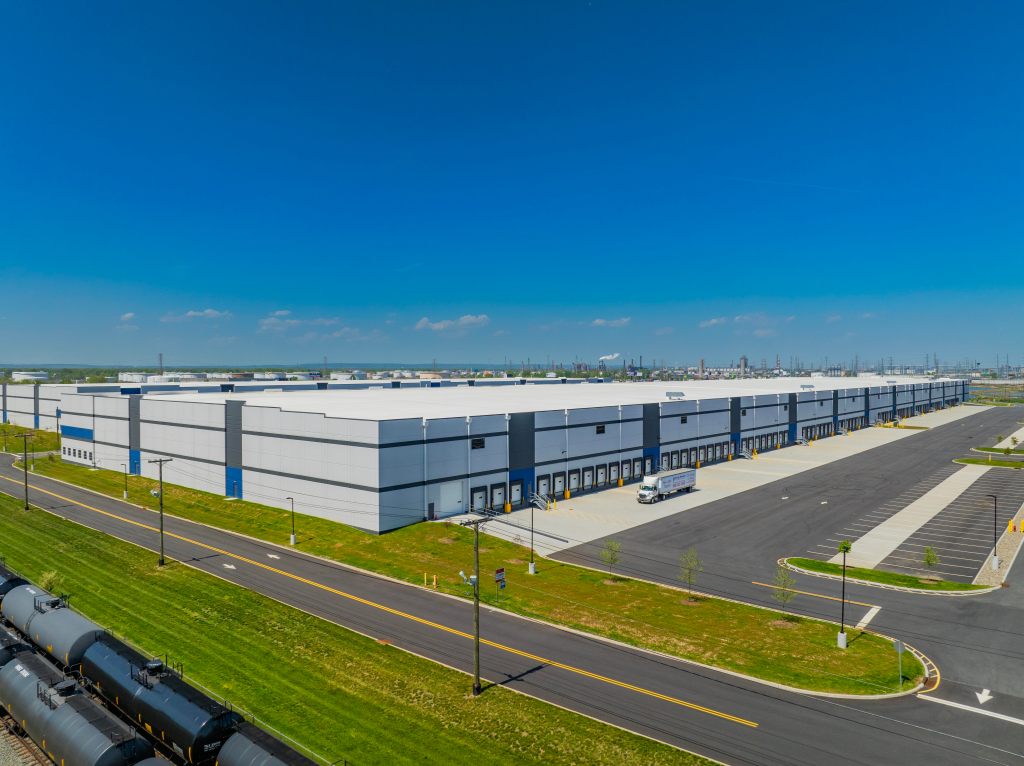
The industrial real estate sector has been closely watching tariff developments to evaluate how, if at all, new import taxes will drive U.S. manufacturing and reshape logistics. If manufacturers decide to reshore, where will they go? And what products or materials are most likely to be built here?
The South is poised to benefit from an influx of manufacturing, particularly in emerging industrial markets in states such as Texas, Georgia and the Carolinas. Investment is especially likely in the battery, electric vehicle, pharmaceutical, aerospace and semiconductor sectors.
READ ALSO: Can Policymakers Outrun Tariff Turbulence?
“I can’t stress enough how much the South is benefiting here,” Lisa DeNight, managing director for national industrial research at Newmark, told Commercial Property Executive. “The South has more manufacturing construction underway right now than the rest of the country combined.”
Manufacturers head south
As far as U.S. reshoring trends go, it’s important to note that domestic manufacturing has been growing over the past five years. Before the most recent sweeping tariffs, the ground was set during the first Trump presidency and the Biden years, with several federal initiatives already in effect, such as the 2022 CHIPS and Inflation Reduction acts, designed to boost domestic manufacturing.
According to a report from Oxford Economics, these laws led to a surge in manufacturing investments in the Phoenix; Austin, Texas; Houston; Raleigh, N.C.; and Columbus, Ohio, markets. Oxford Economics also predicted that reindustrialization efforts would broadly benefit the South.

Barbara Denham, lead economist for cities and regions at Oxford Economics and lead author of the report, said in an interview that some important factors driving the attractiveness of the South are government incentives and marketing campaigns.
“There was definitely a lot of appeal to the South, but the governments’ promotions of their metropolitan areas as an ideal place for doing business definitely came into play,” Denham said.
One marketing tactic employed by Southern states has been to refer to themselves as being in the “Battery Belt,” emphasizing the number of firms that have opened battery manufacturing plants there.
DeNight noted some other factors that make the South particularly appealing to manufacturers.
“That is where you are finding the most labor, the most energy, the most business-friendly environment,” DeNight said, “and relatively speaking, much more affordable real estate.”
But while the South may be the recipient of the most manufacturing demand, “pretty much every state has seen at least one major manufacturing announcement over the past two years,” she added.
The industries ripe for reshoring
Decisions to reshore are often based on one of two reasons: economics or national defense, David Greek, managing partner at Greek Real Estate Partners, told CPE.
For the first category, many firms are looking to avoid tariffs and take advantage of government incentives by moving at least some manufacturing domestically. The threat of tariffs alone can sometimes be enough to encourage manufacturers to announce new investments.
DeNight said that aluminum manufacturing increased in the U.S. after Trump implemented a 50 percent tax on the material. Denham pointed to investments from Eli Lilly in domestic manufacturing as a likely result of proposed pharmaceutical tariffs.

At the other end of the spectrum, some domestic manufacturing might not necessarily create cost savings, but could make more sense strategically, Greek said.
“A lot of what we’re seeing, particularly politically driven from Washington, falls into the second category of ‘We need this for national security reasons’ and ‘We need this to ensure that we can produce tanks and planes and electronics in the event of an international conflict,’” Greek said.
Semiconductor and aerospace manufacturing likely falls into this category, as companies are looking to make sure their supply chains are diversified and not dependent on only one nation, in this case China.
Downstream effects for the East Coast
Greek Real Estate Partners primarily operates in New Jersey and Pennsylvania, which Greek said could also be positioned to benefit from another tariff-related trend: nearshoring.

While West Coast ports such as L.A.-Long Beach have mainly served to process goods from China and other Asian countries, Greek said the growth of manufacturing in Mexico and wider Latin America will likely be a boon for both border-area logistics centers and East Coast ports.
“A lot of goods are coming across the border in trucks or trains, but an increasing number are being put onto ships as well,” Greek noted, “and those ships, almost universally, will head to the East Coast, not the West.”
This could benefit East Coast ports such as Newark, N.J.; Savannah, Ga.; Norfolk, Va.; and Charleston, S.C., and provides an opportunity for distribution facilities in these areas.
Greek also pointed to the strength of the Texas market in recent years. While he said many in the industry had worried about oversupply in the area, the growth of nearshoring has mostly alleviated those concerns.
Uncertainty is still the name of the game
If companies have learned one thing from the federal government in 2025, it might be that no trade policy is set in stone. While industrial leasing has held firm, an August report from JLL found that tenants are deferring to shorter-term renewals over long-term commitments, and they are also taking longer to make decisions about leasing.
JLL reported that traditional retailers reduced space requirements by 16.7 percent year-over-year, while third-party logistics companies increased demand by 12.8 percent, which Greek said demonstrates the hesitancy of major corporations right now.
“Opening a new distribution center is a risk,” Greek noted, “and if you can’t do the throughput you want through that facility, it’s a loss generator.”
To avoid this risk, these firms are instead relying on 3PLs and short-term leases to fulfill needs without making any long-term commitments.
Companies will have to continue to react to any new tariff announcements and create various contingency plans, and there is no one-size-fits-all strategy for how to survive an impending tariff. “There are about as many responses as there are companies,” DeNight said.


You must be logged in to post a comment.