
What Office Brokers Should Know About Wellness
How occupiers want workplaces designed to be strategic assets.
For years, workplace design was driven by a straightforward goal: efficiency. Organizations focused on maximizing space, lowering energy costs and creating environments that support business operations. As sustainability became a priority, office buildings evolved to be more environmentally responsible and cost-effective.
While those goals remain important, the conversation has expanded considerably. Today, organizations are asking a different question: How can the workplace help people perform at their best while also supporting their overall wellbeing? For brokers, that question often comes up in leasing and tenant-improvement conversations and in design meetings.
Increasingly, the office is being viewed as more than a place where work happens. It’s becoming an environment that shapes how people feel, connect, collaborate and engage at work. In an era defined by flexibility and employee choice, workplace design is no longer solely about function. It’s about creating experiences that support both people and business outcomes.
READ ALSO: How Hospitality Is Reshaping the Modern Office
That shift influences how workplaces are planned and managed. Architects and interior designers still play an essential role, but creating successful workplace environments has become a team effort. Human resources leaders, facilities professionals, operations teams, engineering and executive leadership all contribute to the employee experience. Together, they help ensure that the workplace reflects organizational culture, supports employee needs, and advances broader business goals.
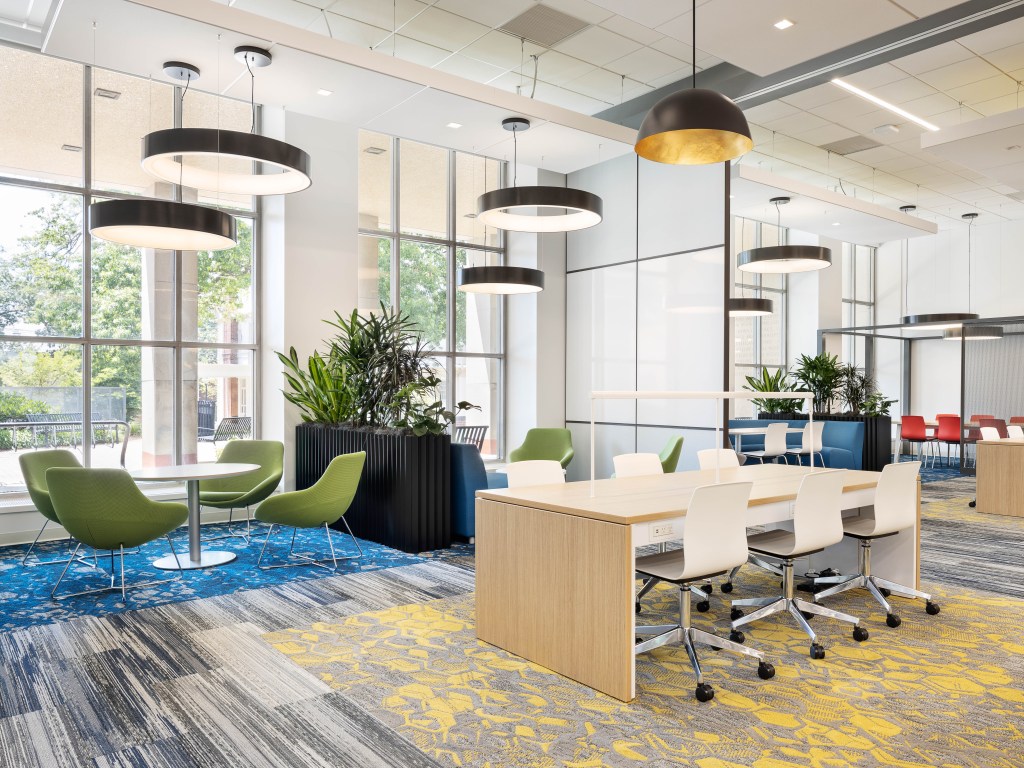
The most effective offices today are designed with a deeper understanding of how the built environment affects people. Features once considered amenities are now viewed as core components of the workplace experience. Natural light, outdoor views, circadian-supportive lighting and the use of natural low-VOC materials can make a space feel more welcoming and less stressful. Improved ventilation systems contribute to healthier indoor environments, while thoughtful acoustic design, increasingly important for supporting neurodiverse employees, helps employees focus without feeling isolated. These elements may seem subtle on their own, but collectively they shape how employees experience the workday.
Flexibility has become just as important as comfort. Employees rarely spend an entire day doing the same type of work and workplace design is evolving to reflect that reality. Many organizations now offer a mix of quiet spaces for focused work, collaborative areas for innovation and informal gathering spots that encourage spontaneous interaction. Technology helps connect these environments, allowing employees to move between spaces and choose the setting that best supports the task at hand.
At the same time, organizations are recognizing that wellbeing is influenced by far more than physical surroundings. Even the most beautifully designed office cannot create a positive workplace culture on its own. Policy, leadership, employee programs and day-to-day operations all play an important role. Human resources teams help shape flexibility and wellness initiatives, leaders establish expectations around inclusion and collaboration and employees provide valuable insight into what helps them feel supported and engaged. When these elements align, the workplace becomes an extension of an organization’s values rather than simply a place to conduct business.
This integrated approach is already influencing workplace strategies as organizations continue to redefine the office’s purpose in a hybrid work environment. With many tasks now easily completed from home or other remote locations, the office must provide something more than a desk and a reliable internet connection. Its greatest value often comes from what cannot be replicated virtually. It creates opportunities for meaningful connections, informal mentoring, collaborative problem-solving, shared learning experiences and a deeper sense of community.
As a result, many organizations are focusing on creating destinations where employees genuinely want to spend time. The office is becoming a place for collaboration, connection and community, offering experiences that strengthen both professional relationships and organizational culture. When employees feel connected to their colleagues and their workplace, engagement and performance often follow naturally.
Workplace as strategy
This people-centered mindset reinforces many of the goals traditionally associated with sustainability. Healthier materials, increased access to daylight, energy-efficient systems and stronger connections to the outdoors can benefit both building occupants and the environment. Rather than existing as separate priorities, wellness and sustainability are increasingly understood as complementary strategies that create long-term value. A recent CBRE survey found that just 14 percent of organizations are pursuing meaningful office reinvestment, even as nearly half rate their current workplace experience as insufficient, underscoring how much room there is for brokers to guide clients on this front.
The result is a fundamental rethinking of the workplace itself. Buildings are no longer viewed simply as operational necessities. They are strategic assets that influence culture, engagement, innovation and retention. For brokers, these matter in negotiations as wellness features shift from amenities to negotiated lease and TI terms. As expectations continue to evolve, the conversation is moving beyond floorplans and furnishings toward something much more meaningful by creating environments where people can do their best work and feel their best while doing it.
The office of the future will still be evaluated through metrics such as efficiency, utilization and sustainability. But its true success may be measured by something more human: its ability to help people connect, grow, contribute and thrive.
Jill DiClementi, NCIDQ, is an associate principal at Spiezle.
Please note: To become a Viewpoint writer, reach out to Therese Fitzgerald at therese.fitzgerald@cpe-mhn.com. All Viewpoints are copyright of Multi-Housing News 2026. We do not accept AI-written content.

You must be logged in to post a comment.