

Special Report: Workplace Trends From Chicago Design Week
Healthy buildings and employees are priorities for the modern office, and manufacturers rolled out solutions with ROI in mind.
Workplace settings are becoming more branded, more luxurious and healthier. The purely open plan office has given way to multiple zones with some of the creature comforts you’d expect when working from home or staying at a favorite hotel.
But one thing stays the same: Corporate decision makers are going to ask about ROI before they commit to new design trends.
The latest innovations showcased at NeoCon and Design Days, two design shows that ran concurrently in Chicago last week, reflect a shift in workplace strategy. Offices are more than just places to work—they’re assets that drive talent attraction, productivity, tenant retention and long-term property value.
Flexible, not fixed, footprints
Chicago Design Week showcased biophilia as a mainstream concept that can be expressed through warm wood tones and an array of wallcovering and textile designs that evoke the great outdoors. Neutral color palettes are popular for a wide tenant base, but they were jazzed up with bold accents like deep burgundy, rich lilac and dark earth tones.
One of the most prominent office space trends, and a continuation from last year, is the evolution of the office into a hospitality-inspired destination. Designers and manufacturers highlighted flexible residential-style settings that encourage employees to return to the workplace for meaningful experiences instead of mandatory attendance. Highly adaptable modular furniture is in demand, because it can evolve with shifting spatial needs.
LISTEN TO: How AI Is Reshaping Architecture
Comfortable lounge environments, multifunctional collaboration spaces and technology-integrated meeting areas are replacing rows of traditional workstations. These spaces support spontaneous interaction, knowledge sharing and innovation—activities that are difficult to replicate remotely.
For commercial real estate owners, flexible workplace infrastructure extends the functional lifespan of leased space, reducing the need for costly renovations.
In addition to 3D-printed furniture options, Chicago Design Week also showcased manufacturers using closed-loop manufacturing processes. In this kind of circular model, components can be refurbished, remanufactured or recycled into new products rather than being sent to landfills.
For tenants and building owners, circular products reduce environmental impact, support corporate ESG initiatives and help organizations meet increasingly ambitious sustainability goals.
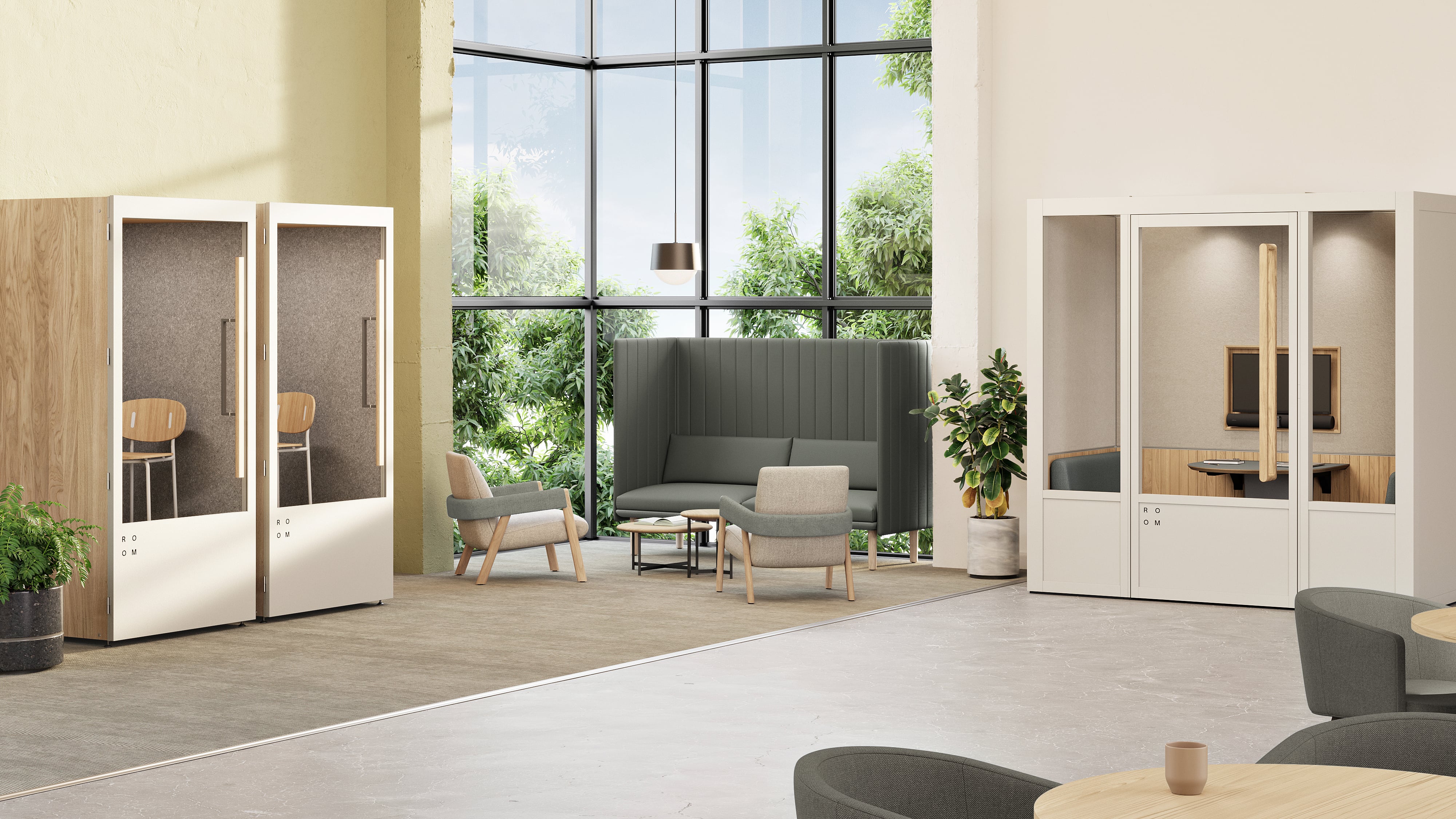
When everyone is at the office at the same time, noise continues to be a challenge. Solving the acoustical problems of open-plan offices has spawned many competitors in the privacy pod category.
“The way companies occupy space has changed fundamentally,” said Thierry Ondet, managing director at ROOM, a provider of modular, soundproof booths for focused work which launched in 2018. “Fewer businesses are betting on a fixed footprint years in advance, and that shift is rippling through every layer of commercial real estate: how buildings are financed, how leases are structured and how space is allocated.”
According to Ondet, “Modularity isn’t a trend anymore. It’s the baseline expectation. When a tenant signs a 12- or 24-month lease, a fixed build-out is a liability, not an asset. Modular furniture gives tenants the same flexibility their lease allows and the ability to adapt as quickly as their business needs evolve.”
Informed by science
For employers, even modest gains in workforce performance generate substantial returns. Because employee compensation typically represents the largest operating expense for most organizations, a small increase in productivity can far outweigh investments in workplace improvements. Neuroscience has become an important part of the conversation and is influencing new product development at Chicago Design Week.
Neuroscience in interior design, also known as neuroaesthetics or neurodesign, applies brain science to the built environment. It studies how color, light, layout and textures trigger measurable biological responses so that designers can create spaces that lower stress, elevate moods and improve cognitive health.
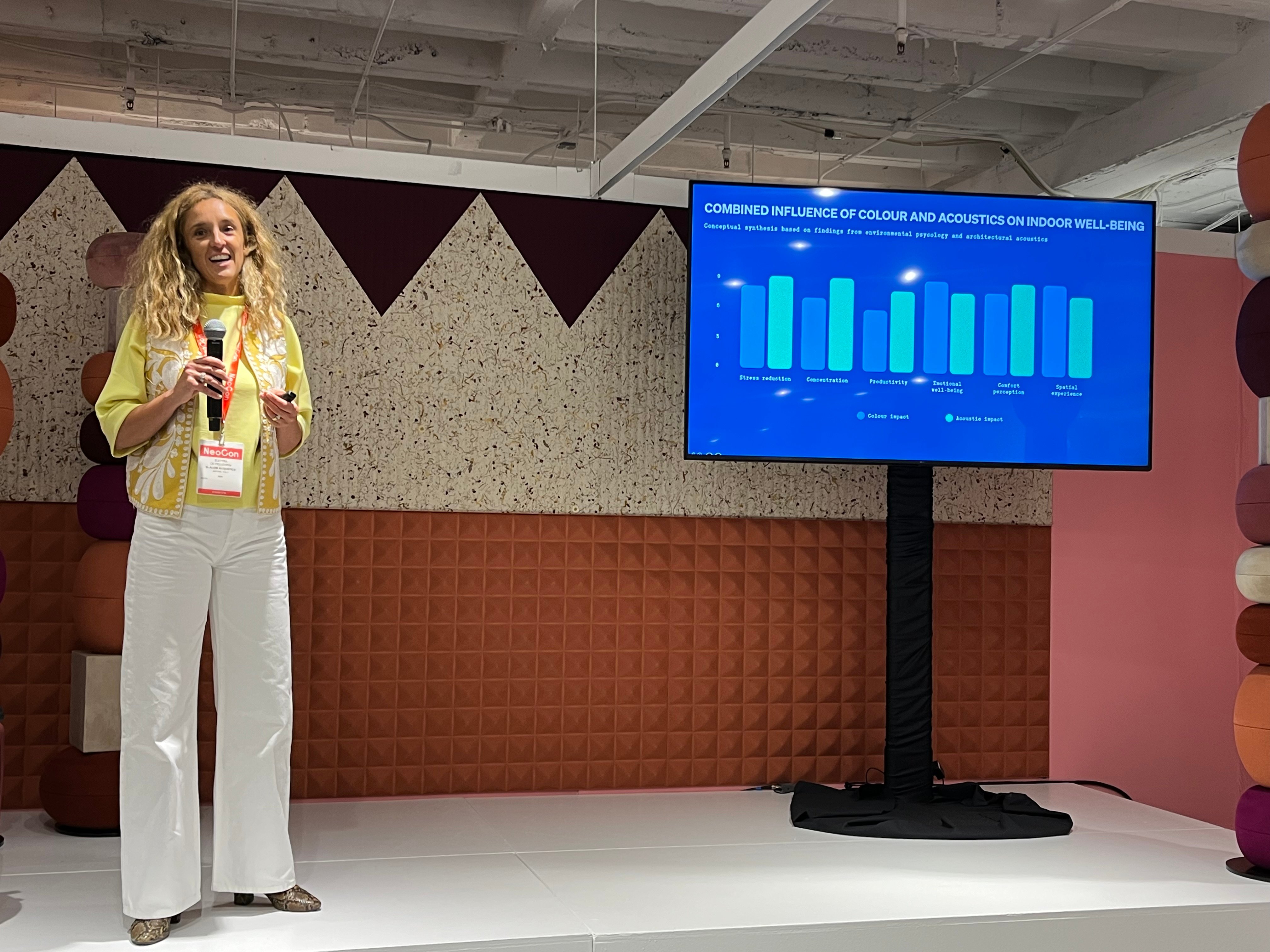
“We spend most of our lives inside designed environments like airports, offices and hospitals, but we rarely ask ourselves how are those spaces making us feel,” said architect Elettra de Pellegrin, founder and CEO of Slalom Acoustics. “Long before consciously evaluating a space, our body has already reacted to it. Neuroscience suggests that we do not perceive environmental materials as one isolated channel, but as a connected ecosystem.”
Pellegrin added, “When a space makes us feel immediately more calm and connected, all the elements—lighting, colors, sounds—are aligned. That feeling is not accidental.”
Meanwhile, commercial design products are also being developed with an understanding of neuroinclusive design to help create environments that support the full range of human nervous systems, including attention-deficit/hyperactivity disorder (ADHD), obsessive-compulsive disorder (OCD), autism and dyslexia.
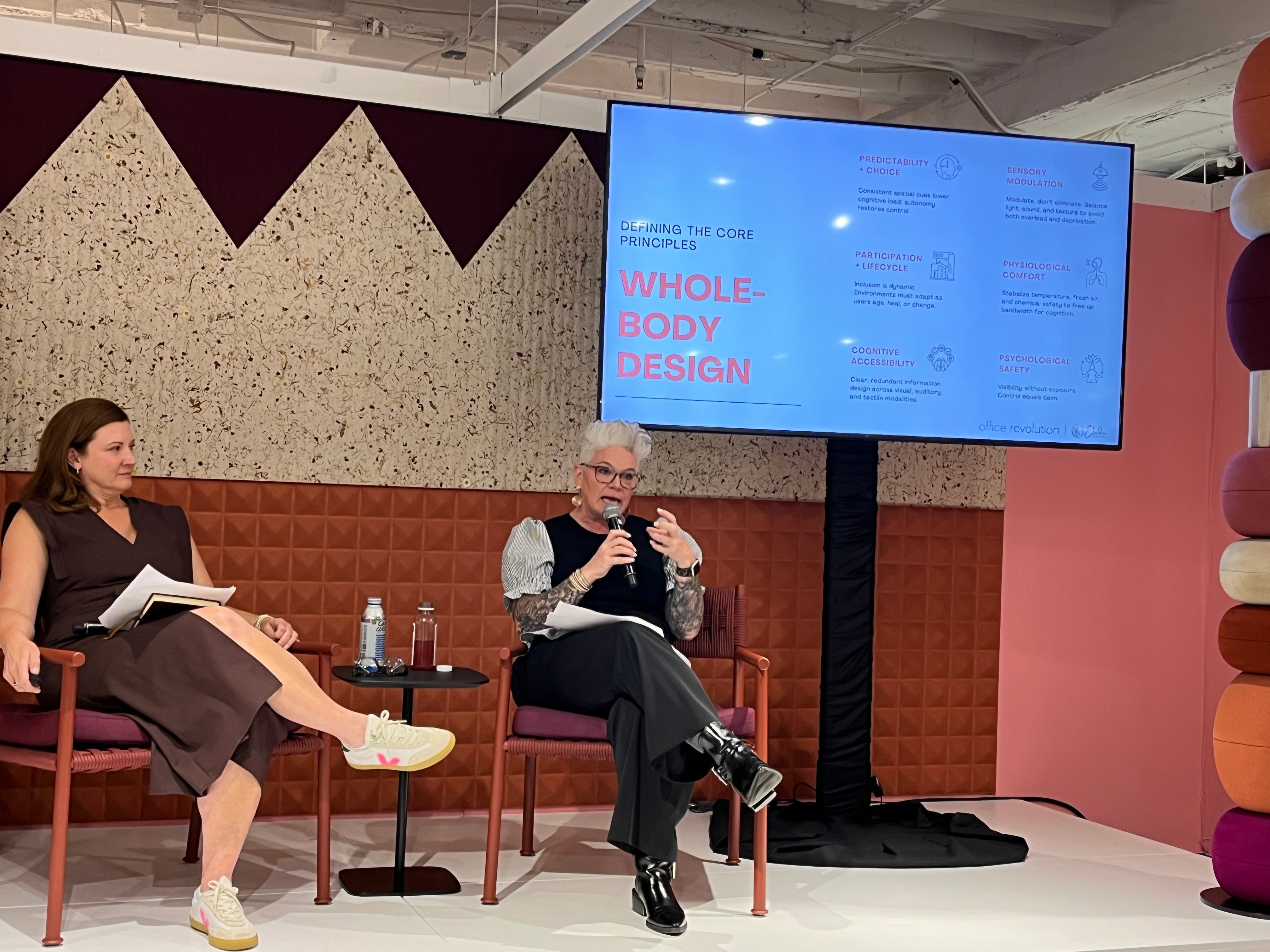
The next chapter in the evolution of inclusive design is “salutogenic spaces” according to Jill Stewart, president of Office Revolution, and Kelly Colón, neurodiversity expert and founder of Eledex Coaching & Consulting, who delved into this topic during their NeoCon Talks conference session.
“Designed spaces are aesthetically pleasing, beautiful and technologically advanced,” said Colón. “And yet the occupants are largely dysregulated, often burnt out, unfocused and not able to interact with that environment in the way in which it was designed.” Also known as whole body design, the salutogenic approach addresses these symptoms by recognizing humans as complete organisms who thrive in spaces that have been designed for all their systems—sensory, cognitive, physiological and psychological—in a unified way.
Designed for wellness
Another major topic receiving attention at Chicago Design Week is wellness-centered design, which can be achieved through the WELL Building Standard. Developed by the International WELL Building Institute, WELL focuses on optimizing human health and performance through factors like air quality, water quality, lighting, thermal comfort, movement, nourishment and workplace well-being.
“I tell designers and facility managers that you could have more impact on people’s health than their doctor because of the spaces you’re designing and managing,” said Steven Brown, senior vice president of global market development at the International WELL Building Institute, during his NeoCon Talks conference session. “Once that light bulb goes off as they realize how important their role is, and should be, the WELL Building Standard can be their science and research-backed library of strategies and roadmap to help create these healthy environments.”
For commercial workplace tenants, WELL-certified spaces can deliver measurable business benefits. Improved indoor environmental quality has been associated with higher employee satisfaction, lower absenteeism, enhanced cognitive performance and stronger employee retention.
In today’s competitive labor market, organizations can view workplace wellness investments as a talent strategy rather than a facilities expense. Furniture and furnishings are part of that story.





You must be logged in to post a comment.