

NAREE Special Report: Retail Recovery Attracts Institutions
Stronger occupancies achieved through lack of development are attracting investors.
The retail recovery brought about by cessation of development is attracting institutional investors back to the sector.
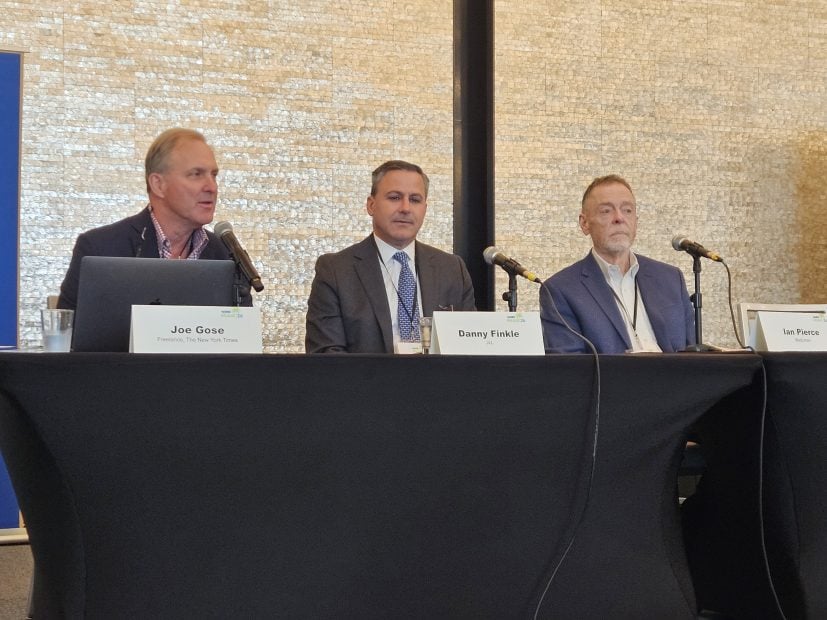
With owners remaining risk averse despite retailer frustration at the continued lack of new space, institutions have realized how strong retail fundamentals are, noted Danny Finkle, senior managing director & co-leader of JLL’s U.S. capital markets retail group, during the retail panel at the National Association of Real Estate Editors 60th Annual Real Estate Journalism Conference, which took place in Miami last week.
It also helps that so many older and lower-performing malls have been successfully transformed. Finkle noted that the number of U.S. malls has dropped from a high of 1,500 at its peak to 750 today. At some point, it will probably be reduced to 600 nationwide, he predicted. The reduced competition is helping these remaining major fortress malls improve their performance—which in turn is attracting lenders and investors.
Meanwhile, transformation of Class B and C malls to other uses and for other types of retailers has likewise been so successful that those properties are also attracting buyer interest.
MORE FROM NAREE: New Cycle for CRE
“If the price is right, somebody is going to buy it,” observed Ian Pierce, a senior vice president at Weitzman, the Texas-based retail-focused commercial real estate services firm.
Some of those malls are refocusing around small, local tenants, effectively becoming incubator space, Pierce noted. They can charge these startups lower rent because of their space availability.
Others continue to find success adapting around convenience and service rather than traditional retail, and their solid occupancy levels are allowing them to charge high rents for visibility and accessibility. The result is institutional-level growth that is achieving trades at 6 and 7 cap rates, down from the 8 to 9 caps they used to go for, Finkle noted.




You must be logged in to post a comment.