

Brennan Investment Group’s Flexible Industrial Strategy
Explosive growth has not come from developing the flashiest facilities but from knowing which levers to pull at a given time.
When Michael Brennan founded Brennan Investment Group with his nephew in 2010, the firm didn’t have a square foot of space to its name. Now, the Chicago-based firm is the nation’s second-largest privately held owner of industrial real estate.
Over the past decade and a half, the company’s grown to own and operate a portfolio of nearly 60 million square feet of space across 29 states, amounting to more than $6.5 billion in assets under management.
A 36-year veteran of the industrial sector, with more than $20 billion in transactions under his belt, Brennan believes that his company has come this far not because it builds or buys the fanciest new facilities for high-profile tenants but because of its nuanced understanding of the industrial sector and the relationships it’s cultivated with investment partners and tenants. There’s also a distinct internal company culture that’s difficult to find anywhere else.
“We confine our activities to the best investments that we can find in America, and it doesn’t necessarily matter what kind of building it is or where it’s located,” Brennan detailed during a late afternoon Zoom call days after the firm had closed on an 800,000-square-foot Midwestern portfolio acquisition.

Eyes on the prize

If you scroll through the press releases on the firm’s website, it’s difficult to get an exact idea of what it looks for when investing in an industrial property, even if it did carry out nearly $2 billion in transactions last year. Brennan simply referred to the sector as a “vast expanse of opportunity.”
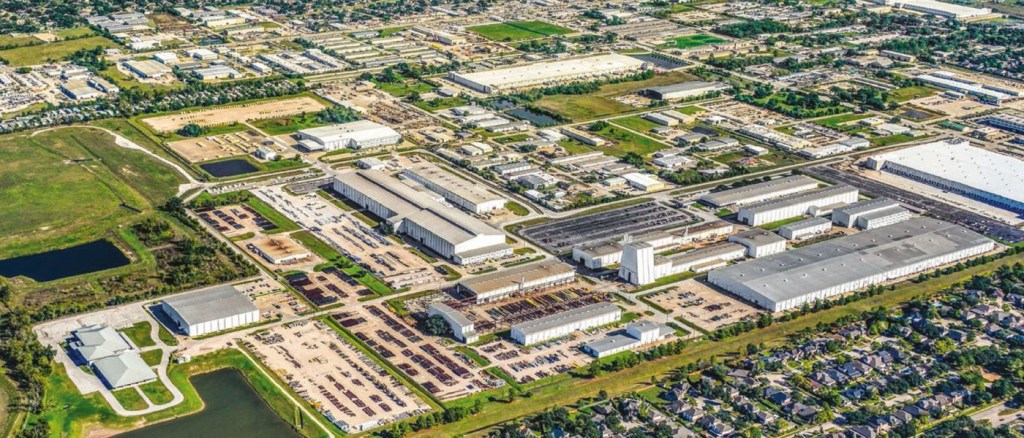
There’s everything from the purchase of a 1.3 million-square-foot gas equipment manufacturing campus in Houston, Texas, to the acquisition of a 56,000-square-foot light industrial facility in Cincinnati and the formation of a joint venture with asset management giant Barings, targeting $150 million of investment in industrial outdoor storage space alone.
Kevin Brennan, Michael’s nephew, sees the company’s strategy being governed by the ability to add value to an asset before reselling as soon as possible. The firm cares more for niche industrial development and acquisition opportunities than it does for building and leasing state-of-the art logistics campuses to the likes of Amazon.
“The consistent theme for Brennan is focusing on buying (what) we know, only in industrial, where there’s margin and there’s value,” Kevin related, with a cadence resembling a presentation to an investment committee.
Today, the value presents itself mostly through build-to-suit construction, redevelopment or sale-leasebacks.
Brennan’s first-ever opportunity fund, launched in September of 2024, focuses specifically on corporate-owned industrial real estate properties. The fund managers will often directly call the corporate owners and ask if they’re interested in selling surplus buildings.
“The U.S. occupier still remains the largest owner of industrial buildings, and we needed some way to tap into that,” Kevin said. “We’ve married the resources of Brennan with the resources of corporate America to produce great value for our investors.”
Speed is another value for Brennan. The firm’s average hold period for an asset is just over three years, well below the sector’s mean of five to 10. For Kevin, it’s not necessarily the strategy that’s changed over time, but the firm’s focus.
“We’re not on or off,” he commented. “We’re pulling levers differently depending on the market conditions—going harder on value-add when it makes sense, and on speculative (development) at other times.”
The willingness to pivot seems to have paid off. The firm’s average internal rate of return is 39 percent, with a 2.16 average equity multiple across each building it has sold.
Hot and cold
Both of the levers Brennan decides to pull and the tenants it pursues are more the result of subsector-specific market conditions than demand for any one asset.
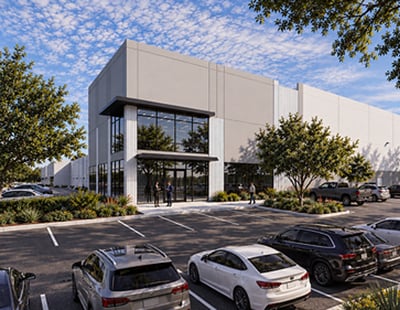
On the acquisition front, the firm has a healthy appetite for single-tenant net lease facilities and corporate real estate acquisitions, with its value-add focus directed toward shallow-bay buildings. Shallow-bay facilities are particularly appealing for Brennan because the assets boast diverse tenant bases, strong rent growth and low cap rates.
“We know the market and what they can pay us, and we can also bridge the gaps many times,” said Brad O’Halloran, an executive vice president & managing principal at the firm, who also leads investor relations.
“If we’re buying a 250,000-square-foot asset with 15 tenants that’s 60 percent leased, we feel like we can take it into the 90s,” O’Halloran said about the strategy.
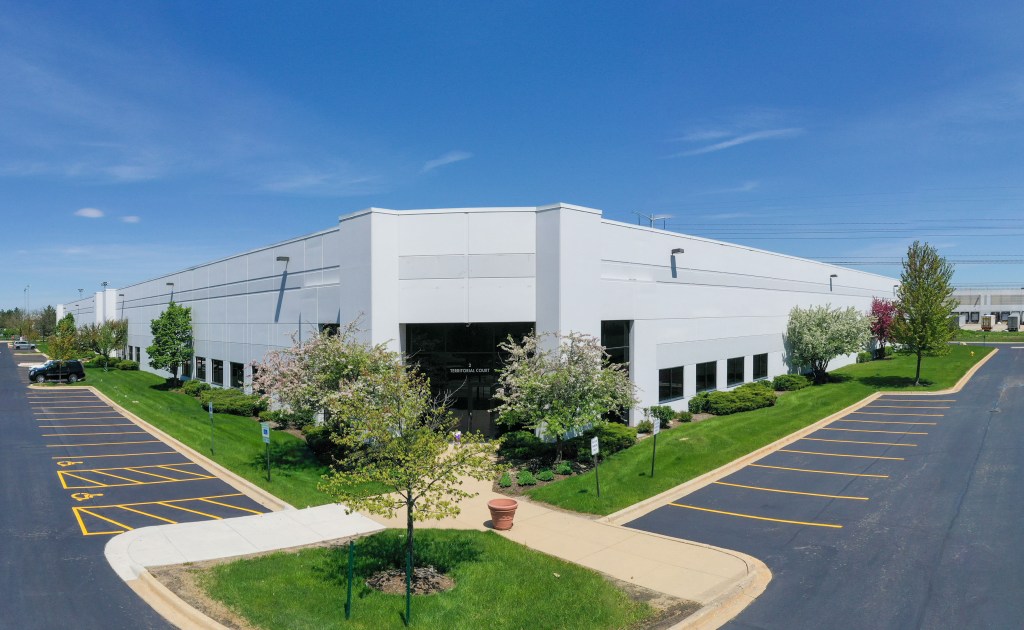
In January, the firm picked up nearly 1.3 million square feet of East Coast and Midwest shallow-bay space. In October, it acquired another 80,000-square-foot facility in Chicagoland’s Woodridge submarket, intending to convert it to four 20,000-square-foot small-bay facilities.
Among property managers, the firm has a reputation for being highly attuned to specific tenant needs, a trait that goes well with the types of occupiers who are hungry for this sort of space.
“Brennan brings real flexibility to deal structure and a willingness to get creative to solve tenant needs, including pursuing new acquisitions to accommodate strategic relocations,” said Kenneth Franzese, a principal at Lee & Associates of Illinois, which manages several Brennan assets in the area. “We love their ability to be ‘market makers,’ and tailor outcomes around specific users.”
Market makers
Brennan’s tenant of choice of late has been in the manufacturing sector, which is seeing pronounced growth, particularly in defense, energy, food and pharmaceutical production. The current administration’s tariff policies have only increased the near-term demand for space.
“The way I look at them, manufacturing companies are an absorber of land and builder of industrial—an animal that didn’t previously exist at the scale that it does now,” Kevin observed.
Last year, the company’s largest acquisition was a 16-building, 1.3 million-square-foot campus in Houston, Texas, that was formerly a factory for drilling equipment manufacturer Innovex. In addition to the diverse building sizes and their recent vintage, the firm was attracted to the bridge cranes, electricity accommodations and outdoor storage yards that dotted the campus.
Prior to the sale, Brennan stabilized the assets, leasing 16 of the 17 buildings after they were vacated by Innovex.
“My old boss used to say: ‘Mike, there are only two kinds of buildings in this world: full ones and empty ones,’” Michael recounted. “Sixteen empty anything is a lot of things to buy, and we needed great conviction in the Houston market as well as the manufacturing and energy industry.”
John Ferruzzo, partner & market leader at KBC Advisors, has represented Brennan in industrial transactions since its founding and was one of the brokers on the Houston deal. “Their ability to speak the language of industrial users puts tenants at ease and demonstrates that they truly understand the nuances of their business,” Feruzzo noted.
If there’s one industrial area that Brennan is generally avoiding, it’s ground-up, speculative construction. Even though building from scratch was a mainstay for the company after its founding, high construction and labor costs have made it exponentially more difficult.
“It’s the riskiest thing any investor can do in our space,” Kevin said. “You’re taking construction risk, timing risk and lease-up risk, and we’re only comfortable with that in certain markets.”
Practicing and preaching

Michael’s nuanced investment strategy is well informed. He was a founder of First Industrial Realty Trust in 1994 and its CEO until 2008, and while he enjoyed the leverage that being one of the nation’s largest owners of industrial real estate provided, there was something missing for him.
“When I left First Industrial, I saw a generational opportunity to enter the industrial space in a way where I would lose some of the prohibitions I had at a public company,” Michael reflected. “I wanted to be more entrepreneurial, even if it meant having no properties and two offices.”
The company’s growth to 18 offices with assets in 29 states, according to Michael, is the result of an ethos adopted by each new hire on the investment team. No one actively involved in buying or selling properties at the company takes a salary; they get paid only by the proceeds generated by the industrial assets themselves.
“We explained quite clearly that the way they would get compensated would be the same way that an investor got paid: by the fruits of the recycling of investments and nothing more than that,” he recounted.
It’s a practice that persists at the company to this day. “Drawing your compensation from the results of recycling is a hard model, but it’s a very rewarding one if you can do it,” Michael added.
The credo gives Brennan executives incentive to pursue deals with the highest resale value and deepens relationships with capital partners who get paid the same way. In its 16 years, the company has been able to build a network of high-net-worth investors, family offices and institutional shops, largely through word-of-mouth.
“This person tells a friend of theirs, a family office talks to another at a gathering and they basically then contact us and put them in touch with another group,” O’Halloran detailed. “Our goals are the same as theirs.”
Standing up, standing out
In addition to hurdles around tariffs, interest rates and overbuilding in the sector, both Brennans are concerned about investor competition—be it from REITs or more local, equally niche investors.
“There’s both more money and more people in the market, and sellers can always charge a higher price because there’s a longer line of capital,” Kevin acknowledged.
Brennan doesn’t have the reach and resources that Prologis or Link Logistics does. And, at the other end of the spectrum, there are hyper-niche investors that are also hard to compete with.
A former financial analyst at Prologis, Kevin understands both how potential competitors think as well as some areas they may miss.
“We can buy things at rates lower than some of the lower-cost capital folks would be interested in buying,” he noted. “They probably didn’t see the deal in the first place.”
To accomplish this goal, Brennan has structured its 18 regional offices with market- and asset-specific investors who have the goal of buying assets below market price. “We have a person in Nashville—that’s all he does,” Kevin said. “He wakes up and eats, dreams and breathes Nashville. He can go to every single (property) tour and can be at every single walkthrough with a contractor.”
This hands-on approach also applies to the company’s asset management strategy. “Once you buy the thing, you’re just getting started. Michael and I literally go through every single building we have.”
The compensation structure at Brennan also produces a degree of camaraderie among the firm’s investment partners. “When our partners do well, we do well,” Kevin said. “When they suffer, we suffer, and if they do, they won’t be with us next time.”
Michael compared the model to that of the service industry. “When I was a kid, we’d drive in front of the golden McDonald’s arches that said, ‘10 million hamburgers sold here.’ If you drove back in 5 years, it would say ‘50 million sold here.’ We just want to keep selling hamburgers–or in this case, industrial buildings.”





You must be logged in to post a comment.