

Industrial Big Box Hits a Reset in Greater Philadelphia
Colliers’ Tom Golarz on shifting supply-demand dynamics, corridor-level performance and what comes next for the modern bulk market.
After several years of rapid expansion, the Philadelphia super region’s big-box industrial market is beginning to recalibrate as new development slows and recently delivered space is absorbed, according to Colliers’ year-end Industrial Big Box Report for 2025.
Spanning Eastern Pennsylvania, Greater Philadelphia and Southern New Jersey, the six-submarket region encompasses more than 433 million square feet of industrial inventory and remains one of the most closely watched logistics hubs in the country.
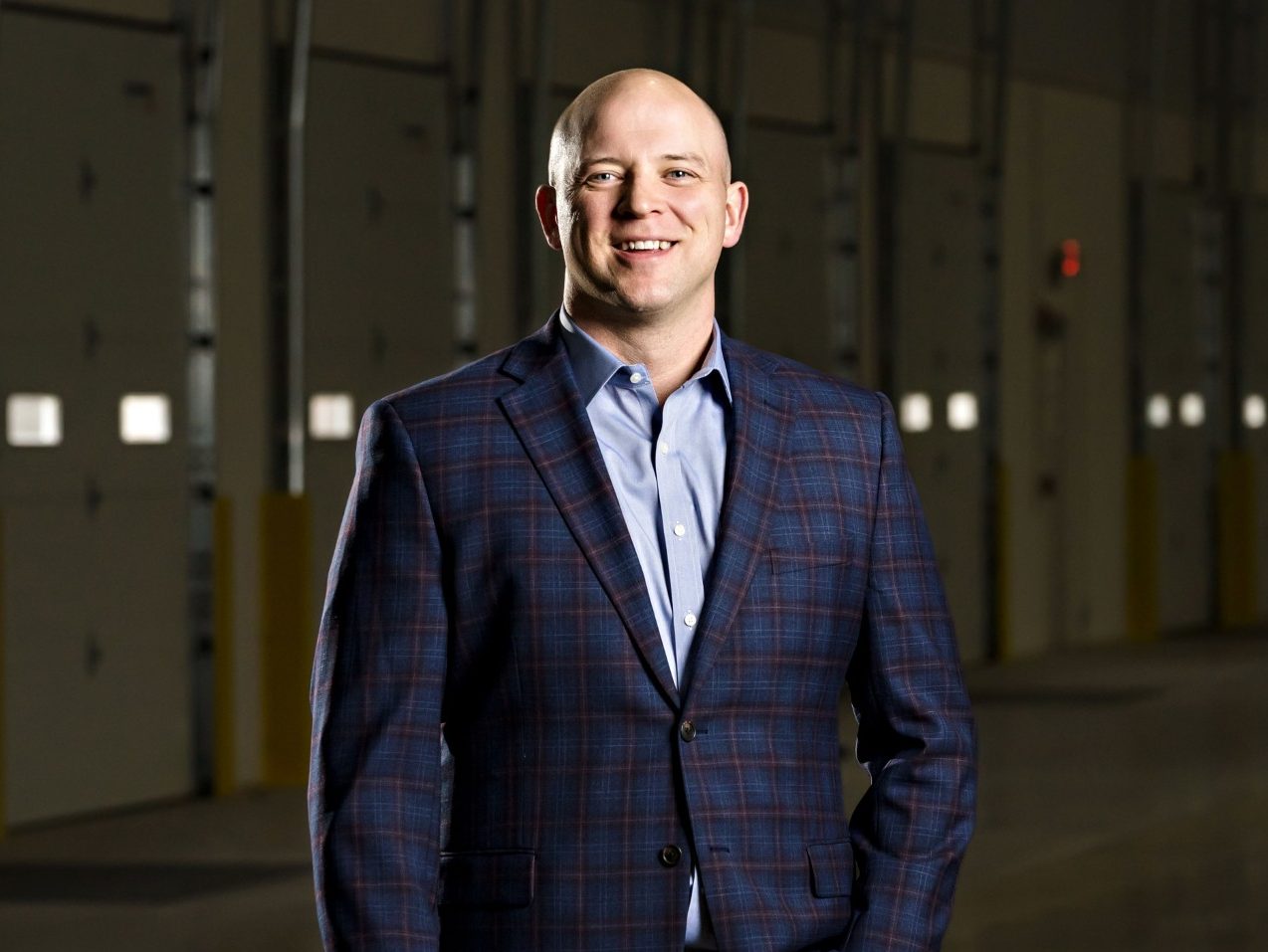
In this interview, Colliers Executive Vice President Tom Golarz breaks down how performance is diverging across key corridors, how supply dynamics are shaping vacancy and rent trends, and what to keep an eye on as the subsector continues to evolve.
READ ALSO: Philadelphia’s Industrial Market Saw Strong Deliveries in 2025
How would you characterize the current state of the big-box industrial market in the Philadelphia super region?
Golarz: The overall market is working toward equilibrium. There are pockets of the super region that are doing well and others which are facing challenges related to leasing velocity. Central Pennsylvania and Burlington have carried the region over the last 18 to 24 months, however, Burlington’s activity has been dominated by Asian 3PL tenancy. CPA has seen a more diverse set of tenant activity.
In your report, you focus specifically on modern bulk warehouse and distribution facilities larger than 200,000 square feet with at least 28 feet of clear heights. How is this segment performing within broader industrial market, particularly in comparison to smaller-format industrial space?
Golarz: Overall, we are seeing a general flight to quality. That said, the under 200,000 square feet market and less than 28 feet clear is an incredibly viable industrial market regionally and nationally. Smaller boxes are more expensive to build and harder for developers/capital to underwrite. As such, they have experienced significant rent growth and low vacancy.
Eastern Pennsylvania continues to rank as the nation’s top big-box market by demand. What factors are underpinning that sustained level of large-format leasing activity?
Golarz: Simply, the ability to reach over one third of the U.S. population and 50 percent of the Canadian population in a days truck drive. EPA provides access to major metro markets such as New York City, Philadelphia, Baltimore and D.C. A vibrant highway network allows for east, west, north and southbound travel.
Within the broader Eastern Pennsylvania market, Central Pennsylvania has recorded roughly 6.7 million square feet of leasing and more than 4.3 million square feet of positive absorption. What’s driving that performance, particularly along the I-81 and I-83 corridors?
Golarz: A combination of pricing parameters, flight to quality from existing tenant base and labor availability.
The Lehigh Valley posted strong leasing volume but negative net absorption. How should we interpret that disconnect in terms of supply and demand in the big-box segment?
Golarz: The LHV did see significant construction activity and deliveries which were not met by tenant demand. There were also several second-generation Class A buildings which had been leased during the height of the pandemic which tenants gave back to landlords. A key point of focus here is that rent growth has continued steadily. No one wants to sit on a vacant building, but we have not seen tremendous rent ‘compression.’ With limited supply under construction, we will see this space absorbed through 2026.
By contrast, Burlington County has maintained relatively low vacancy alongside more than 4 million square feet of leasing activity. What’s supporting that balance, and do you expect it to persist?
Golarz: Much like the LHV, Burlington is land constrained which limits forward-looking supply. No one has a crystal ball, but my supposition is that Burlington will continue to see market-leading lower vacancy rates due to demand-supply fundamentals.
Asking rents across key corridors range roughly between $8 and $13 per square foot. Within the big-box segment, to what extent are rent levels driven by location vs. building specifications and asset quality?
Golarz: This is location driven, not quality. Candidly, buildings which are ‘non big box’ can sometimes command equal or higher rents than the big box category in certain markets. Northeast Pennsylvania ($8.00 per square foot) is the market’s lower cost alternative for big box. That said, at $8.00 per square foot that is tremendous rent growth in only 24 months time.
READ ALSO: Industrial Real Estate Market Trends
Construction starts have slowed significantly year-over-year. How is this slowdown in new development influencing leasing activity and the absorption of recently delivered big-box space?
Golarz: It is not necessarily affecting leasing velocity, however, in certain size ranges we are seeing groups be pushed to make decisions due to a lack of supply—namely the more than 1 million square feet size range. A lack of new development will ultimately allow for absorption but a lack of construction does not equal increased demand.
As the market works through new supply, how is negotiating leverage shifting between landlords and tenants in large-format deals?
Golarz: It’s very market/building specific, and that’s why it’s very important to track and understand your competitive set as a developer and broker. You may be the only game in town so to speak, or you may be one of three or four existing buildings experiencing significant downtime. The latter will sometimes drive leverage for tenants. That said, tenant rep brokers which give guidance that they can give you the world in concessions are simply not seeing both sides of the deal. There is sometimes a little leverage—for landlords and tenants—and we all fight over the dime, but these are long-term partnerships where everyone has to win.
Looking ahead, what indicators or signals will you be watching most closely this year to assess the direction of the big-box segment?
Golarz: It’s challenging for decision-makers at these companies to make long-term bets during periods of uncertainty. The more certainty we can have—interest rates, geopolitical etc.—the easier it is for companies to make long-term commitments to space.
In times of uncertainty, the companies doing new deals are doing them as they are enterprise requirements—i.e. they solve a problem or are part of a broader initiative. I’m watching the Fortune 500 companies out in the market and whether they’re making new deals which generally require significant levels of approvals before completion.



You must be logged in to post a comment.