


MCB’s on a Mission for Development Success
Inside the Baltimore-based firm's community-centric approach.
There’s no real estate investment or development project that is too small or too large to pique the interest of MCB Real Estate.
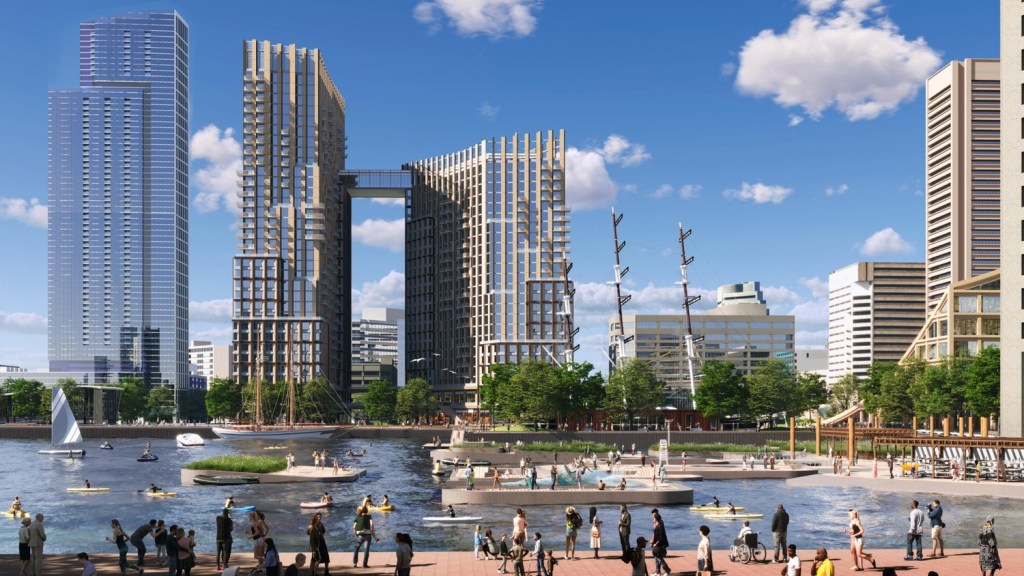
The Baltimore-based investment and property management firm, co-founded by P. David Bramble and Peter Pinkard, has recently engaged in a wide range of deals—from medical office developments and grocery-anchored retail acquisitions to a $900 million mixed-use waterfront redevelopment.
But while size or property type is not a factor for a firm with $4 billion in assets under management in 30 states, these projects have two things in common: They’re all complicated and they provide an opportunity to enhance local life.
“(It’s) something with a story to it, where you are finding a good or greater good way to improve a community,” Bramble, who along with Pinkard serves as managing partner, told Commercial Property Executive during a lengthy phone interview conducted after business hours.
Keeping the lights on
Lately, MCB has had an affinity for retail and multifamily, with some industrial and medical office sprinkled in. And while it prioritizes stable cash flows alongside the desire to give back to the surrounding area, sometimes, the scale tips to one side.
“Investing is challenging,” said Bramble, who was late for our meeting because he had “10 people in my office” at our scheduled meeting time. “Interest rates are finally moderating, construction costs have stopped rising rapidly, but they really haven’t fallen, as far as we’ve seen.”
A native Baltimorean and UPenn undergrad and law grad, Bramble is no stranger to crafting narratives. He and Pinkard, who hails from Baltimore’s Pinkard real estate dynasty, met while Bramble was working as a mortgage broker and real estate attorney and Pinkard was brokering deals. They founded MCB in 2007—just before the global financial crisis—so they are familiar with investing in choppy waters. Today the struggles include competing with the likes of Simon Property Group, Kimco and larger investment managers.
“There is still a lot of capital on the sidelines chasing deals, which makes it really hard to compete when you’ve got a lot of bidders with a cheaper cost of capital,” explained Mike Trail, the firm’s chief investment officer. “Everyone is trying to get into retail, and it’s really hard to compete unless you have an edge.”
Leveling the playing field
MCB’s competitive advantage is its relationships with retail tenants and local stakeholders. When considering a new acquisition, the firm has likely dealt with the parties before. There’s also a strong understanding of what communities need to thrive.

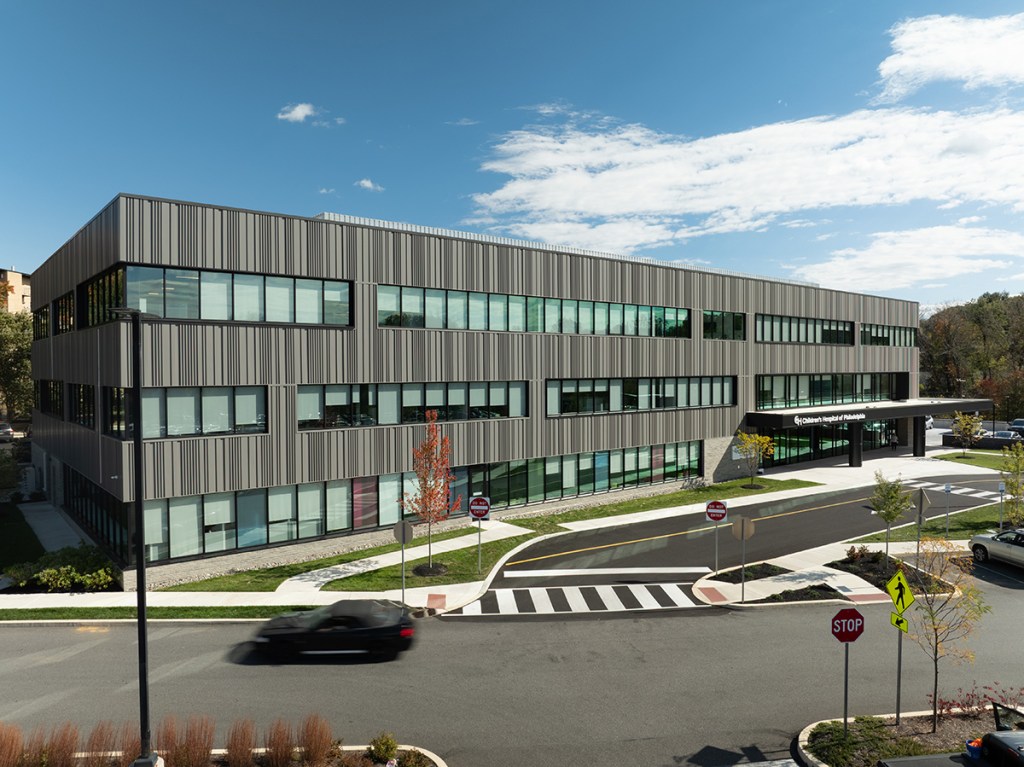
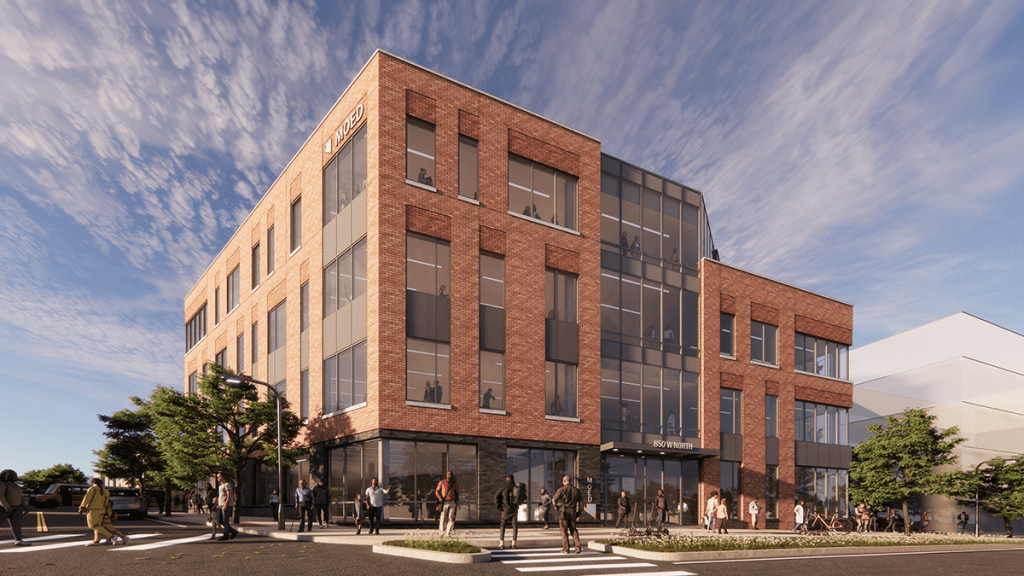
In November 2025, for example, MCB Science + Health, the firm’s medical office development arm, broke ground on the Drexline Medical Office Building, a 60,000-square-foot medical office building located adjacent to the Drexline Town Center, a Philadelphia-area property anchored by a ShopRite supermarket. The firm zeroed in on that location because it would be convenient for residents to shop for groceries and tend to their medical needs in one location.
MCB also relies on its reputation and its ability to recognize well-trafficked, under-retailed markets. The firm recently closed on the $47.5 million acquisition of a 14-plot retail space in Brooklyn, N.Y.’s Bay Ridge neighborhood that pre-COVID was home to a Century 21 department store. In a $100 million partnership with local investor Osiris Ventures, MCB will transform the site into 95,000 square feet of modern space for essential retailers.
“I would say most of the value-add that we’ve been looking at revolves around the ability to turn a box or turn a space,” said MCB President Gina Baker Chambers, who joined the firm in 2023 after working in acquisitions, capital markets and asset management roles at Artemis Real Estate Partners. “It’s no secret that many managers are doing that, but we want to make sure that we are identifying locations and even micro locations where people traffic and want to be,” Chambers noted.
MCB also knows a good partner when it sees one. Last month, the firm acquired Epic Real Estate Partners, an Austin-based investor in grocery-anchored retail properties with more than $575 million in assets under management. MCB and Epic had previously collaborated on the acquisition of a 440,000-square-foot shopping center in San Antonio.
“It really was the Epic team that we thought highly of, as people first and then as investors second,” Chambers recounted.
Labors of love
But it’s the hometown urban revitalization projects, which bring safety and employment to underserved areas of Baltimore, that give the firm its ethos as a community builder.

“You can build anything you want if you have the money,” Bramble suggested. “But if the community doesn’t support and use it, it’s not going to perform.”
Recent such projects include the redevelopment of a 19th century manufacturing facility in East Baltimore as well as Reservoir Square, which includes 20,000 square feet of retail, 172 new townhomes and a new Mayor’s Office of Employment Development in West Baltimore.
Reservoir Square is taking shape at a site once nicknamed “Murder Mall” because it was beset by decrepit public housing and a shopping center where area residents could hear gunshots from the outside. Those spaces have since been demolished, and the project is expected to come online later this year.
Baltimore’s MLR Partners, which started Reservoir Square nearly 10 years ago, is MCB’s chief investment partner on the project. “The project had the potential to make a real, positive impact on the surrounding community and to contribute meaningfully to the city’s long-term growth,” MLR Principal & CEO Mark Renbaum told CPE.
MCB has been working with MLR for over half a decade, beginning with the development of Northwood Commons, a 120,000-square-foot mixed-use redevelopment of a boarded-up shopping mall.
“(MCB) began and built its reputation in Baltimore by doing the hard work the right way: delivering complex projects with integrity, discipline and long-term commitment,” Renbaum said.
Passion project
Currently, two projects dwarf the others: Harborplace, a $900 million redevelopment of the city’s long-neglected Inner Harbor district, and Viva White Oak, a $2.8 billion, 280-acre mixed-use campus located midway between Baltimore and Washington, D.C.

MCB bought the 20-acre Harborplace parcel in 2022 after a tumultuous three-year receivership. A port since colonial times, the site was transformed into a commercial district in the 1970s by The Rouse Co. following decades of urban decline in downtown Baltimore. It initially opened to widespread acclaim as a festival-style waterfront promenade with three separate shopping malls and pavilions. But by the middle of 2024, it had lost more than 90 percent of its retail tenants.
The decline wasn’t for lack of trying. General Growth Properties, the owner since 2004, went bankrupt in 2008. Ashkenazy Acquisition Corp., which purchased the site in 2014, later defaulted on a $76 million acquisition loan after failing to secure new tenants for the dwindling malls.
MCB plans to replace the current Harborplace with four buildings containing 400,000 square feet of commercial space, 900 multifamily units across two buildings and an elevated public park. The project will require five to 10 years of development, planning and construction. “I always say, be careful what you ask for,” Pinkard joked.
But MCB’s execs knew this was more than a real estate deal. “This is a very important civic project in the beating heart of Baltimore,” Bramble said.
As such, over the course of two years, the firm hosted a mix of public forums, dinners, canvassing events and online community engagement spaces that covered all the bases. One forum was held at a senior housing community located near the harbor, while a youth engagement program considered what local teens and young adults would like to see at the project. Additionally, MCB placed advertisements on buses and knocked on more than 1,000 doors to maximize community input for the project.
You can build anything you want, if you have the money. But if the community doesn’t support and use it, it’s not going to perform. You have to build things that will become part of the fabric of their lives.
—P. David Bramble, Co-Founder & Managing Partner at MCB Real Estate
The efforts came to a head during the 2024 elections, when a ballot measure on changes to area zoning—which previously designated the site a public park—passed with more than 60 percent of the vote. “It’s been a heavy lift,” Bramble recounted.
Gensler designed 303 Light St., the project’s residential component. “Everyday people drove the planning approach,” said Vaki Mawema, principal & co-managing director of Gensler Baltimore.
Other inspirations were waterfront redevelopments in Washington, D.C., San Diego, Toronto, Vancouver and Copenhagen.
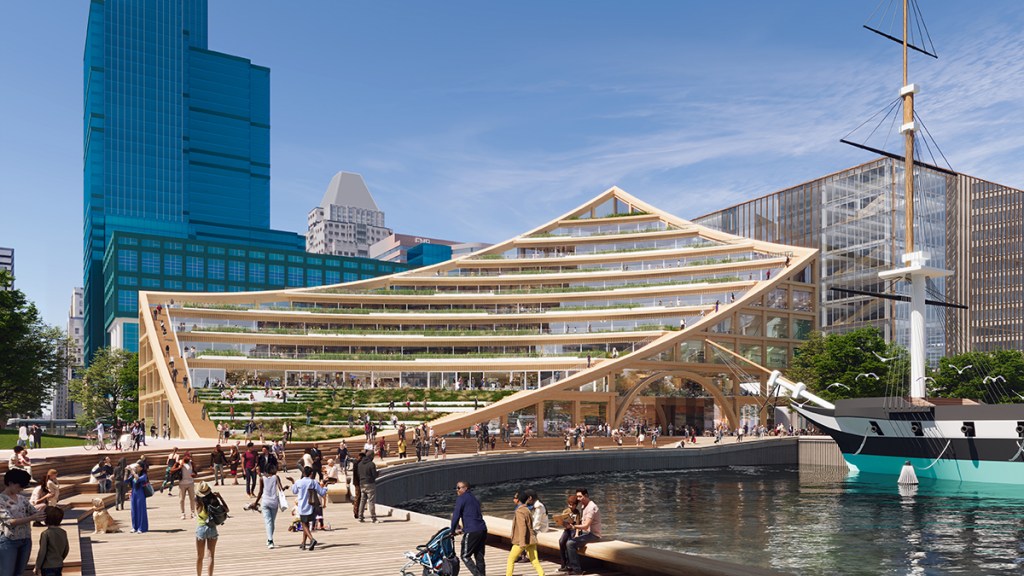
The centerpiece of Harborplace will be 201 E. Pratt St., a 200,000-square-foot mass timber mixed-use building with a water-facing exterior covered by landscaped terraces.
“The best buildings don’t just serve their community,” said Kim Herforth Neilsen, founder, senior partner & creative director for 3XN, architects for 201 E. Pratt. “They become catalysts that create new patterns of life around them.”
Bramble believes that addressing the community’s priorities—more local, black-owned businesses; smoother connections with the rest of Downtown Baltimore; and a better activation of open spaces to enhance public safety—makes Harborplace a stronger asset for MCB’s investment partners. And he views the very idea of investment as a responsibility.
“Institutional investors are aggregating money, which at the end of the day belongs to working people: policemen, firemen, teachers,” Bramble said. “We have a solid responsibility to invest that money, get a return, and most importantly, give it back.”
Full circle
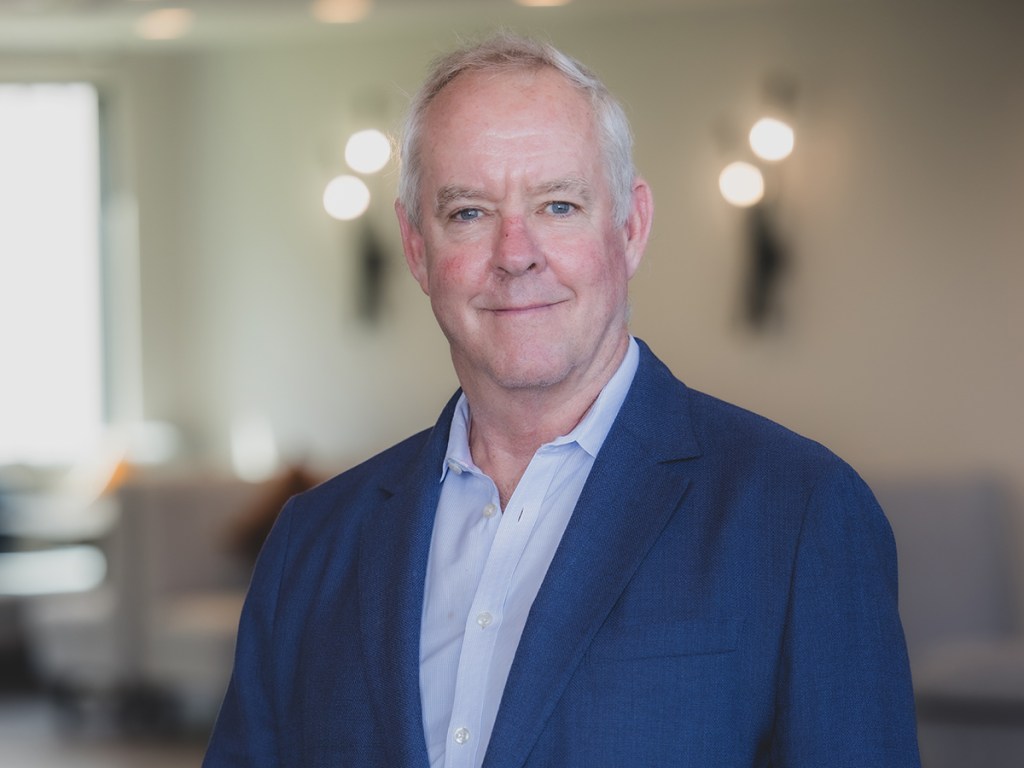
MCB’s connections to Baltimore real estate go back more than a century.
Pinkard’s grandfather, Walter Pinkard, founded WC Pinkard & Co. in 1922 as a property management firm. All four of his sons ended up working in real estate, with Walter Jr. taking the reins of his father’s company in the 1970s. The company underwent a series of mergers and acquisitions, eventually becoming Colliers Pinkard, now part of Cushman & Wakefield’s Baltimore office. Prior to the merger, that company was led by Gregory Pinkard, Peter Pinkard’s older brother.
In February 2025, Peter reconnected with the Pinkard name in an official capacity when MCB purchased Pinkard Properties, a Baltimore-based commercial property management firm led by Gregory and his daughter Katherine Pinkard.
Bramble saw the merger as a “natural progression” of MCB’s value proposition, with Pinkard Properties now providing locally based third-party management to its entire portfolio.
“We were looking at how we could grow our business and platform, and spoke to a lot of companies about opportunities and how we might do it.” Peter said.
The stars aligned when MCB’s previous in-house head of property management retired. The firm was looking for someone both young and local, and the fact that the firm shared a history with Pinkard Properties was the icing on the cake.
“We built an internal property management (business) several years ago, and given the scale of our expansion, we wanted to upgrade and professionalize it,” Bramble detailed.
The merger has led to a vast increase in management responsibilities for Katherine, who now oversees teams and assets spanning the continental U.S. But in terms of strategy, it is business as usual.
“We treat all assets the same, whether they are third-party (or not), bringing that institutional-quality mindset with the ability to be nimble and pivot,” she said.





You must be logged in to post a comment.