

Where Tech and CRE Meet, SteelWave’s There
The West Coast developer has been at the right place at the right time—and not by accident.
Twenty years ago, before anyone knew what a search engine was, SteelWave leased to Google what would become its corporate headquarters. The San Francisco-based design and development firm has been seizing tech-related real estate opportunities ever since.
Since 1998, the company has developed or acquired more than 118 million square feet worth of commercial real estate valued at nearly $18 billion in tech-focused markets like the Bay Area, Los Angeles, Seattle and Austin, Texas. And the owner, whose holdings include office, industrial and mixed-use space, recently ventured into digital real estate investing.
But for SteelWave Founder & CEO Barry DiRaimondo, the secret sauce hasn’t been about jumping on tech trends before others. It’s been about tracking venture capital investment and listening to tenants about the type of space they want to occupy.
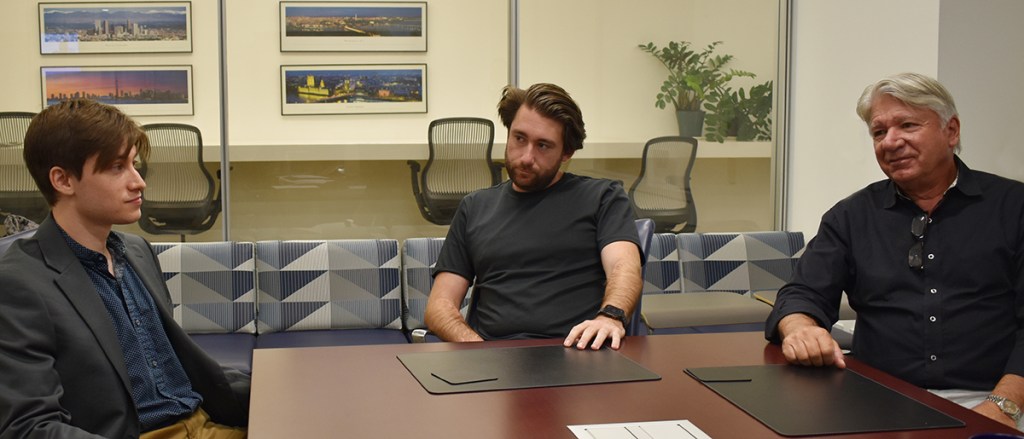
“I think all the tech companies have figured out that productivity is tied to pushing people into (their) real estate, and that’s the name of the game right now,” shared Barry, who arrived to our interview with son Mitch DiRaimondo dressed more like a tech mogul than the seasoned real estate developer he is.
Speed in a slow-moving industry
Currently, SteelWave’s markets are alight with leasing and investment due to the explosive growth of artificial intelligence and biotech. San Francisco, which claimed 70 percent of the more than $80 billion of VC investment this year, according to Ernst & Young, is particularly hot.
“(It’s) always been a strong tech market with the MAG7 firms—think Google, Apple, Meta and Nvidia—and Silicon Valley is no exception,” said Steve Dunn, the firm’s senior managing director of acquisitions and development for the San Francisco Bay Area. “Properties are starting to be reabsorbed with increased rents, and their values are increasing, too.”
San Francisco ranked as the nation’s top market for office deliveries in the first half of 2025, with 1.7 million square feet of new space coming mainly from tech and life science companies, according to Yardi Commercial data. Meanwhile, Avison Young shows that the price per square foot for office assets in San Francisco had increased by nearly 50 percent though last year’s third quarter.
“The city’s recovery isn’t just underway—it’s accelerating,” commented Louis Thibault, manager of market intelligence for the U.S. West region at Avison Young.
At the same time, Los Angeles recorded the second-highest sales price per square foot for office assets this year.
SteelWave received approvals last September for its plan to redevelop the Golden Gate Produce Terminal in South San Francisco into a five-building, 2.5 million-square-foot biotech campus. That same month, the firm signed a lease with self-driving vehicle startup Applied Intuition at Sunnyvale Business Park, a five-building 624,000-square-foot R&D campus in San Jose that it completed in 2014.
Where SteelWave is more active currently, however, is retail acquisitions. “It’s buying yesterday’s malls in good locations, which are twice as big as they should be, because retail demographics don’t support as much mall space as they did in the ’90s,” Barry said.
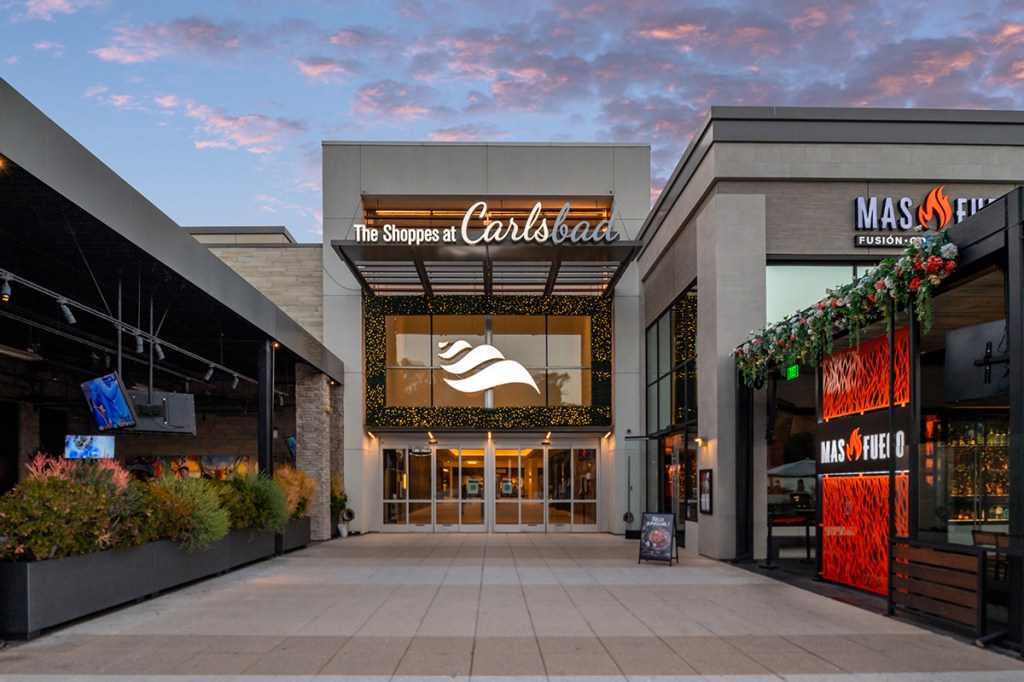
Back in September, the firm acquired The Shoppes at Carlsbad, a 1.1 million-square-foot shopping center located outside San Diego. With acquisitions like this, the company prefers to demolish around half of the existing space, rebuild around 50,000 square feet as mixed-use and sell the remaining land to a multifamily developer. In a way, it allows the company to give back to the communities in which it operates.
“We have a housing issue in Southern California, but we see some of these (Class) B malls as an opportunity to not just reinvigorate the retail component but also add housing and a mixed-use concept,” said Gregg Hall, SteelWave’s senior managing director of acquisitions and development for Los Angeles County.
Design-forward
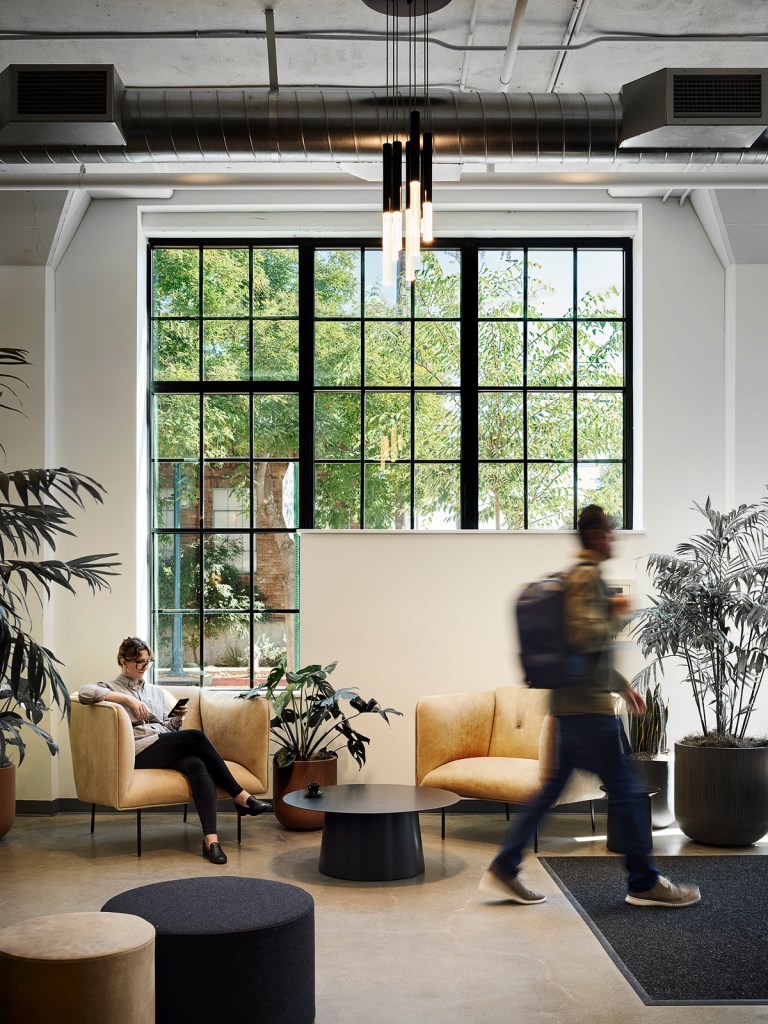
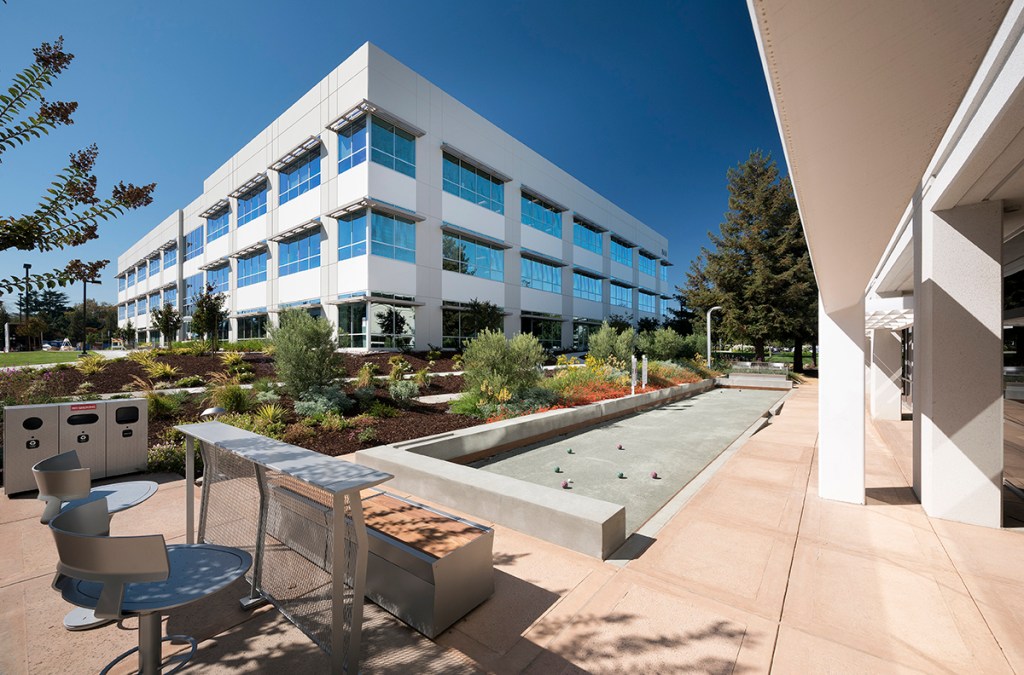
SteelWave describes itself as a design-led commercial real estate developer, and its design focus tends toward the practical needs of tech tenants, who see their space as a strategic asset rather than a cost center. They want office space that will help them attract talent and keep them happy.
“It’s about creating a facility where people are going to spend as much time as the company requires,” Barry explained. “The more time they’re on-site, the more productive they are.”
SteelWave is also a big fan of conversions, focusing on historic commercial properties and obsolete malls. Examples include the LAB Emeryville, a 73,000-square-foot life science campus that emerged from the shell of the 1919-built Sherwin Williams office building in Emeryville, Calif.
A conversion of an old industrial property will often include elements of the previous building with ample natural light and the latest weapons in the amenity arms race added in.
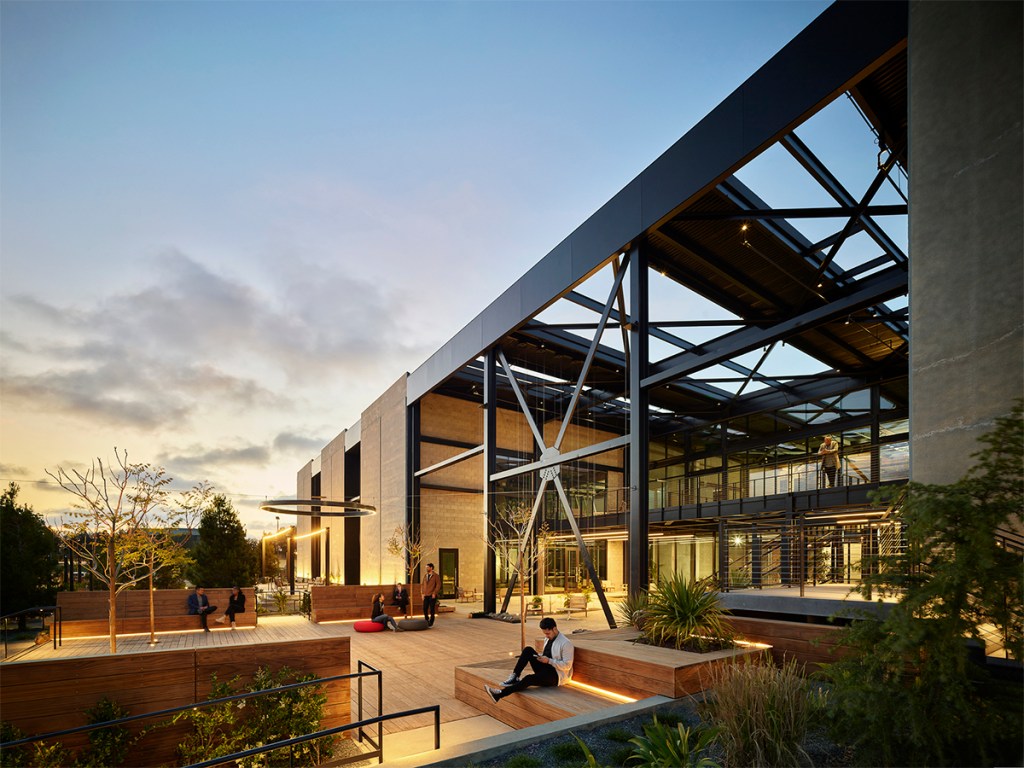
EYRC Architects Partner Patricia Rhee said SteelWave embraced the firm’s idea of “selective subtraction” at The Press, a 640,000-square-foot creative office campus conversion of the former printing facility and distribution center for the LA Times. “It’s a design approach rooted in carefully editing the existing fabric rather than overwriting it,” Rhee pointed out.
For the roofs, the firm removed surface materials, exposing their interiors to the elements. The result was sunlight, fresh air and even rain pouring into the interiors of the buildings themselves, as detailed by Rhee.
SteelWave sought to replicate these ideas in the ground-up construction of a 180,000-square-foot R&D building at the campus. Their goal, according to Rhee, was to create a “clear dialogue between old and new.”
New demand drivers
In the current wave of tech-driven growth, Barry has seen a big change in who’s driving demand. Previously, the MAG7 of tech companies—the Googles, Metas, Amazons and Nvidias—were absorbing most of the space.
“But we’re not seeing that at all today,” he said. “These aren’t just companies like OpenAI, but AI tangential companies: robots, autonomous vehicles and synthetic biology.”
And the funding for these projects is now coming from the venture capital arms of the tech companies themselves, investing a combined $400 billion annually in cutting-edge tech, according to dealroom.co. The figure almost matches the GDP of Norway.
“It’s not Sequoia (Capital) and these other guys,” Barry explained. The VC arms of tech companies “control the infrastructure that the startups need for their business, whether that’s the cloud, app stores or computing power.”
Lighting dry powder
The Google experience taught SteelWave that outside-the-box solutions often yield the best results, and the company has built a reputation for the “creativity and innovation” they bring to projects, said Gregg Domanico, vice chairman at CBRE, which is heading up leasing at SteelWave’s Discovery Station, a 15-acre life science campus underway in South San Francisco.
Lately, as the firm has struggled to access more traditional institutional equity, it’s been thinking creatively about where its capital comes from.
“A lot of these core funds that historically (had) been office buyers are not buying right now because they can’t recycle capital,” shared Barry.
So in June 2024, the company launched SteelWave Digital, a $500 million commercial real estate investment fund that allows participants to convert cash commitments into cryptocurrency-backed tokens that are then used to purchase commercial properties.
“It solves that liquidity problem so you can recycle capital without selling the asset,” noted Barry. But he turned to Mitch, founder & lead project manager of SteelWave Digital and CEO of ECI Digital Asset Manager, for a more thorough explanation.
According to the younger DiRaimondo, who joined the company in 2021, the fund facilitates investment in an otherwise notoriously gatekept industry at a time when CRE has more than $350 billion in dry powder going into the new year. Long inspired by Robinhood Markets Founder Vladimir Tenev’s idea to democratize stock trading, he thinks the same can be done for CRE finance. He compared it to Fundrise but on a global scale.
“There are other options besides an IPO,” said Mitch, leaning forward like he was pitching a startup to VC partners. “When people start to realize that this isn’t a yield play, where (real estate) moves from being a locked up archaic asset to money markets round two you can start buying and selling these yield-bearing real estate deals pretty freely.”
Certainly, there are still some hurdles to get over to make SteelWave Digital happen, but The GENIUS Act, which passed in July of 2025, and the Clarity Act that passed the house in May, could be the start of a clear regulatory body for cryptocurrency.
“(The administration) understands that this is a potentially $50 trillion industry, and if you have a
$50 trillion industry, why wouldn’t you want that thing regulated in the U.S.?” Barry asserted.
That, in turn, could allay the fears of some of the firm’s more traditional investment partners. But the DiRaimondos think it will be another two to three years before the regulatory environment is certain and there is real estate trading in places like Coinbase.
“There’s a lot that needs to change, and it’s getting there,” Mitch noted. “But I don’t think you’re going to be able to primary issue a real estate deal anytime soon.”
Riding the wave
Despite talk of an AI bubble, SteelWave is content to stay the course, especially when it comes to development. Any changes will come from listening to the tenants in the market.
“Maybe it’s a climbing wall or golf simulators as opposed to foosball, but it’s going to be design-forward, where you’re creating a super cool environment, and one that resonates with the user base,” Barry said.


You must be logged in to post a comment.