

Denver Office Recovery Remains Uneven
The market showed improving occupancy and solid investment volume, even as pricing remained low, Yardi Matrix shows.
Denver’s office market reached midyear with improving occupancy, but continued pricing pressure, reflecting a recovery that remains uneven, according to Yardi Matrix data. The vacancy rate posted one of the sharpest annual declines among major U.S. markets, but stayed above the national average, while asking rents moved against broader national office real estate trends.
Investment volume cleared the $500 million mark year-to-date as of June, but assets traded at one of the lowest average prices in the West. Meanwhile, construction remained muted.
In terms of office conversions, Denver continued to turn policy support into project funding. The city kept using its Downtown Development Authority to back office-to-residential deals with gap financing. The metro also kept pressure on development timelines through a centralized permitting office with a 180-day city review target and removed parking minimums for new and reused buildings—giving older downtown offices fewer regulatory hurdles if they can make the conversion math work.
Pipeline remains measured as deliveries slow
Denver’s office development pipeline as of June clocked in at 731,683 square feet. Phoenix (583,552 square feet) and Atlanta (380,000 square feet) were some of the peers with less space underway, while Dallas (2.9 million square feet) and Austin, Texas (1.3 million square feet) had some of the largest pipelines nationally.
The metro’s pipeline accounted for 0.4 percent of its total office inventory, on par with the national average. When also taking into consideration projects in planning stages, the figure rose to 0.9 percent, almost half the U.S. threshold. Nationally, Dallas (4.2 percent) had the largest share.
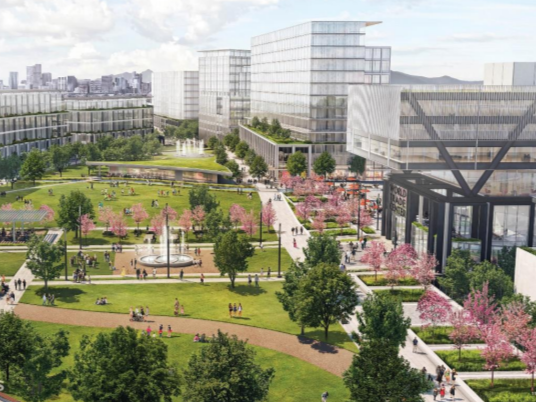
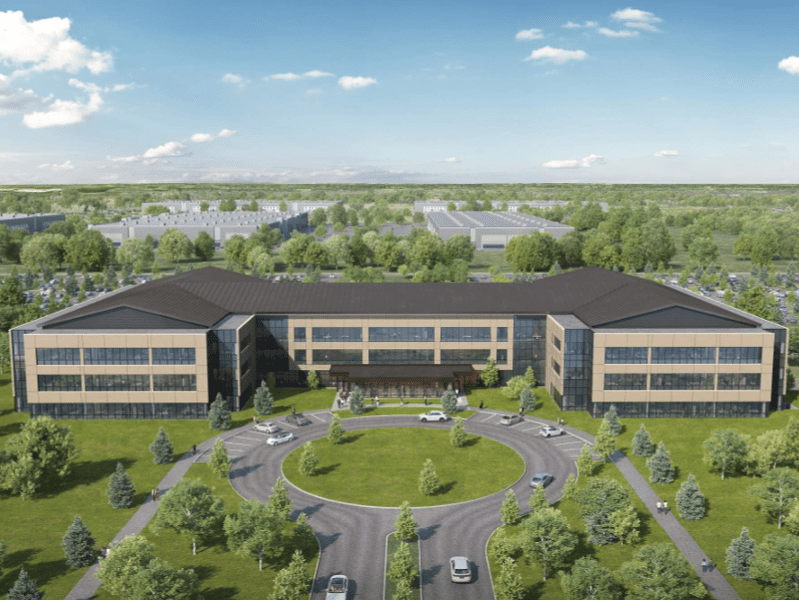
One of the most notable projects currently underway in the metro is World Trade Center Denver Complex, a 600,000-square-foot campus within the Five Points neighborhood. Pure Development broke ground on the project last year using funds from a JPMorgan Chase construction loan. The development is part of a 41-acre, 2.2 million-square-foot project that will be delivered in four phases.
In terms of completions, only two properties totaling 200,358 square feet came online in the first half of the year. This figure almost halved year-over-year.
Investment activity holds up, values stay low
Denver’s office investment volume year-to-date through June reached $622 million. The metro ranked somewhere in the middle among the top U.S. markets. Alongside Seattle ($512 million), the metro was the only Western city to surpass the $500 million threshold. Atlanta ($638 million) and Phoenix ($711 million) fared better, While Austin ($609 million) and New Jersey ($533 million) saw a smaller investment volume. Manhattan ($4.3 billion) led nationally.
Denver assets traded for $101 per square foot on average, well below the $195 per square foot U.S. index. The metro also posted the lowest average sale price in the Western region, while San Francisco led with $610 per square foot.
Dallas ($218 per square foot) and Orlando, Fla. ($182 per square foot) are some of the peers that registered higher prices.
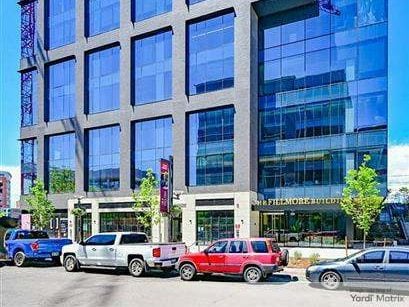
In one of the largest sales in the metro so far this year, BMC Investments sold 255 Fillmore for $92.5 million. The company completed the 100,000-square-foot property within the Cherry Creek neighborhood in 2024. The building was fully leased at the time of sale.
Vacancy falls sharply, rents decline
Denver’s office vacancy rate as of June clocked in at 19 percent, dropping 450 basis points year-over-year. The market registered the second largest drop in vacancy rate, with Detroit (-590 basis points) ranking first.
Despite this improvement, the metro’s rate was still above the 17.7 percent national average. Dallas (19.2 percent), Houston (23.3 percent) and Austin (24.5 percent) are some of the peers that had more available space during the same month, while Tampa, Fla. (14.3 percent) was at the opposite end.
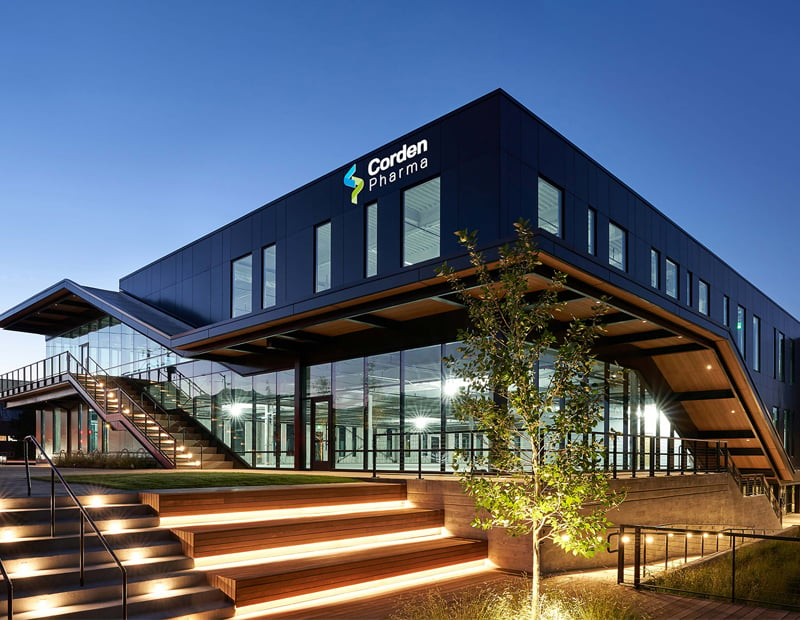
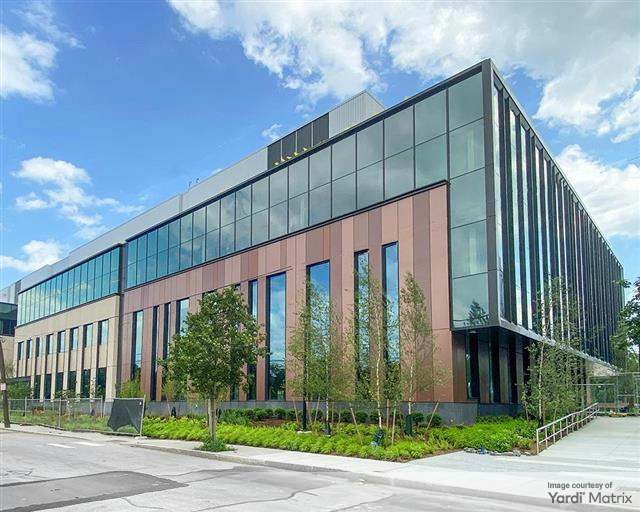
In March, CordenPharma Colorado signed a 64,000-square-foot lease at 5505 Central in Boulder, Colo. BioMed Realty owns the 2024-completed building that is LEED Gold certified. The peptide drugs developer will occupy the entire facility for 15 years.
In June, the average listing rate for Denver office space was $30.28, down 1.3 percent year-over-year. The rate remained below the $33.67 U.S. average and moved against broader national office real estate trends, as the national figure rose 2.4 percent over the same period.
Flex footprint remains above U.S. average
Denver’s coworking inventory totaled roughly 4.4 million square feet across 273 locations as of June, representing 2.5 percent of the metro’s leasable office stock, according to CoworkingCafe. The share was 20 basis points above the national figure.
The metro’s flex office inventory was larger than that of Philadelphia (4 million square feet) and Phoenix (3.6 million square feet) but continued to trail peer markets Houston (4.9 million square feet) and Atlanta (5.8 million square feet).
Regus remained Denver’s largest provider as of June, with 824,312 square feet across 46 locations. It was followed by WeWork (307,846 square feet) and Office Evolution (155,916 square feet), while Industrious (150,000 square feet) and Humanly (148,918 square feet) rounded out the top five.

You must be logged in to post a comment.