
Builders of the Boom: Top 10 Data Center Developers
Get to know the leading producers of this fast-growing and increasingly vital property type.

The U.S. data center real estate market is booming, driven by growing demand for cloud services, AI, edge computing and data storage. AI, still in its infancy, is the primary catalyst for expansion, and it’s driving innovation around sustainability and energy sources.
According to a mid-year JLL report, 73 percent of the U.S. construction pipeline is preleased, and colocation vacancy is nearly 0 percent. Even with tremendous data center construction, JLL is forecasting vacancy below 5 percent through 2027, but it most likely will hold at 2 percent.
“AI demand is growing so fast that the traditional model of building a data center and waiting for the utility to deliver power just isn’t workable anymore,” said Jason Bell, vice president of technology services for JLL. “Developers are being forced to rethink everything. We’re moving from grid-dependent campuses to hybrid sites that bring some of their own power.”
Full off-grid facilities will come, Bell said, but they’re still a few years out because we need more natural-gas capacity, better large-scale battery solutions and federal approval for technologies like small modular nuclear reactors.

As a result, data centers developers are opening up new tech corridors as they search for large and power-ready sites. “AI is accelerating demand in ways that core markets alone can’t support,” said Ryan Mallory, CEO at Flexential. “Developers are turning to new greenfield sites because that’s where power and interconnection can come together at the scale customers need.”
The key is staying disciplined. Mallory noted, and building where the fundamentals are strong, including the ability to deliver efficient, sustainable infrastructure rather than chasing growth for its own sake.
Here’s what you need to know about the top 10 data center real estate developers today:
1. Digital Realty Trust

Digital Realty Trust, the leader of the pack, boasts more than 300 data centers across 47 markets in 25 countries worldwide.
Providing colocation and interconnection services to enterprises, cloud providers and IT companies, the company focuses on building large-scale, high-performance data centers with a commitment to sustainability. More than half of its U.S. portfolio is Energy-Star certified, and it is the only data center company to garner an Energy Star Partner of the Year award.
Based in Austin. the company was founded by private investment firm GI Partners with 21 data centers acquired in a bankruptcy auction. It was the first data center company to complete an IPO in 2004 as a C corporation. In 2014, it converted to a REIT.
Digital Realty is focused on expanding in high-growth markets, To meet soaring AI demand (over two-thirds of new leases in Q1 2025 were AI-related), Digital Realty is building both new data centers and renovating existing ones.
At the beginning of 2025, Digital Realty reported a development pipeline of $9.3 billion. It also delivered 50 megawatts of new capacity, which was 83 percent preleased, and had 219 megawatts in starts, including a 200-megawatt hyperscale project in Northern Virginia that is half preleased.
The company continues to enter new markets and new partnerships as well. For example, it launched Digital Realty Bersama targeting Southeast Asia’s cloud and digital infrastructure boom with local partner Bersama, and delivered the Heracleion One data center on Crete, which enhances connectivity across Europe, Asia and Africa via subsea cables. Last year, it entered into a joint venture with Mitsubishi in which the electronics giant purchased a 65 percent equity share in two data centers under construction in the Dallas-Fort Worth area.
Currently, 75 percent of power used by Digital Realty data centers is from renewable sources, of which 8.8 megawatts are generated onsite, and 185 of its data centers already operate 100 percent on power from wind and solar. It also employs building management systems designed to improve energy efficiency and utilizes water-free cooling technology and non-potable water sources for cooling.
2. Equinix

Equinix, a REIT headquartered in Redwood City, Calif., owns 273 data centers in 77 markets on six continents that connect more than 10,000 businesses. The company offers colocation and interconnection, cloud and IT infrastructure solutions, and Edge data centers—small, decentralized facilities that bring computing and storage closer to end-users and devices at the “edge” of a network.
Equinix is also dedicated to sustainability and in 2024 achieved its seventh consecutive year of greater than 90 percent renewable energy coverage. It also plans to deploy small modular reactors at some of its data centers.
The company was cofounded in 1998 by Al Avery and Jay Adelson, formerly of Digital Equipment Corp., and grew its client base by providing a neutral data center platform where competing networks could connect and share data traffic.
Since 2002, Equinix has been growing and expanding through acquisitions and partnerships throughout the U.S., Europe, Asia, Southeast Asia, India, the Middle East and Africa.
Last year, Equinix invested heavily in hyperscale xScale data centers, built an International Business Exchange data center in Iskandar Puteri Johor Bahru, Malaysia, announced a $390 million expansion plan to build more data centers in Africa and partnered with the Canada Pension Plan Investment Board and Singapore’s GIC sovereign wealth fund to meet demand center demand generated by the AI boom.
Major tenants include cloud service providers, media and entertainment content providers, financial services and stock exchanges, network and telecommunications providers, tech companies and business and consulting.
“The secret sauce is how we connect one business to another,” said Adaire Fox-Martin, Equinix’ CEO & president during a CNBC interview. “That is super important in the AI race. The focus right now in AI is on training, but inference is when you begin to put the model you developed in your training to work. And that’s going to need connectivity.”
3. STACK Infrastructure
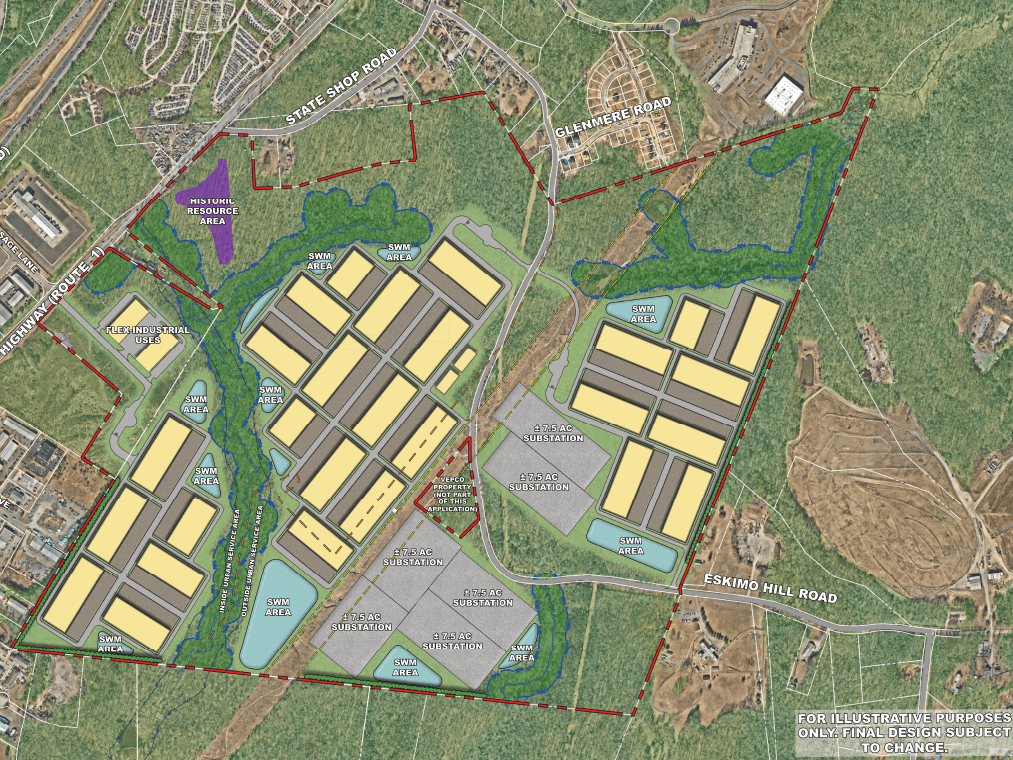
Denver-based STACK Infrastructure owns and operates a total of 130 data centers across 34 markets in 12 countries, 53 of which are currently operational and 77 underway.
STACK was founded in 2019 by IPI Partners, a joint venture of ICONIQ Capital and Iron Point Partners, by combining data center assets acquired from Infomart and T5 Data Centers. It was recently acquired by New York-based Apollo Global Management, Inc.
STACK offers cloud and colocation services, edge and hybrid cloud solutions and data center custom design and engineering. The company is notable for its focus on scaling data centers to meet the demands of cloud and hyperscale customers.
It is growing its footprint by building out scalable data center campuses, offering build-to-suit options, and ensuring there is flexible expansion capacity available. The company currently has eight projects underway across the U.S. and four in Asia.
In March of this year, STACK Infrastructure secured $4 billion in green financing for a new 1 gigawatt campus in Stafford, Va. The funds will also finance expansions at the firm’s Portland, Ore., and Toronto, Canada,
Other sustainability initiatives include operating on 100 percent renewable energy—a goal it has achieved in 100 percent of U.S. facilities, utilizing water reclamation systems when possible and promoting circularity through waste reduction. The company is targeting net-zero emissions by 2050 and using green financing for projects.
STACK’s clients primarily consist of large, rapidly growing hyperscale and enterprise companies, including major global technology firms and cloud providers.
4. DataBank

Dallas-based DataBank, a provider of enterprise-class, managed data center space and colocation services, owns 89 data centers in the U.S. and United Kingdom metro markets.
DataBank was founded in 2006 in the historic, 100-year old Federal Reserve Bank Building in downtown Dallas. The building was built to withstand any event, and, therefore, had excellent bones to become a data center. The company was acquired in 2016 by DigitalBridge along with a group of investors.
DataBank provides colocation and edge data center solutions that offer flexible, customized technology and scalable, stable power and connectivity 24/7. The company’s data centers are AI-ready, with high-density infrastructure, advanced cooling technologies, and flexible solutions built to handle the most demanding AI workloads.
Its growth strategy encompasses mergers with and acquisition of smaller data center companies and building ground-up facilities. The company currently has 10 new data centers underway.
Last year, DataBank obtained $2 billion in an equity raise led by AustralianSuper, which committed $1.5 billion. The company also secured an additional $483 million in commitments from existing investors.
The company is committed to a net-zero emissions goal by 2030 and is achieving this target by utilizing energy-efficient, standard designs; implementing efficiency retrofit projects; utilizing innovative technologies; and purchasing renewable power.
DataBank serves more than 3,000 customers across an industry spectrum that includes cloud services, enterprise financial and computing companies, healthcare, government, communications and media and entertainment.
5. QTS
Based in Ashburn, Va., QTS is a major data solutions provider with 75 data centers in operation or under development across the U.S. and Europe. The Blackstone company offers colocation and cloud services, along with software-defined services for enterprise and cloud providers. It provides different types of services to clients, leasing large customized data center spaces and offering colocation and cloud and managed services, as well as caters to varied infrastructure needs.
QTS was founded in 2003 with the purchase of a data center in Kansas and operated as a REIT until 2021, when it was acquired by Blackstone Infrastructure Partners and Blackstone Real Estate Income Trust, which took the company private.
QTS is growing its footprint through strategic new builds and expansions in key markets like Texas, Virginia and the Netherlands, alongside acquisitions. Earlier this month, QTS announced it will secure a $3.5 billion CMBS note—the largest such issuance for the year—to refinance 10 data centers across six markets.
The company’s sustainability strategy focuses on carbon-free energy, material and waste recycling, water conservation, and energy efficiency. Key initiatives include sourcing 100 percent renewable electricity, repurposing brownfield sites, implementing water-saving technologies, and pursuing ENERGY STAR certification and green building standards for new and existing facilities. QTS also invests in solar and wind energy projects and 100 percent of new greenfield data centers use water-free cooling technology.
QTS clients range from large hyperscale technology companies and U.S. government agencies to major enterprises that include healthcare, financial services, media and entertainment, and major IT outsourcing clients, and communication service providers.
6. CyrusOne
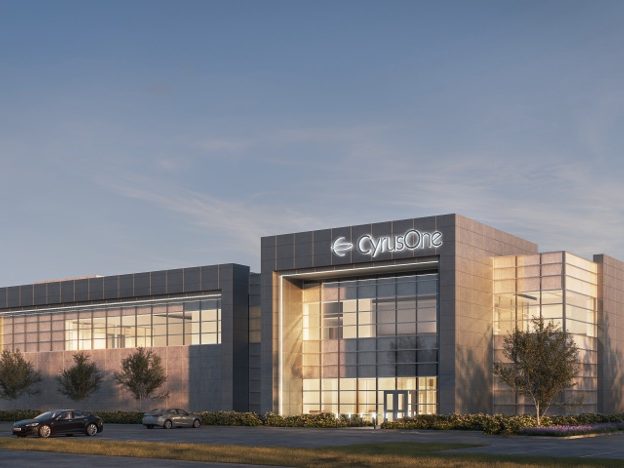
Dallas-based CyrusOne, a data center real estate company with 46 facilities in 17 markets globally, was founded in 2000 by David Ferdman and Larry Bursten, who met when their former companies were acquired by IXC Communications.
CyrusOne went from public to private about a year ago, enabling it to grow more aggressively. The company currently has a number of projects underway or on the drawing board, including three in Texas and one in Illinois, Colorado, London, Milan, Japan and Frankfurt.
The company specializes in large-scale, enterprise-class, carrier-neutral data centers and is a leader in hyperscale data center solutions. CyrusOne also offers built-to-suit facilities, partnering with organizations to create purpose-built data centers that align with businesses’ objectives.
In addition, its Intelliscale facilities provide purpose-built infrastructure solutions that address the intense computational demands of AI applications and the company’s focus on enterprise colocation solutions provides clients secure, connected environments for business-critical infrastructure, flexible scaling options, and robust connectivity.
CyrusOne is growing its footprint through a combination of global expansion in key markets, significant financial investment, and a focus on building AI-ready data centers. The company uses a “manufacturing-led” approach to speed up development and embed sustainability into its growth by linking financing to environmental targets and implementing eco-friendly designs and cooling systems.
Last year, Energy Capital Partners announced that a joint venture of KKR and CyrusOne will build its $4 billion, 190-megawatt hyperscale data center campus in Bosque County, Texas.
According to the company’s sustainability report, business volume grew by 70 percent, but its carbon emissions have decreased by 29 percent. This was accomplished through energy efficiency projects, new carbon-free electricity contracts and its customers procuring their own carbon-free electricity. The company has set a goal of 100 percent carbon neutral by 2030, and its European facilities are already 100 percent carbon neutral.
Major clients include hyperscale cloud providers, as well as 5,000 companies in sectors, such as financial services, technology, energy, and retail.
7. Flexential
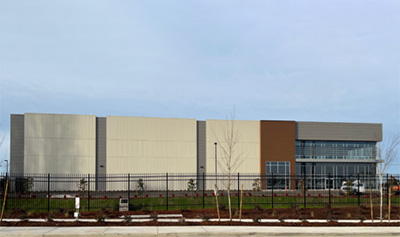
Flexential, a hybrid IT solutions provider headquartered in Centennial, Colo., owns more than 40 data centers in 18 U.S. markets, two of which are under construction. It offers cloud and data center services, colocation and disaster recovery and business continuity. The company’s focus is on tailoring solutions for small and medium-sized businesses, as well as large enterprises across the health care, finance, government, technology and retail industries.
Flexential was founded in 2017 through a merger orchestrated by GI Partners that combined two data center companies, Peak 10 and ViaWest.
The company has been steadily growing by acquiring previously leased facilities to expand its owned capacity and is buying raw land to build further. Flexential purchased two fully leased data centers in Atlanta in May 2024, for example, and in September 2025 acquired a site in Hillsboro, Ore., where it is building its sixth Hillsboro data center, a two-story, 350,000-square-foot facility expected to support 27 megawatts of capacity.
The company’s sustainability strategy focuses on energy efficiency, responsible growth, and social responsibility through facility design, emissions reduction, and community engagement.
Key initiatives include joining the Science Based Targets initiative, building energy-efficient data centers with strict power usage effectiveness thresholds, using green financing, implementing recycling and waste management programs, and promoting remote work to reduce employee travel.
8. Vantage Data Centers

Denver-based Vantage Data Centers owns and operates 40 campuses with multiple data centers on five continents. Its primary focus is on providing colocation for hyperscale clients, but the company also offers build-to-suit data centers for large-scale or specialized requirements, as well as rack-ready spaces and turnkey solutions.
Founder Jim Trout launched Vantage in 2010 with investment firm Silver Lake, beginning with a single data center in Santa Clara, Calif.
Vantage provides clients customized space and network management options and facilitates both dark and lit services and operates an open, carrier-neutral network, allowing clients to work with carriers of their choice.
Driven by demand from hyperscale cloud services and AI, the company is charting aggressive global expansion into new markets and existing ones. Key components include strategic partnerships, acquiring companies to enter new regions and developing large-scale campuses for AI workloads. It currently has five new campuses under construction in Texas, Wisconsin, Ohio, Nevada and London.
Earlier this month, Vantage announced it was embarking on a $2 billion expansion of its Northern Va., portfolio. The campus, the company’s fourth in the market, is a 192-megawatt complex that will include three data centers totaling 929,000 square feet.
Vantages sustainability strategy focuses on five key areas: greenhouse gas emissions, energy, water, waste, and community. It has committed to achieving net-zero operational carbon emissions by 2030, neutralizing all emissions by 2040, and implementing innovative conservation solutions like using air-cooled chillers.
The company is also exploring the use of cleaner fuels, on-site renewable energy generation, and community engagement programs. It currently generates onsite renewable energy for non-critical uses and sources clean energy to reduce reliance on carbon-heavy grids.
9. CoreSite
CoreSite, now a part of wireless infrastructure investor American Tower, is a real estate data center company that operates 30 data centers in 11 U.S. markets. Its offers colocation solutions where enterprises of all types and sizes locate servers and networking equipment they rely on to communicate, store and process data; develop new products and services; and conduct business.
The company was founded 2001 as CRG West, a portfolio company of The Carlyle Group, to meet the needs of interconnection and data center customers at One Wilshire in Los Angeles and 55 South Market in San Jose. It was rebranded CoreSite in 2009.
It’s growth strategy encompasses expanding existing facilities, developing new markets through strategic partnerships, and enhancing its interconnection services to support hybrid and multicloud IT architectures.
The company currently has new data centers underway in Denver and New York City, is upgrading infrastructure at the One Wilshire building, and is expanding its Silicon Valley data center. It’s also targeting expansion into new tier 2 and 3 markets through collaborations with strategic customers.
Coresite’s sustainability efforts focus on creating high performance facilities and leveraging the advantages of colocation, which creates efficiencies by combining data from different customers into one state-of-the-art facility, which reduces energy consumption and carbon emissions.
The company also employs innovative cooling techniques and technologies to reduce power usage, carbon emissions, and water usage. For example, the company’s Boston data center features an energy-efficient cooling system designed to save eight million kilowatt-hours annually. In addition, several colocation campuses use outside air to cool the facility up to 60 percent of the time.
Coresite’s major clients include hyperscale cloud providers, along with a diverse range of enterprise industries, such as financial services, media, and healthcare.
“In response, a record number of data centers are under construction to provide colocation for specialized, high-density workloads and ongoing digital transformation,” said Juan Font, president/CEO of CoreSite & senior vice president of American Tower in a blog post. “What’s notable is the uptick of speculative building in markets previously not considered priorities—Tulsa, Oklahoma and Madison County, Mississippi, where land and power are available at lower costs.”
10. Iron Mountain Data Centers
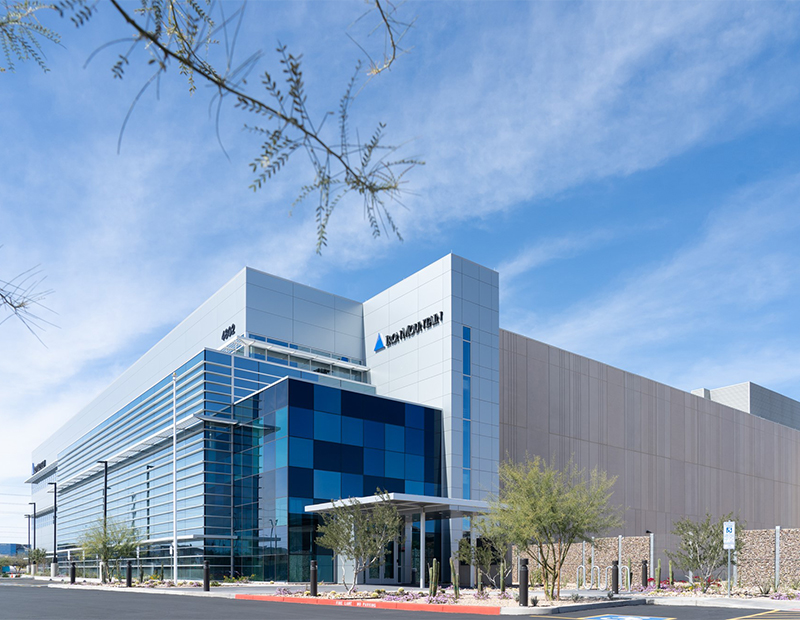
Boston-based Iron Mountain Data Centers, a S&P 500 company, owns and operates 30 data centers in more than 25 markets on three continents with plans to add 450 megawatts over the next 24 months to its current 452-megawatt capacity.
The company is known for security, especially in terms of disaster recovery and high-availability facilities, so its data centers appeal to companies in highly regulated industries like healthcare, finance, government and other other public entities, and its roster includes a significant number of Fortune 1000 companies.
Herman Knaust founded Iron Mountain in 1951 as a business records storage facility. The company’s transition into data centers is a later evolution of its core business of secure information storage.
The company is now a major player in the data center market, providing AI-ready, sustainable, carrier and cloud-neutral colocation solutions tailored to customers’ business needs. It also offers hybrid-cloud services, secure data storage, and environmental controls and redundancy systems.
Iron Mountain is growing its footprint through a combination of new campus developments and acquisitions. It has three major projects underway: 150-megawatt and 200-megawatt campuses in Virginia, three new campus developments in India with nearly 152 megawatts of capacity and a 27-megawatt facility in London. The company also recently acquired a Frankfurt data center.
The company’s sustainability strategy includes a commitment to 24/7 Carbon-Free Energy by 2040, Net Zero GHG from operations by 2030 and BREEAM certification for all new colocation sites. Their energy plan incorporates investing in on-site solar, renewable tidal energy and natural cooling methods, while also working with partners to secure renewable power through power purchase agreements.

You must be logged in to post a comment.