


DC Office Sales Rank High, Pricing Still Lags
See which of the market's metrics perform well, according to Yardi Matrix data.
Washington, D.C.’s office market has showed a mixed performance through the first three quarters of 2026. The vacancy rate improved year-over-year, while investment remained strong at $2.9 billion, according to Yardi Matrix. Still, the average price per square foot lagged the national benchmark and the development pipeline stayed thin.
The market continued to benefit from government, legal and technology demand, with Northern Virginia’s growing data center industry and large law firm commitments supporting office absorption despite broader vacancy pressures.
On the policy side, Washington, D.C., continued expanding its conversion toolkit in 2026. The District widened its Housing in Downtown program, allowing more projects to compete for a 20-year tax abatement tied to commercial-to-residential redevelopment. The D.C. Council also preserved a rule that lets eligible properties move to the lower residential tax class once a conversion building permit is issued rather than waiting until construction is complete, helping reduce carrying costs while work is underway.
The District’s sales stay strong
Washington, D.C.’s office investment volume in the first three quarters of the year totaled $2.9 billion, ranking fifth nationally and fourth among gateway metros. Manhattan ($5.7 billion), Dallas ($3.7 billion) and San Francisco ($3.2 billion) rounded out the top three.
Assets in the District traded for about $177 per square foot on average, $20 below the national figure. Among similar markets, Chicago ($102 per square foot) was the only metro to lag behind D.C. Manhattan ($585 per square foot) was in the lead once again.
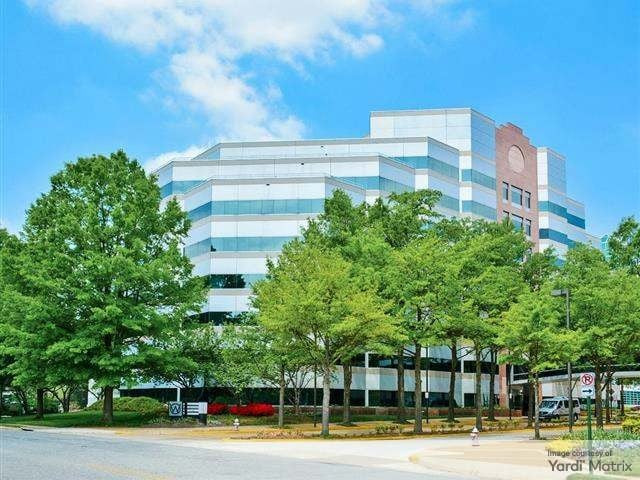
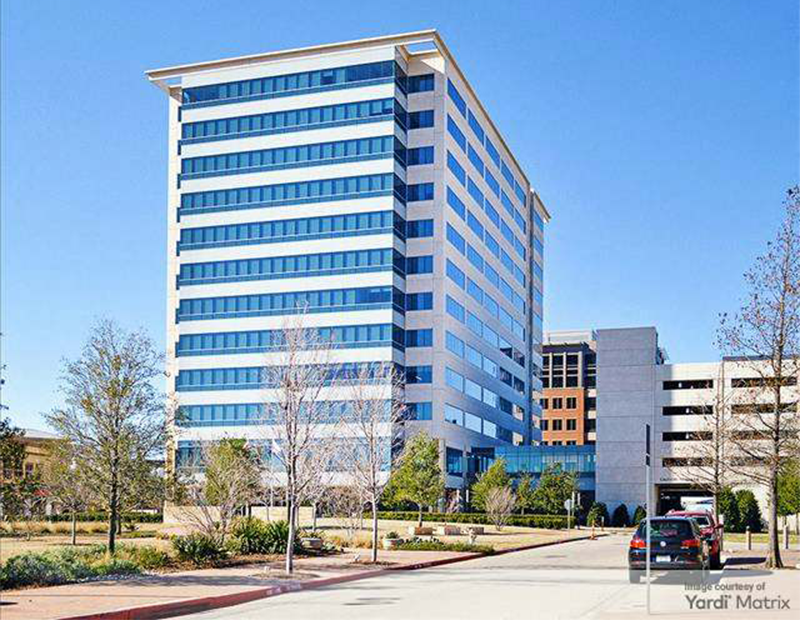
One of the largest deals in the metro as of September involved a medical office asset. Inova Health System paid $97.5 million for Willow Oaks Medical Campus, a 382,850-square-foot campus in Fairfax, Va. The two-building property traded for almost $255 per square foot.
Other transactions include CIM Group’s sale of Highline at Greensboro, a 460,000-square-foot office campus in Tysons Corner, Va. Finmarc Management purchased the asset for $77.5 million, about $168 per square foot.
Leasing metrics show improvement
D.C.’s office vacancy rate in September dropped to 18.9 percent, improving by 120 basis points year-over-year. Despite the decline, the figure still remained above the 17.8 percent national average.
Nationally, the metro ranked in the bottom half of the largest metros. San Francisco (26.7 percent) had the most vacant space in the U.S., followed by Seattle (24.8 percent). Since the pandemic, Manhattan (10.2 percent) and Miami (11.6 percent) recovered the most.
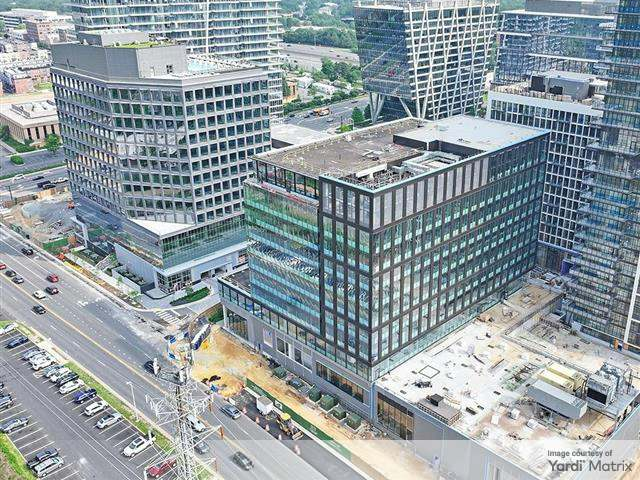
This summer, QTS Data Centers signed a 77,000-square-foot lease at Reston Station, Comstock Holding Cos.’ property in Reston, Va. The firm will occupy three full floors within the 335,200-square-foot building at 1800 Reston Station Plaza, reflecting the growing influence of Northern Virginia’s data center sector on the broader office market.
Earlier this year, law firm White & Case committed to 196,000 square feet at 1701 Pennsylvania Ave. NW. The company will occupy 12 floors of the building, about 94 percent of it, starting in 2029. Grosvenor owns the office building that’s located one block from the White House.
Average listing rates for Washington, D.C., office space clocked in at $41.02 per square foot in September, up 0.5 percent over the year. The market trailed several gateway peers such as Manhattan ($72.03 per square foot), San Francisco ($64.92 per square foot) and Miami ($61.26 per square foot), but surpassed Seattle ($35.17 per square foot) and Dallas ($32.52 per square foot).
Construction activity stays limited in D.C.
Washington D.C.’s office pipeline as of September amounted to just 380,000 square feet, representing 0.1 percent of its total stock. The figure doesn’t include owner-occupied projects.

The metro had one of the smallest pipelines among peers, but still surpassed Chicago (251,930 square feet) and Seattle (15,910 square feet). Among gateway markets, Manhattan (3.6 million square feet) and Boston (3 million square feet) were in the lead.
When also taking into account projects in planning stages, D.C.’s share grew to 2.4 percent, but still ranked in the lower half of the peer set. As for office completions, no project has come online in the market during the first three quarters of the year.
HITT is currently working on one of the largest projects underway in the metro. The 270,000-square-foot building located at 7125 W. Falls Station Blvd. in Falls Church, Va., broke ground in 2025 and is scheduled to come online early next year. The company will use part of the six-story property as its headquarters.
Coworking footprint remains below U.S. levels
As of September, Washington, D.C., had 6.7 million square feet of coworking space across 304 locations, representing 1.8 percent of the leasable office inventory, according to CoworkingCafe. That index trailed behind the 2.5 percent national average. Among gateway markets, Miami posted the highest share (5 percent).
By total flex office inventory, Manhattan ranked first among peer markets (12.2 million square feet), followed by Chicago (9.3 million square feet) and Los Angeles (7.7 million square feet).
Regus remained the District’s largest coworking operator, with 711,339 square feet across 33 locations. Other major providers included Industrious (569,620 square feet), WeWork (557,171 square feet), HQ (415,499 square feet) and LocalWork (409,525 square feet).
The market also attracted a new coworking platform this summer, when London-based Hubble expanded into D.C. as part of a broader U.S. rollout. The marketplace launched in eight markets with more than 10,000 office units across north of 700 properties, partnering with operators such as Regus, WeWork and Industrious.


You must be logged in to post a comment.