


Office Report: Remote Work Sustains High Vacancies, Frozen Pipeline
Selective investor activity and few signs of occupancy recovery highlight the structural changes of the office sector.
More than five years after the start of the COVID-19 pandemic, U.S. offices remain well below full capacity, according to the latest Yardi Matrix national office report.
With nearly half of workers saying they would leave their employer if remote options were withdrawn, hybrid work is here to stay. As a result, office utilization is unlikely to return to pre-pandemic norms, creating a new reality of elevated vacancies across U.S. office markets.
Office usage data confirms the shift, with the average occupancy rate set at around 50 percent over the past 12 months. Hybrid arrangements have become the norm: 66 percent of companies are offering flexible schedules as most employees are opting to work remotely whenever possible.
READ ALSO: CRE’s Mixed Bag of Uncertainty and Opportunity
As of August, office-using sectors recorded a net loss of 25,000 jobs, driven primarily by declines in professional and business services. On a year-over-year basis, these sectors added just 22,000 positions nationwide—an increase of only 0.1 percent. Meanwhile, at metro level, 14 of the top 25 markets reported negative year-over-year employment growth as of July, with San Diego and the Bay Area leading this decline.
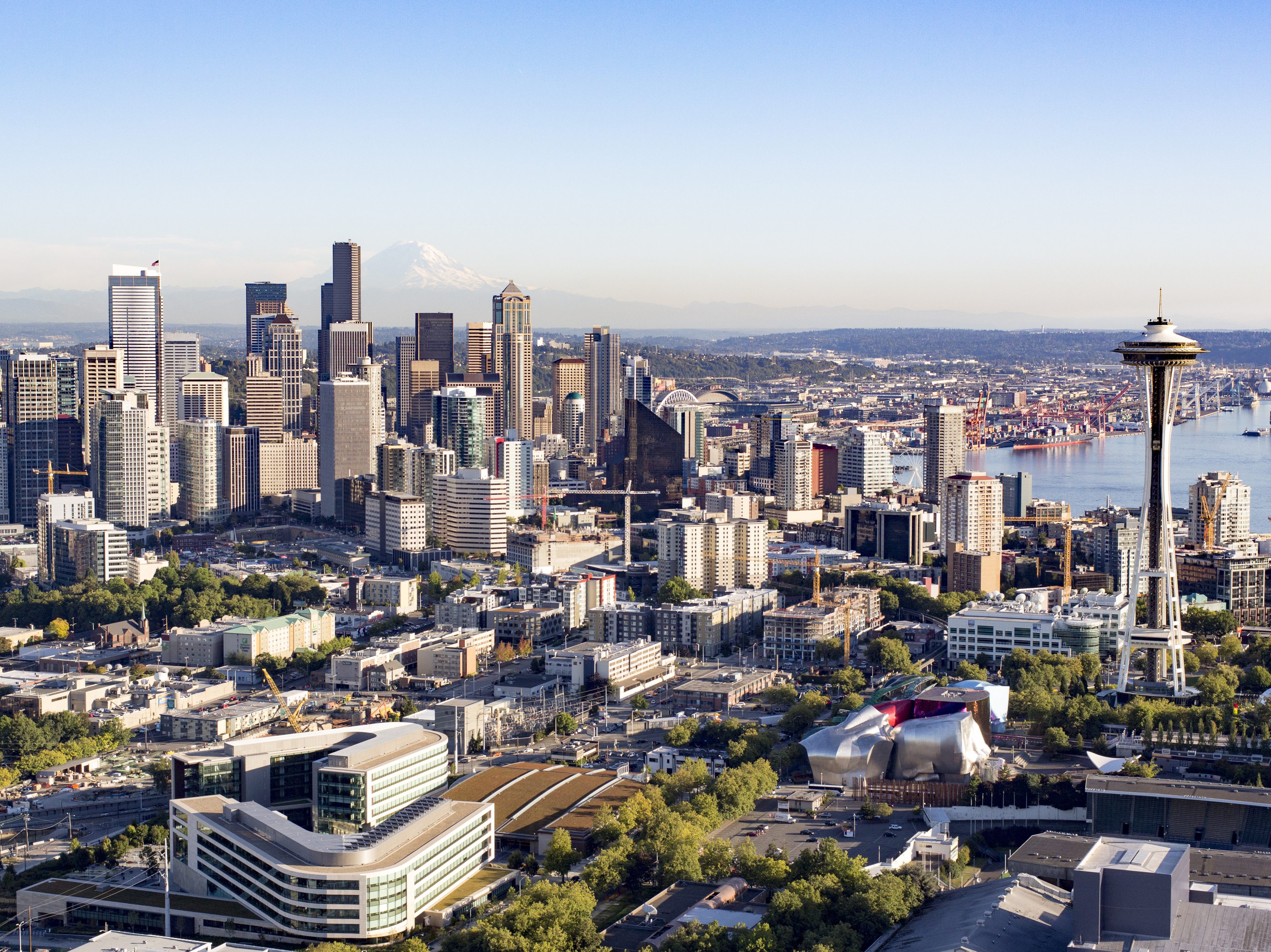
The national office vacancy rate stood at 18.7 percent—down 80 basis points over the past 12 months. Metro areas with elevated vacancies include San Diego (22.6 percent), Dallas (22.4 percent), Austin (26.5 percent), and Seattle (27.2 percent). The latter illustrates how a once-booming development pipeline, driven by rapid expansion among tech firms, has now been disrupted. In 2022, a wave of mass layoffs occurred, and today the city’s tech employment has fallen by 10 percent, partly because investment shifted towards AI-driven data centers, thus reshaping Seattle‘s traditional office sector.
The country’s average full-service equivalent listing rate was $32.63 per square foot as of August—nine cents lower than the previous month and reflecting a 0.4 percent year-over-year change. Office markets that recorded notable increases in average in-place rents included Boston, Miami and San Diego, while Houston continued to post substantial declines, registering an 8 percent annual decrease.
Office sales fall short, construction starts hit historic low
Nationally, the office transaction volume totaled $33 billion as of August, with properties trading at an average sale price of $190 per square foot. Investment activity has shown a slight increase compared to last year, but remains well below pre-pandemic levels, when properties averaged $277 per square foot in 2019.
The office construction pipeline amounted to 40.2 million square feet as of August—representing 0.6 percent of existing stock, unchanged for the past two months. Boston remained the leading market for office development, with 5.6 million square feet underway, followed by Manhattan with 3.4 million square feet.
Demand for new office space is expected to keep declining, as companies and employees continue to rely heavily on remote work. Only 10.7 million square feet of new starts were recorded—or 13.5 million when including owner-occupied properties. Construction starts over the past two years dropped to levels not seen since the Great Financial Crisis. For context, Manhattan led all metros in construction starts this year, with more than 2 million square feet breaking ground, while most other key markets reported no more than 500,000 square feet.
Read the full Yardi Matrix office report.
You must be logged in to post a comment.