

10 Emerging Data Center Markets to Watch
Find out what’s steering developers and hyperscalers toward these locations.
This article first appeared in the CPE Sneak Peek Newsletter. Subscribe now for early access to exclusive content, in-depth analysis and key trends!
Before AI entered the scene, network connectivity largely determined where data centers were built. Today, AI’s unprecedented energy requirements have elevated power availability, grid resilience and expansion potential to the top of site-selection criteria.
The industry has also shifted toward large-scale campus developments requiring massive acreage. As a result, these projects are often sited in unincorporated areas, where land is more affordable, permitting hurdles are lower and regulatory oversight typically falls to state or county governments.
“If grid power is not an option within the timeframe you want, the potential to generate power onsite comes into play, and for some of these emerging secondary and tertiary markets that likelihood is a little bit higher than you might expect in primary markets,” John McWilliams, head of data center insights at Cushman & Wakefield, told Commercial Property Executive.
Texas is now the fastest-growing data center region in the nation and possibly the world. In fact, the state’s data power capacity is on par with and expected to exceed that of Northern Virginia, which currently ranks as the world’s most powerful data center hub. From coast to coast, other markets are taking shape, ranging from locations with an existing data center footprint to those preparing for their first major developments.
CPE has identified 10 emerging data center markets and described what attracted developers and hyperscalers to these areas.
1. San Antonio & Austin, Texas
The hyperscalers, including Amazon, Google, Microsoft, Meta, Vantage and CloudHQ, are flocking to the San Antonio-Austin Central Texas corridor to capitalize on the region’s abundant power access, vast available land, favorable tax incentives and deep-rooted tech infrastructure. San Antonio, in fact, is the fastest-growing data center hub in the nation, said McWilliams, with nearly 50 facilities either operational or planned.
The region offers:
- A sustainable water supply;
- Tax abatement and other economic incentives;
- Favorable, inland geographic safety, immune to coastal threats like hurricanes and coastal flooding;
- Reliable, competitive energy rates;
- Deep fiber and connectivity;
- Affordable land, which enables hyperscale campus development;
- A robust, independent power grid managed by ERCOT (Electric Reliability Council of Texas), allowing for quick large-load project approvals.
Several major projects are under development in and around San Antonio. These include TX12, a $448 million, 174,000-square-foot campus Vantage Data Centers is building on Omicron Drive. Microsoft is also expanding its Texas Research Park campus on the Far West Side. In nearby Medina County, the company is pouring $1.5 billion into expanding the SAT93 and SAT94 facilities.
READ ALSO: What Hyperscaler Growth Means for Data Center REITs
CloudBurst has also received approvals for an enormous 706-acre, 1.2-gigawatt data center near San Marcos, Texas (between San Antonio and Austin), backed by $14.5 billion in projected investments.
Additionally, several big developments are underway in Austin and neighboring communities.
EdgeConneX is building an enormous $1.4 billion Bastrop County campus in two phases in the Cedar Creek area, beginning with a 578,000-square-foot facility.
Prologis & Skybox Datacenters are planning multi-site, master-planned Texas projects in Hutto and Pflugerville. Prologis is also developing a 160-acre master-planned power campus in Austin featuring a private substation.
2. West Texas
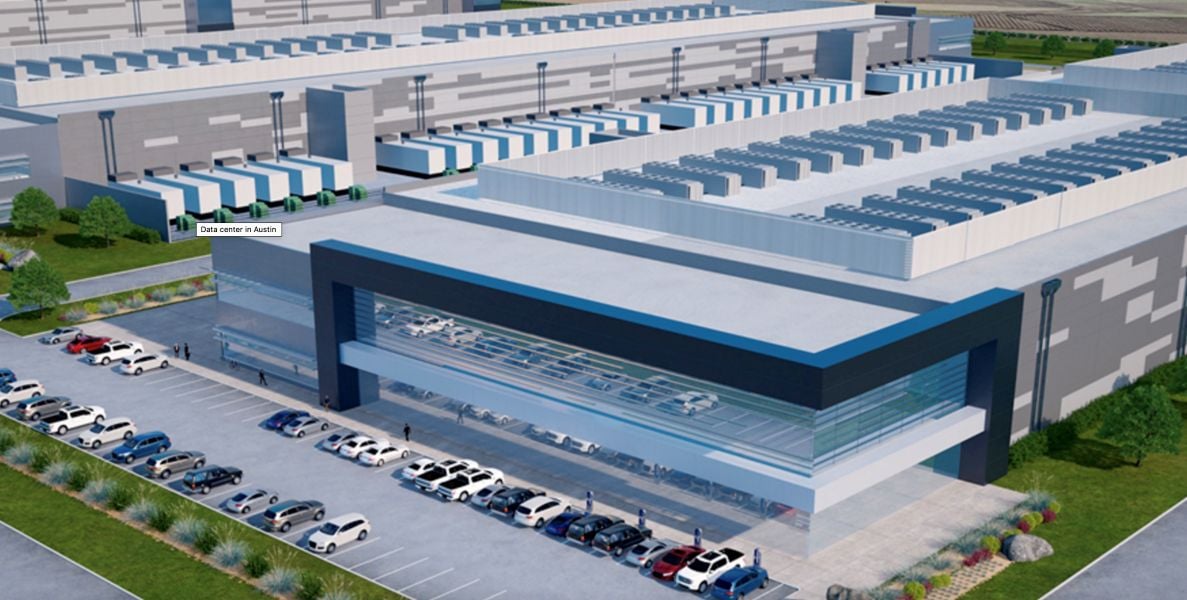
West Texas is emerging as a global epicenter for AI data center infrastructure. This growth is fueled by the region’s abundance of inexpensive land and ability to bypass public electricity grids using dedicated natural gas-fired power generation, supplemented by solar and battery storage.
Notable multibillion-dollar projects underway or proposed are driving this regional boom.
GW Ranch, an 8,000-acre development in Pecos County near Fort Stockton, Texas, is described by Pacifico Energy as the largest permitted data center campus in the nation. The project has received approval for up to 7.65 gigawatts of capacity.
Poolside AI’s Horizon Project, under development in Fort Stockton, is a 2-gigawatt, 568-acre data center campus that will provide dedicated infrastructure for the next generation of frontier-scale AI training and model development. The site is adjacent to a major natural gas hub and benefits from established water processing infrastructure.
READ ALSO: Who’s Funding the Data Center Boom?
Meta El Paso AI Data Center increased its investment from $1.5 billion to approximately $10 billion, with 1 gigawatt of capacity planned. This is expected to be one of Meta’s largest global AI facilities.
3. Columbus, Ohio
Columbus is another premier data center hub for developers and hyperscalers, including AWS, Google and Meta, due to the availability of affordable, expansive building sites; proximity to major U.S. markets; robust power infrastructure; and fiber connectivity.
Other advantages include:
- Favorable tax policies, including a data center sales tax exemption and attractive local incentives that drastically lower operational costs for capital-intensive projects;
- A business-friendly tech ecosystem that expedites permitting to get campuses operational 25 percent faster than in neighboring cities;
- Safety from natural disasters, like hurricanes and wildfires.
Three major developers have projects underway in the market, including a massive multi-phase campus in New Albany being developed by EdgeConneX, with a total of more than 1.2 million square feet of energy infrastructure, and new AI-ready facilities in Columbus being built by Cologix, while Meta continues major investments in New Albany, including hyperscale AI infrastructure.

4. Reno, Nev.
Reno is becoming a Western overflow market near the Silicon Valley but without the high costs of California. As a result, it has become one of the fastest-growing secondary U.S. data center markets, driven by AI workloads, proximity to Northern California, tax incentives, relatively cheap land, as well as access to fiber and power infrastructure around the Tahoe Reno Industrial Center.
The region offers many other advantages, including:
- Lower seismic and wildfire risk than some California locations;
- No state corporate income tax;
- Cooler desert climate for “free cooling”;
- An existing hyperscaler ecosystem, including Apple, Google and Microsoft nearby;
- Large land parcels available around USA Parkway/TRIC.
A few key developments are driving the boom:
Vantage Data Centers is developing a 224-megawatt, $3 billion hyperscale campus near Reno with the first two buildings already preleased.
In Storey County, NOVVA Data Centers launched a 60-megawatt facility in 2025. In Tahoe Reno, Nev., Switch continues to expand its Citadel Campus, which could ultimately reach 650 MW of power capacity.
Also in Storey County, Fleet Data Centers recently financed a 230-megawatt hyperscale project with billions in secured debt. The site is fully preleased to an unnamed AA-rated investment-grade tenant with a market cap of more than $3 trillion, fueling speculation that the firm is Nvidia.

5. Kansas City, Mo.
Situated at a major fiber-optic crossroads, Kansas City is emerging as a premier data center hub. Its central location offers sub-millisecond latency, the bleeding edge in computing and networking. Tech giants like Meta and Google have already invested billions in local hyperscale campuses there.
Key factors driving this momentum include:
- Ample, affordable power; a robust grid; and massive renewable energy initiatives that support tech companies’ carbon-reduction goals;
- A strategic, central location that delivers sub-millisecond latency across the Midwest and direct routing to both coasts;
- Multibillion-dollar tech investment by hyperscalers, which expands AI and cloud capabilities locally;
- Robust state and local tax incentives, making it cheaper to build and equip massive server farms.
The city recently introduced proactive regulations to balance economic growth with resource management. This includes strict zoning ordinances that classify data centers as industrial facilities and require developers to prove utility capacity for water and electricity before breaking ground.
The rules grew out of citizen and environmental pushback, prompting local leaders to debate data center moratoriums and demand stricter environmental impact and utility constraints.
Even so, the city continues to enjoy a boom in AI and hyperscale data center development and is positioned at the forefront of sustainable tech growth.
The region is home to several major hyperscale and AI data center developments, ranging from recently completed facilities to large-scale projects currently underway.
Meta’s $1 billion Northland campus, which came online last summer, features massive renewable energy commitments and advanced water replenishment technology.
READ ALSO: The Allure of Data Centers, Health Care
A $1 billion Google campus is under construction in the Northland near Worlds of Fun, providing hundreds of construction jobs. Google is also behind Project Kestrel, a proposed $100 billion hyperscale campus north of Kansas City International Airport that is set to include five buildings across 379 acres. The company acquired the land through a Delaware-registered shell corporation.
Metrobloks is also planning a $1.4 billion data center development in the Kansas City suburban community of Liberty, Mo. Developed in a joint venture with Lincoln Property Co., the project will consist of three buildings totaling 150 megawatts of capacity.

6. Salt Lake City
Salt Lake City, now known as the data center industry’s “Silicon Slopes” tech ecosystem, has gained favorability among data center developers and operators for its geographic stability, tax incentives and deep pipeline of tech talent.
Other factors fueling this rapid expansion include:
- The area’s high-altitude, cold desert climate and low humidity, allowing facilities to utilize ambient air and closed-loop cooling systems for much of the year, which dramatically reduces energy and water consumption compared to warmer climates;
- Some of the lowest electricity and natural gas rates in the Western U.S., alongside strong access to solar and wind energy;
- Favorable tax legislation allowing data center operators to realize significant tax exemptions on essential equipment;
- The city’s position as a critical, low-latency interconnection and long-haul fiber routing point between major West Coast and Midwest tech markets, including Los Angeles and Denver;
- Its safe location away from coastal storms and other natural disasters.
The region’s rapid, exponential growth in data center development, however, has sparked notable debate, triggering public pushbacks and regulatory scrutiny over the massive land and energy these facilities consume, resulting in new state and local guidelines to protect residential energy rates and Great Salt Lake water supply, as well as provide greater transparency on resource use.
Major planned developments include the Stratos Hyperscale Project in northern Utah’s Box Elder County, backed by “Shark Tank” investor Kevin O’Leary. The 40,000-acre campus with up to 7.5 gigawatts of planned capacity is designed to run on natural gas and features closed-loop cooling, but it is facing pushback from residents and state lawmakers over its scale and potential environmental impact. In June, O’Leary agreed to reduce the footprint by more than 19,000 acres, leaving the surrounding land as open space.
In West Jordan, a suburb of Salt Lake City, Aligned Data Centers operates multiple facilities on a 55-acre campus. These include the 300,000-square-foot, 34-megawatt SLC-01 and the 240,000-square-foot, 48-megawatt SLC-02. DataBank, which operates a robust footprint in Salt Lake City, recently announced the opening of its sixth facility and is planning a seventh.
7. Memphis, Tenn.
With unrivaled fiber connectivity and abundant resources, Memphis is emerging as a prime data center and AI infrastructure hub. Primary drivers are positioning the region, including neighboring Arkansas, as a key “Digital Delta” tech corridor.
Important factors attracting data center investment to the region include:
- Massive energy capacity, which is driving tech giants like Google and xAI to develop utility-scale substations and green energy integration to support high-capacity operations;
- An abundant water supply, which is essential since cooling hyperscale servers requires millions of gallons of water, and Memphis sits atop the rain-fed Memphis Sand Aquifer. Major facilities have committed to building massive wastewater recycling plants to draw from the city’s municipal supply, rather than depleting drinking water;
- Memphis’s history as a major manufacturing and distribution hub, which offers developers an abundance of decommissioned, mega-warehouses for repurposing as AI-ready data hubs;
- Memphis’ location at the crossroads of several major national and regional fiber-optic routes, providing ultra-low latency connections critical for the high-frequency trading of data and the fast-training of Large Language Models.
A number of major tech developments anchor the region:
Elon Musk’s xAI (SpaceX) has three projects, Colossus 1 & 2, supercomputer facilities powering the Grok AI model; MACROHARDRR, a third massive facility pushing computing capacity to 2 gigawatts; and a $659 million expansion of an existing 312,000-square-foot campus. Anthropic reached a deal with SpaceX to utilize all computing capacity at xAI’s Colossus 1 facility. Colossus was built by repurposing an Electrolux factory and warehouse.
Google is constructing a massive $1 billion, 900,000-square-foot campus on a 580-acre site in West Memphis, just across the river in Arkansas. The project has the potential to scale to a $10 billion investment.
Oracle partners and other digital infrastructure developers are also establishing edge nodes and sovereign AI hubs in the metro area to bring cloud processing closer to the middle of the country.
8. Omaha, Neb.
Omaha has emerged as a Tier 2 data center hub and strategic tech market due to hyperscaler adoption and AI innovation. With traditional Tier 1 markets, like Northern Virginia, maxing out their local power grids, data center operators are moving to the Midwest for readily available and cost-effective electricity.
Several factors contribute to the region’s attractiveness for data center infrastructure development, including:
- Access to abundant, inexpensive power and grid reliability;
- Aggressive tax incentives and highly attractive tax codes for the tech sector;
- Central location for network latency, offering ideal geographical positioning for solving east-west and north-south routing challenges;
- An established tech ecosystem, backed by heavyweights like Google Data Centers and Meta;
- Low disaster risk.
Google operates an expansive 700,000-square-foot campus in northwest Omaha and has proposed a massive data center in southeastern Nebraska, signaling ongoing regional expansion.
Meta operates one of the state’s largest enterprise data center campuses in nearby Sarpy County, which continues to undergo phased capacity expansions to support its global social media and AI networks.
In La Vista, Neb., H5 Data Centers manages a 234,500-square-foot flagship data center campus that serves numerous cloud, content and enterprise customers, and offers access to extensive telecommunications carrier ecosystems.
9. Albuquerque, N.M.
Positioned as an alternative to overcrowded, expensive Southwestern markets like Phoenix and Dallas, Albuquerque is fast emerging as a data center hub because it offers an optimal mix of affordable land, low natural disaster risk, robust fiber connectivity and state-backed tax incentives.
Key growth drivers include:
- The city’s favorable semi-arid, high-desert climate, which allows for highly efficient “free cooling,” in which outside air is used to cool servers for a large portion of the year, reducing energy consumption;
- New Mexico’s state and local governments’ use of economic tools like Industrial Revenue Bonds to exempt developers from certain property and gross receipts taxes, drastically lowering the upfront cost of data center development.
While the region has many upside advantages for data center development, significant community pushback against massive, water-and-energy-hungry projects in the state, such as Project Jupiter in a nearby county, has resulted in new guardrails and zoning requirements in both Bernalillo County and the city of Albuquerque to regulate AI data center expansion.
The primary concerns for developers and locals are the region’s heavy reliance on groundwater and massive electricity demands, prompting some neighboring New Mexico counties to place temporary moratoriums on new builds.
READ ALSO: How Significant Is the Backlash Against Data Centers?
Located in neighboring Doña Ana County, Project Jupiter is a massive AI data center campus under construction by BorderPlex Digital Assets in Santa Teresa, N.M. This $165 billion hyperscale facility is the cornerstone of OpenAI’s ambitious $500 billion Stargate project. Oracle is the primary tenant.
10. Tulsa, Okla.
Tulsa is emerging as a prominent data center market because of the availability of large-scale land parcels, affordable and abundant renewable energy, and favorable business incentives. The city is increasingly favored by major technology companies for hyperscale AI deployments away from congested, high-cost coastal hubs.
Key drivers of this growth include:
- Massive hyperscale investments by tech giants like Meta;
- Abundant power and green energy;
- Affordable land and competitive energy rates that allow tech companies to build large campuses at a fraction of the cost of Tier-1 markets like Northern Virginia;
- Robust water supply, as Tulsa sits on substantial water reserves;
- Local and state economic incentives tailored to large industrial users, like the ability to generate electricity “behind the meter” to keep utility costs stable, as well as targeted tax incentive districts.
The surge in data center proposals has prompted the city to enact a temporary moratorium on new data center construction to evaluate long-term infrastructure, utility and environmental impacts of massive server farms on the local community, illustrating evolving data center industry trends.
An exemption was made to allow Meta to continue working on its Anthem project. The $1 billion development will bring a 2 million-square-foot, AI-optimized data center at Fair Oaks Innovation Park in East Tulsa. This project will provide 1,000 construction jobs at peak and about 100 permanent, operational jobs. Meta committed more than $25 million to local infrastructure, including a 100 percent match of its electricity consumption with clean energy, adding 1.5 gigawatts of renewable capacity to the regional grid.
Several other projects are also underway, including Beale Infrastructure’s Project Clydesdale, a multi-phase, $3 billion development that will comprise approximately 1.2 million square feet. Phase one is expected to come online next year.


You must be logged in to post a comment.