

How Constellation Real Estate Partners Rises Above Industrial Swings
The firm turned complex projects into their North Star.

Founded just five years ago, Constellation Real Estate Partners has already navigated sharp ups and downs in the industrial real estate market.
The development company opened its doors near the height of the pandemic-era logistics boom and at a time of record-low interest rates. That heyday has been followed by generational inflation, higher interest rates, regional bank failures, shifting trade policy and mounting geopolitical uncertainty. “We sometimes chuckle that we don’t know what a normalized environment looks like at Constellation,” shared Jeremy Giles, one of the firm’s co-founders and managing partners.
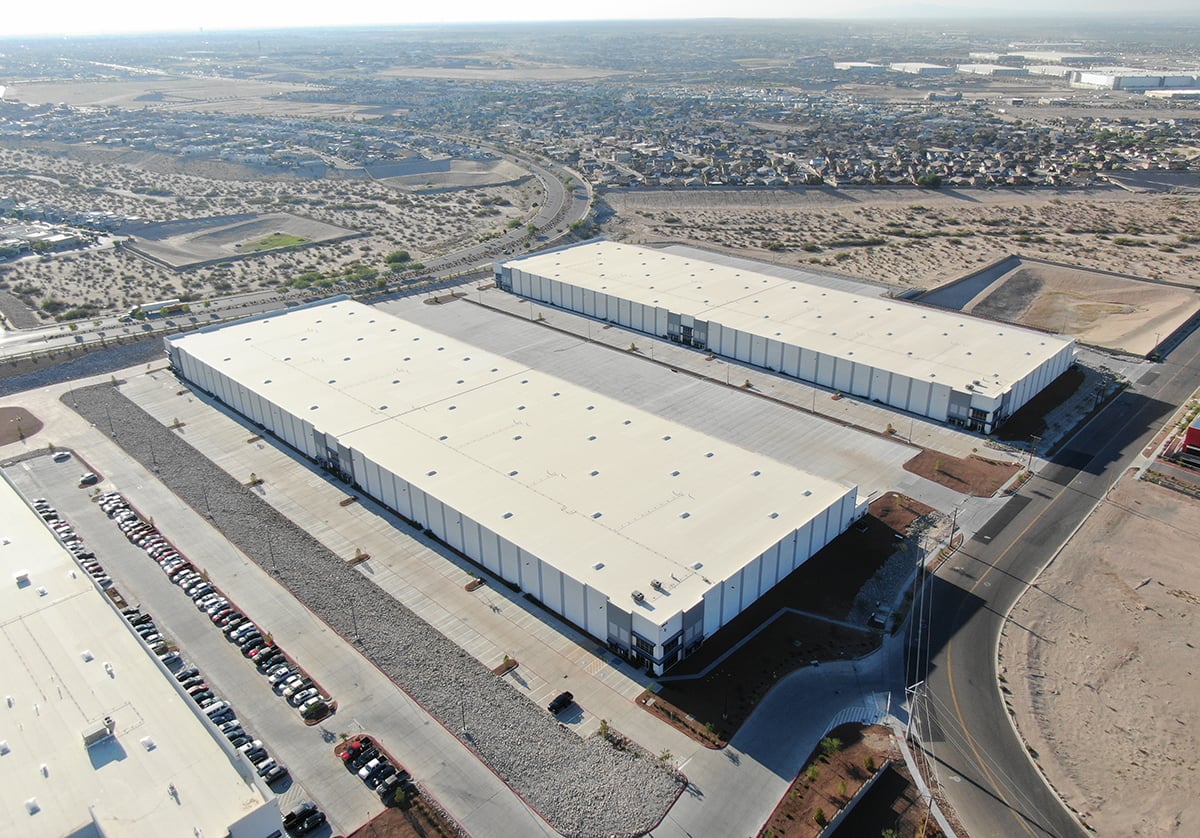
Constellation has already undertaken 28 projects, mostly speculative, encompassing 60 buildings and nearly 15 million square feet of logistics properties, and it now employs 24 people across seven offices. The company aims to combine a mix of institutional experience with entrepreneurial speed in its development projects, pairing advanced data science with local instinct to take on complicated projects that might deter rivals.
Building in an extraordinary environment

Giles, an 18-year veteran of Prologis, co-founded Constellation with Hien Le, who previously spent 14 years at J.P. Morgan Asset Management. In a joint interview, the partners said they were both looking for a new challenge at the time.
“We started feeling like we were maintaining something vs. building something,” Le said.
After deciding to launch a Sun Belt-focused development company, Le and Giles knew they needed to distinguish Constellation from the crowded field of institutional giants and local developers clamoring to put shovels in the ground as e-commerce-related warehouse demand soared. The duo used their past experience working with external partners to envision what an ideal developer would look like—and how industrial customers would want to be served.
“When you really know what excellent service feels like because you’ve been there, that’s where we want to be differentiated,” Le noted. “We built the business to be empathetic to our customers’ needs.”
That emphasis on empathy extends to the firm’s capital structure. Le said the firm typically contributes about 20 percent of a project’s equity, giving the developer significant exposure alongside its investment partners.
If gut and data are not pointing in the same direction, it gives you pause.
—Jeremy Giles, Co-Founder & Managing Partner, Constellation Real Estate Partners
As Le and Giles brought in more institutional veterans, they sought to emphasize an entrepreneurial spirit. That culture attracted Scott Ellerman and J.W. Fields, partners at Constellation who both joined from Trammell Crow Co.

Ellerman leads the firm’s activity in Dallas–Fort Worth, while Fields focuses on the Texas markets of Houston, Austin, San Antonio, El Paso and Laredo. The two discussed what convinced them to leave one of the top commercial real estate developers in the nation.
“To be quite honest with you, I was a very high-maintenance recruit,” Ellerman said. “I was happy with where I was and didn’t really have any visions of leaving.”
It was ultimately the culture Giles and Le sought to create at Constellation that encouraged Ellerman and Fields to make the leap to the new firm.
“That entrepreneurial thread that exists within Trammell Crow really is carried on to Constellation,” Fields noted.
That combo of institutional discipline and entrepreneurial autonomy informs both the sites Constellation pursues and the buildings it designs. Rather than choosing between relationships and analytics, the firm has built its platform around both.
Old-school relationships plus new-school data
For Constellation, local relationships aren’t merely a source of deals. They’re part of the company’s operating model. According to David Eseke, vice chairman at Cushman & Wakefield, Constellation treats professional connections as a long-term asset rather than a transaction.
“We’re not viewed as vendors,” Eseke said of the firm’s rapport with brokers. “They really treat us like partners and include us in partnership-level discussions.”

Constellation supplements this personal approach with some advanced data-science techniques that help it make even more informed decisions around site selection, supply analysis and underwriting.
Le gave an example of how the company made decisions around site selection during the pandemic logistics boom. Instead of looking solely at the supply of warehouse workers, the company examined adjacent labor pools—such as quick-service restaurant employees accustomed to fast-paced fulfillment—and analyzed where potential workers lived vs. where they worked.
Positioning industrial facilities within a short driving distance of this somewhat nontraditional labor pool would make working there more attractive and create a major selling point for Constellation’s customers searching for warehouses with access to labor.
To keep track of existing inventory, the team uses a tool called Constellation Intelligent Pipeline Recognition to improve its visibility into local industrial development pipelines. Rather than relying solely on brokerage reports, which Giles said often produce widely different estimates of space under construction, CIPR combines multiple paid data sources to identify where competing projects are being built, how large they are and when they are likely to deliver.
The goal is to develop a more precise picture of future supply and identify gaps in the market before competitors do. For Constellation, CIPR is one part of a broader investment process that combines data science with local market expertise. The system helps validate site selection and underwriting, but it doesn’t replace experience or intuition.
“If gut and data aren’t pointing in the same direction, it gives you pause,” Giles said.
Regional execution
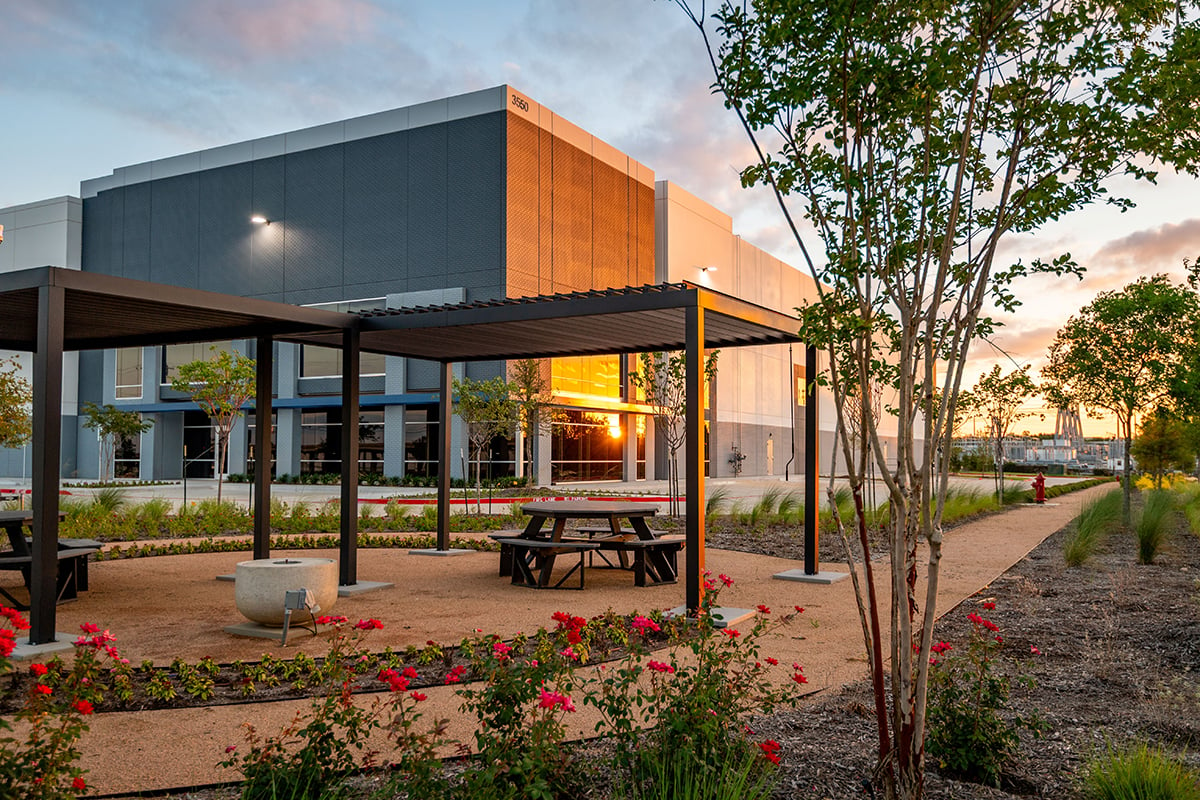
As Constellation has grown from a two-person startup to a multiregional industrial developer, it has resisted creating a one-size-fits-all playbook. Instead, the firm adapts its strategy to each region—and often to individual corridors within a market—looking for constrained sites where local knowledge, institutional underwriting and patient execution can create value.

While logistics remains a core focus, the company’s projects also target manufacturers and other industrial users, depending on local demand.
The firm’s strategy doesn’t include a fixed holding period, according to Giles, who said that each project is unique. However, Eseke stressed that Constellation builds with a long-term ownership view, even though it may not be the owner in the long term.”
There’s no consistent size for a Constellation project. The company’s portfolio ranges from smaller urban infill warehouses to speculative projects approaching 1 million square feet. And from a property management perspective, Constellation employs a mix of third-party managers and internal capabilities to oversee its assets, depending on what works best for each property.
“If you know your market well, you should be building to what your market needs—not what you do,” Giles said.
Even as Constellation continues its rapid growth, its leaders know the company is not immune to the growing complexities of the industrial market.
Easy sites have largely disappeared, requiring more complicated entitlement, environmental remediation and infrastructure work. Access to electrical power has also emerged as one of the sector’s biggest constraints, particularly as AI-driven manufacturing and data-center-related demand continue to reshape industrial markets.
We built the business to be empathetic to our customers’ needs.
—Hien Le, Co-Founder & Managing Partner, Constellation Real Estate Partners
Across its markets, Constellation doesn’t shy away from taking on particularly tough projects. Targeting quality infill sites with high barriers to entry is its specialty, noted Nathan Wynne, a Houston-based executive vice president at CBRE who has worked with Constellation on capital formation and asset sales.
In South Florida, where land for ground-up projects is growing scarce, more redevelopments are going to be necessary, according to Scott Alexander, a partner at Constellation who oversees the firm’s strategy in Florida and other Southeast markets, along with Colorado.
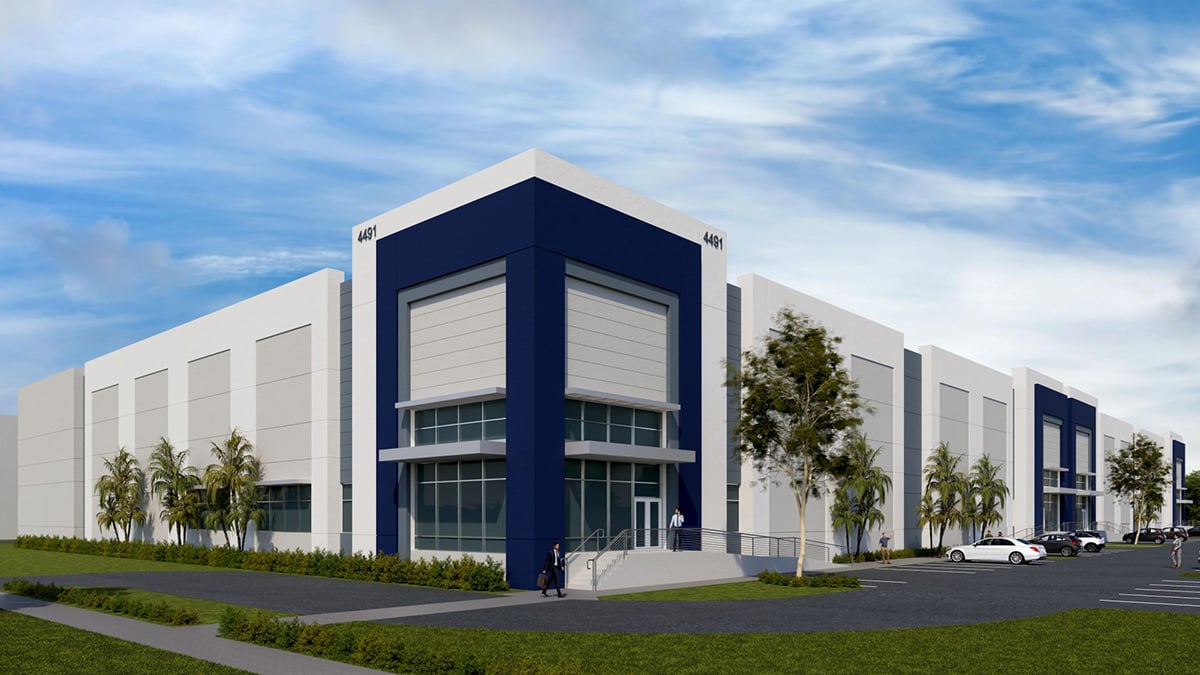
One project where the team took on a nontraditional site was in Fort Lauderdale, where the firm acquired a former marina with plans to redevelop it into a two-building, 170,000-square-foot warehouse campus. That project, known as Constellation Airport Logistics Center because of its proximity to Fort Lauderdale-Hollywood International Airport, is set to deliver in the first quarter of 2027.

To make the project possible, Constellation had to secure approvals from the Army Corps of Engineers, the city of Fort Lauderdale and Broward County to allow the marina to be filled. The entire approval process took 18 months, Alexander explained.
“At the end of the day, it’s irreplaceable real estate,” he said.
Across the country, partner Sven Tustin leads Constellation’s work in Phoenix and the greater Southwest. Tustin discussed how the firm aims to capitalize on the expanding semiconductor ecosystem around TSMC’s North Phoenix campus, which is driving billions of dollars of investment into the region.
Constellation is planning to break ground on a 550,000-square-foot, five-building industrial park in the Deer Valley submarket of Phoenix later this year. Tustin said the firm is targeting TSMC suppliers and customers with that project.
“One of our core values is: Strive to be local,” Tustin noted, “and that’s really key in terms of being able to obtain real-time market information and determine where that opportunity is going to be.”
Reputation as a business strategy

Five years in, Constellation’s founders say they’re still building—not just warehouses but the company’s lasting identity. That emphasis on reputation has become one of the qualities that partners say distinguishes the firm.
“They genuinely care about relationships, and their reputation is everything to them,” said CBRE’s Wynne.
Analytics may help identify the next site, and regional expertise may shape the next development, but Le and Giles hope the firm’s lasting competitive advantage will be something harder to quantify: a reputation for acting with integrity and treating investors, sellers, brokers, occupiers and employees as long-term partners.
“I want people to not look at (Constellation) and say, ‘They’re this many billion dollars or this size,’” Giles reflected. “I want them to look at it and be able to say, ‘They did it a certain way.’”






You must be logged in to post a comment.