

Earth Day 2026: What’s Driving Sustainable CRE Decisions Now
Power constraints, capital markets and risk are reshaping how and where commercial real estate gets built.
Commercial real estate has long framed sustainability in the future tense: the next retrofit, the next target, the next wave of better buildings. But this year, the issue is showing up in the present: in delayed projects, filtered-out buildings, tighter lending conditions and growing questions about which properties will remain competitive as energy, infrastructure and future capital needs become harder to shrug off.
In some cases, the warning signs are subtle or even invisible. “The landlord never hears about it—the building is filtered out before the conversation even starts,” said Paulina Torres, global research director of sustainability research at JLL. Owners may assume tenants are not prioritizing sustainability, while occupiers and their advisers are quietly crossing buildings off the list because they lack the necessary capabilities. “That is not a reputational story,” Torres said. “It is a vacancy and rental growth story.”
READ ALSO: Green Building Trends
Against that backdrop, Earth Day 2026’s theme—Our Power, Our Planet—takes on a more literal and commercially grounded meaning for real estate than it might have carried a few years ago. In CRE today, power is no longer a metaphor for influence or responsibility. It increasingly refers to actual electricity availability, infrastructure readiness and a building’s ability to remain viable in a tighter, more demanding market. Sustainability is being pulled into investment and leasing decisions by policy deadlines, financing constraints, tenant expectations, grid stress and investor concern over future capital risk.
Compliance makes waiting harder
For commercial real estate owners looking past Earth Day 2026 rhetoric, building performance standards are making sustainability harder to defer. For years, owners could treat decarbonization as a longer-term planning exercise. In markets with more mature policies, that window is narrowing.
Cliff Majersik, senior advisor at the Institute for Market Transformation, believes that the most effective programs are not just ambitious on paper, they’re clear, transparent and structured to drive earlier action. That includes clear interim milestones, visible outcomes, meaningful consequences for noncompliance and enough certainty around future enforcement to make long-lived investments feel rational rather than speculative.

At Skyridge Resort in Deer Valley, Utah, sustainability starts with the systems behind the scenes, from a high-performance envelope and LED lighting to efficient elevators, HVAC and water-saving plumbing. All images courtesy of PACE Equity 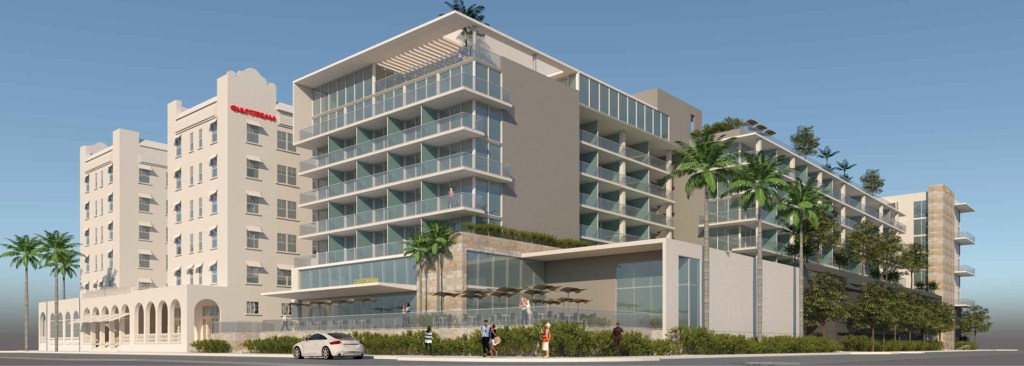
The Lake Worth Marriott renovation in Lake Worth Beach, Fla., centers on practical efficiency gains, including upgrades to the building envelope, lighting, HVAC and water systems. 
In Las Vegas, the Marriott AC | Element by Westin project brings together a tighter building envelope, efficient lighting and HVAC, and water-saving plumbing to reduce operating demands.
Even so, the timing challenge is often minimized. “Owners are underestimating how long the process of understanding and improving building performance takes,” Majersik said. In practice, that process can start with something as basic as benchmarking, but even then, gaps can surface later. Owners who have tracked energy use for years may only apply rigorous quality control as deadlines approach, sometimes discovering that basic inputs such as gross square footage were wrong all along. The result is not just a reporting issue. It can reset compliance baselines and compress the time for making real performance improvements.
This dynamic is pushing some owners and jurisdictions to move beyond incremental fixes. IMT has been advocating for more strategic decarbonization planning rather than a piecemeal, widget-by-widget approach. While isolated upgrades may help meet near-term requirements, they do not necessarily position an asset to remain compliant over the life of major equipment or through successive rounds of tightening standards. Owners who act earlier tend to have longer hold periods, stronger engineering capabilities and a clearer commitment to tenants and building performance, Majersik said.
For others, the push often comes later and more reactively.
“When owners see their competitors acting or start fielding BPS questions from tenants, lenders, investors, or board members, then they are much more likely to prioritize BPS compliance,” Majersik noted.
Capital decides what survives
If compliance is compressing timelines, capital is determining what actually moves forward. One of the clearer Earth Day 2026 lessons for CRE is that policy pressure alone does not decide what gets built, retrofitted or preserved in a project scope. In today’s lending environment, those decisions are often made in the capital stack.
C-PACE has shifted from a sustainability sidecar to a financing tool that helps deals hold together at a time when senior lenders are providing less leverage, according to Andrew Freter, director of originations at PACE Equity Finance.
“The flexible nature of C-PACE allows it to fill the leverage gap between what a senior lender will provide and the leverage a project can support,” he said.
That extends across multiple asset types. C-PACE continues to support new construction, retrofits, adaptive reuse and renovation across major sectors. Historically, mortgage lender consent was a major hurdle, but that friction appears to be easing as more senior lenders grow familiar with how C-PACE fits into transactions. Just as important, its function within deal has evolved.
“It is less of a sustainability add-on and more of a key part of the capital stack,” Freter said. Without it, sponsors are more likely to cut amenities and efficiency upgrades first. With it, the goal is to preserve scope rather than force a redesign.
Timing, in other words, is becoming its own form of leverage. “Like in real estate, where location is everything, in C-PACE, timing is everything,” according to Freter. The earlier that financing is introduced, the easier it is for lenders, sponsors and advisers to get comfortable with the structure and maximize the economics. Once the capital stack is largely set, integrating it becomes much harder.
Buildings are already being sorted
While capital determines what gets built, the market is already determining what performs. One of the clearest lessons of Earth Day 2026 is that the divide is becoming easiest to see in power-intensive uses such as data centers, advanced manufacturing and life sciences, where electricity availability is moving up the location hierarchy fast. Torres said the change is already visible in pricing and site feasibility.
In Silicon Valley, high-power leases of 4,000 amperes or more have been transacting at rents 49 percent higher on average than other leases signed over the past three years, and 33 percent higher than rents achieved by the newest buildings, according to JLL data. Meanwhile, in data centers, Texas is on track to overtake Virginia as the world’s largest market by 2030, but power is emerging as its biggest constraint.
READ ALSO: More Data Centers, Please!
That same dynamic divide is spreading more broadly across office and industrial assets. Buildings that meet evolving occupier requirements, including strong energy performance, are increasingly pulling away from peers that do not. In New York City, high-quality, low-carbon buildings are achieving rents 28 percent above their direct competitors, Torres noted.
One reason the shift can be difficult for owners to interpret is that the market signal is often indirect. Landlords may report that tenants are not raising sustainability requirements, while occupiers are quietly screening out buildings that lack those capabilities. In effect, some assets are losing out before the owner ever hears why.
Energy cost visibility and power availability are now central to those decisions. Energy is often among a building’s largest operating expenses and in grid-constrained regions, occupiers are already facing annual rate increases of 8 to 15 percent or more. That shifts energy from a facilities concern to a site-selection variable. Resilience is also gaining ground, particularly in markets with documented reliability risks, where tenants are placing greater emphasis on business continuity and a building’s ability to scale without hitting infrastructure limits.
The impact is most immediate at the site-selection stage. Grid constraints are shrinking the pool of viable sites in real time, Torres noted, particularly for high-load occupiers. Development timelines are also stretching as projects that cannot secure sufficient capacity stall, regardless of demand. In major U.S. data center markets, connection timelines for large new loads now exceed four years on average, pushing owners to consider onsite generation and storage more seriously.
“Power has moved from a background infrastructure assumption to a core variable in location decisions, underwriting and asset strategy,” Torres said.
Power is becoming part of location
Power availability is increasingly shaping where development is happening. In industrial real estate for example, the Earth Day 2026 theme lands especially literally: Power itself is becoming part of the location equation. For Carter Andrus, COO at Prologis, power availability and energy reliability now belong in the same conversation as traditional fundamentals such as labor access and transportation connectivity.
“Even the best location can’t perform if power can’t be delivered on the customer’s timeline or at the required load,” he said.
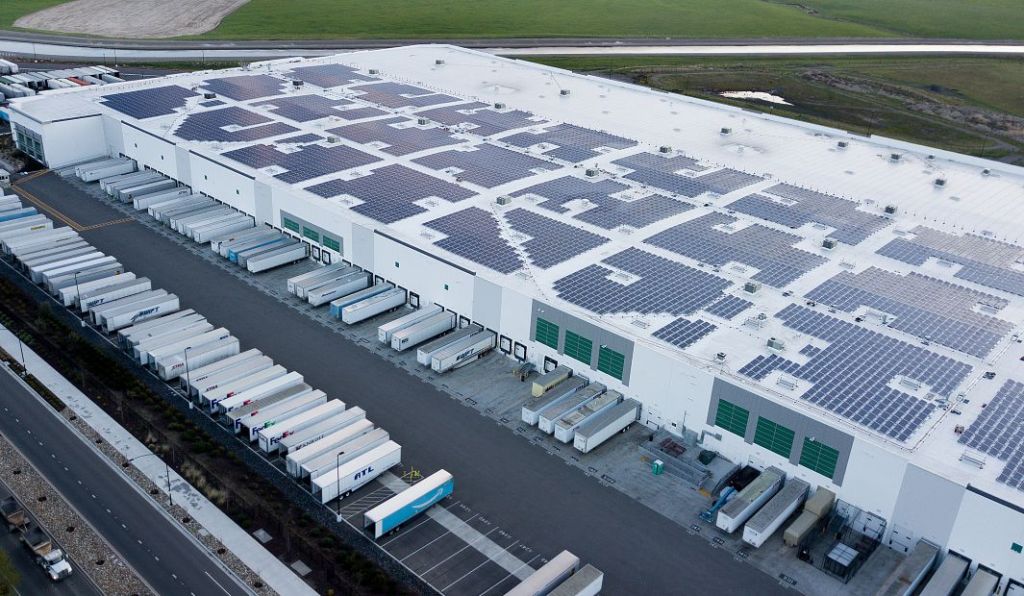
In Prologis’ 2026 Supply Chain Outlook, 90 percent of leaders who participated said they would pay a premium for sites with reliable energy infrastructure. Even though demand is showing up across the board, potential tenants’ top concern is how fast a site can get power. The answer to that question can determine whether a project remains feasible.
“Time-to-power becomes a real operational risk, and we see customers screening sites through that lens,” Andrus shared.
In response, constrained markets are pushing the industry toward more creative solutions, including solar, battery storage and microgrids that can help buildings operate more independently.
That, in turn, is reshaping what makes an industrial building competitive. Reliability is becoming a baseline requirement, with customers looking for facilities that can support, or at least be upgraded for, onsite generation, battery storage and microgrid capability.
Just as important, some of the biggest constraints now sit beyond the property line. “Partnerships among logistics providers, utilities and communities are becoming essential to bridge capacity gaps and provide the energy we all need,” Andrus noted.
Design locks in long-term performance
While power and infrastructure constraints are reshaping where projects can happen, design decisions determine how those projects perform over time. Sustainability can influence a project at any stage, but the number of meaningful opportunities shrinks as design and construction move forward, according to Katie Mesia, firmwide resilience co-leader at Gensler.
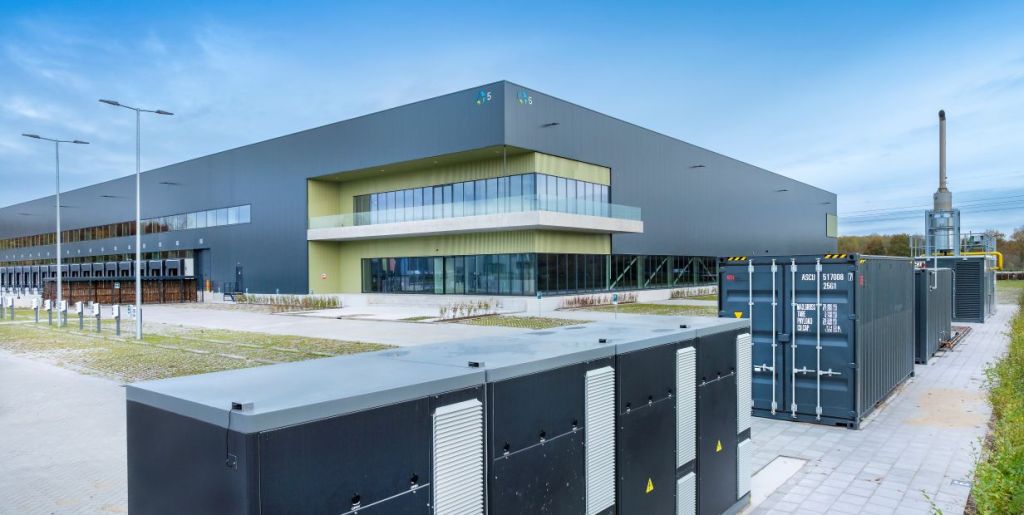
Some of the most important choices are made before drawings advance very far. Site selection alone can lock in advantages or constraints related to transit access, local infrastructure, grid mix and water systems. From there, early design phases provide the best opportunity to embed sustainability into the project’s core logic rather than layer it on later. When that integration happens too late, Mesia noted, sustainable measures can feel forced, and teams lose the chance to improve the design as a whole.
That early alignment becomes even more critical when teams face the increasingly common question of whether to retrofit or rebuild. Mesia believes that reuse works best when teams stop trying to force older buildings into a new-build ideal and instead look for ways to let those structures shape something fresh.
The same principle applies at the material level. A building’s structure remains the largest contributor to embodied carbon, which makes early structural decisions especially consequential. Timber, for example, only works when teams commit early enough to address spans, depth and sourcing to be properly addressed, Mesia added.
Ultimately, the distinction is not between buildings that include sustainable features and those that do not, but between those designed for long-term performance and those that are not.
“Futureproofing is not simply the inclusion of a set of sustainability features,” Mesia emphasized. In practice, it means designing with flexibility, accounting for environmental, social and economic context, and anticipating multiple possible futures.
Investors are pricing the downside
Sustainability is moving from a consideration to a constraint. Ultimately, the market’s most unforgiving test is financial. For investors, sustainability becomes real not when a building makes a claim, but when that claim starts to affect income, capital needs and exit prospects.
“If a ‘green’ feature doesn’t translate into lower operating costs, stronger tenant demand or reduced future capex, it’s just narrative,” said Uma Moriarity, senior investment strategist and global head of sustainability at CenterSquare.
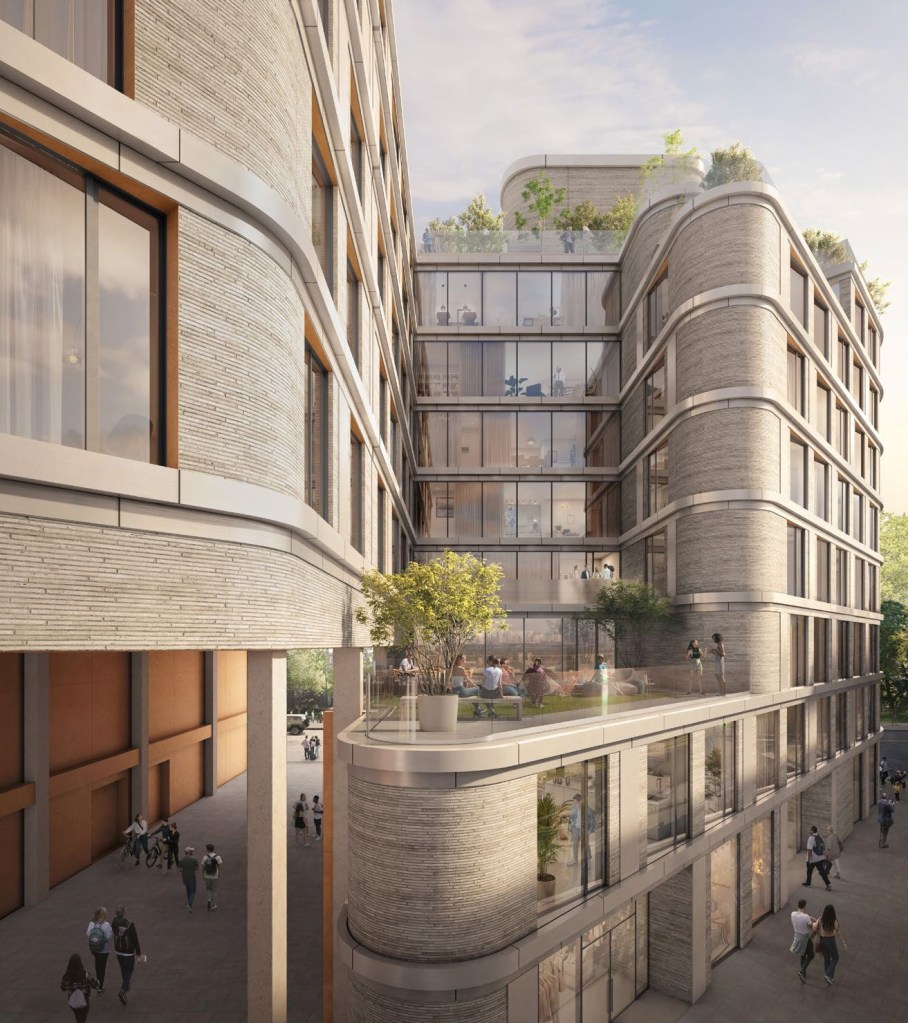
The shift is increasingly visible in underwriting. Energy efficiency shows up as an expense advantage. Physical risk appears in insurance costs or required reserves. Transition risk emerges as future retrofit spending. In Moriarity’s view, by the time weak performance or leasing risk are plainly visible, the issue is already in front of you. A more useful early signal is the capital still needed to build resilience and maintain competitiveness.
Those same factors are beginning to influence pricing and conviction. Energy exposure, insurance pressure and future capital requirements are shaping how investors evaluate risk, alongside a building’s alignment with tenant demand—particularly in sectors where occupiers have sustainability targets of their own.
“The common thread: These factors directly affect the durability of income and exit liquidity,” Moriarity noted.
Investors are getting better at identifying which buildings may become expensive to defend over time, but full risk pathways are not yet consistently priced in. Labels and certifications carry less weight on their own. What matters more is evidence of performance, alignment with tenant needs and a business plan that accounts for how the asset will manage risk over time.
In that sense, the Earth Day 2026 question for commercial real estate is no longer whether the industry is paying attention, but which assets are prepared for a more demanding operating environment, and which will spend the next cycle trying to catch up.

You must be logged in to post a comment.