


Atlanta Office Sector Shows Improving Fundamentals
The latest rundown on which metrics are on the upswing and which are under pressure.
Atlanta’s office sector showed gradual improvement through the first half of 2026, though several metrics remained under pressure. Vacancy declined year-over-year, while asking rents continued to rise. Investment volume proved relatively solid compared with several peer markets as of July, despite average sale pricing remaining well below the national benchmark, while office deliveries remained on par with U.S. figures.
Office attendance within the metro continued to recover in June, reaching a new post-pandemic high, according to Placer.ai data. Visits were still 19.3 percent below June 2019 levels, while average visits per working day were down 23.1 percent after adjusting for the extra weekday in June 2026.
So far this year, Atlanta’s office-reuse efforts have focused less on a single conversion incentive and more on creating a broader framework for redevelopment. City officials moved ATL Zoning 2.0 toward Council review, advancing a rewrite of the city’s 40-year-old zoning code that could make rezonings and adaptive reuse easier to navigate. Downtown also got new support through an Enterprise Zone tied to reinvestment around the World Cup.
Thin office pipeline, few deliveries
Atlanta’s office development pipeline remained thin, with only 380,000 square feet underway as of July. This figure accounted for 0.2 percent of the city’s total office stock, half the national index. It was also one of the lowest shares among its peers, with metros such as Houston (0.3 percent) and Phoenix (0.4 percent) surpassing it.
When also taking into consideration project in planning stages, this figure rose to 1.4 percent, 20 basis points below the U.S. threshold. Austin (2.9 percent), Dallas (3.9 percent) and Nashville, Tenn. (2.7 percent) fared better, while Denver (0.9 percent) and Houston (0.8 percent) remained behind.
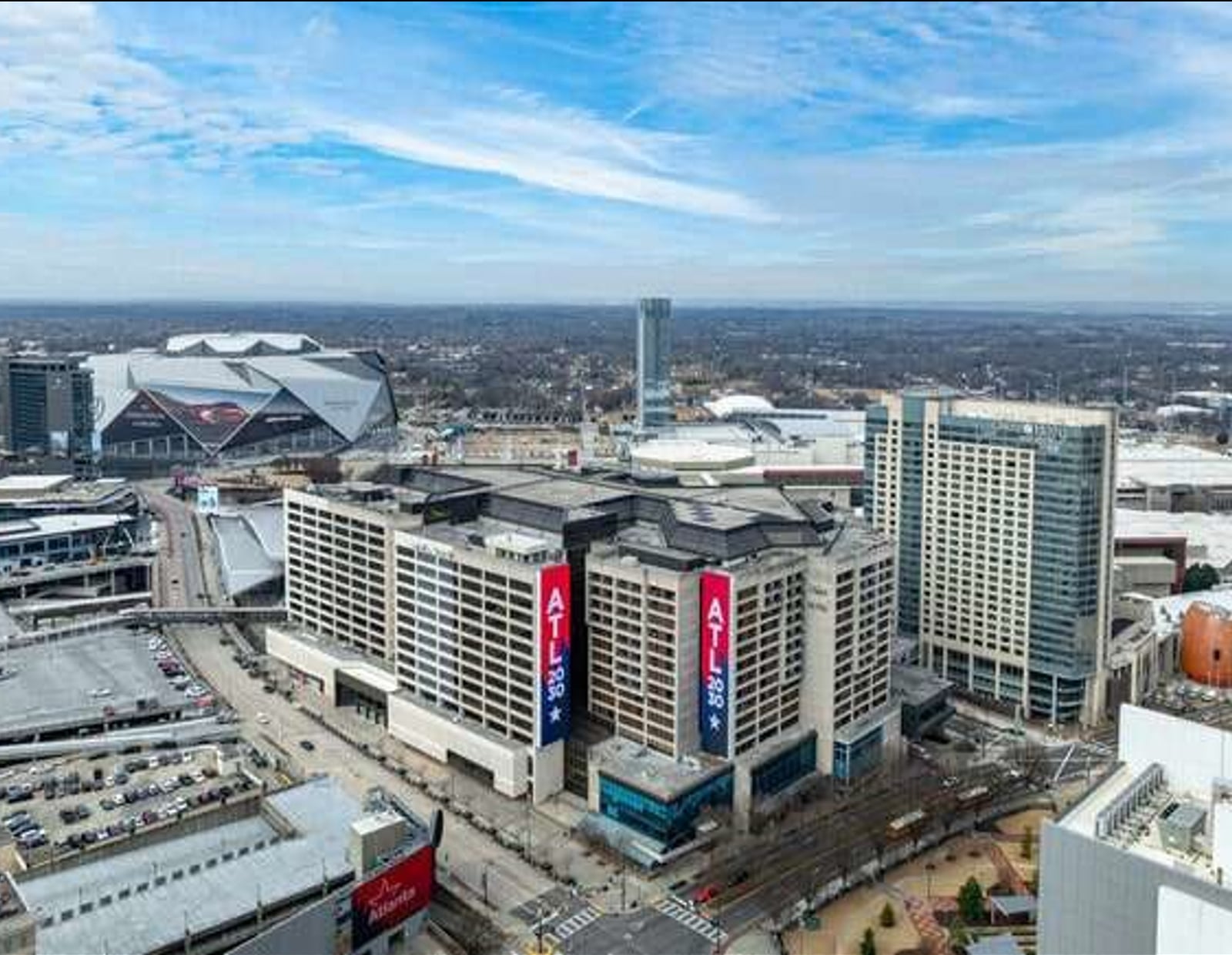
CP Group is working on the redevelopment of the former CNN Center within the city’s downtown. The company recently obtained almost $57 million in C-PACE financing from Peachtree Group. Plans call for the revitalization of the building’s retail atrium, installation of large-scale digital media displays and building system upgrades. The tower spans about 1.2 million square feet.
In the first seven months of this year, five properties totaling 417,434 square feet came online, representing 0.2 percent of the market’s office stock, on par with the national figure. Year-over-year, office deliveries dropped by a third.
Atlanta deal volume stays resilient
Atlanta’s total office sales in the first seven months of this year amounted to $791.7 million. This figure placed the metro in the first half of the top 25 U.S. largest markets. Dallas ($2.9 billion), Houston ($1.5 billion) and Austin ($1.4 million) are the only non-gateway metros to surpass Atlanta, while Phoenix ($790.7 million) and Denver ($697.1 million) followed closely.
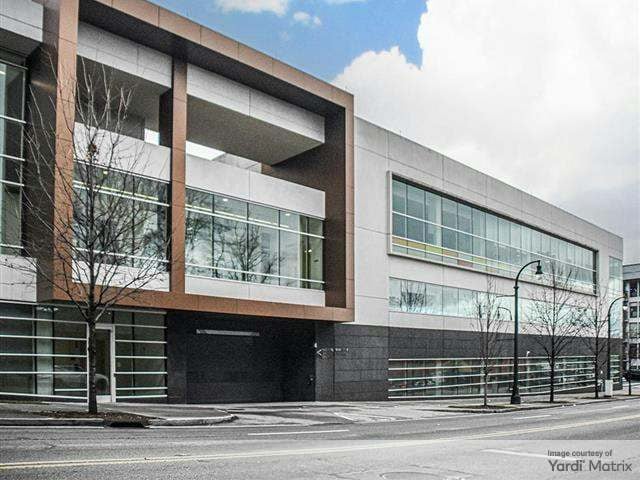
Assets in Atlanta traded for about $157.50 per square foot on average, well below the $198 per square foot national figure. Manhattan ($575.10 per square foot) surpassed San Francisco ($542.90 per square foot) to reclaim its position as the nation’s most expensive market.
At the end of July, Emory University acquired the 107,500-square-foot medical office building housing the Emory Proton Therapy Center for $82 million. Georgia ProtonCare Center sold the property after filing for Chapter 11 bankruptcy protection earlier this year. Including closing costs and the settlement of bankruptcy-related expenses, the total outlay reached $101 million.
Vacancy declines, rent growth leads nationally
Atlanta’s vacancy rate as of July clocked in at 18.6 percent, improving 130 basis points year-over-year due to corporate office moves. This figure was, however, almost 1 percent above the U.S. index, which also recovered 130 basis points compared to a year ago.
Nationally, the metro ranked somewhere in the middle. Among peers, Austin (24.5 percent) and Houston (24.1 percent) had more available space, while Philadelphia (18.4 percent) and Phoenix (16.9 percent) were at the opposite end. Detroit posted the sharpest rate recovery, dropping 6.3 percent.
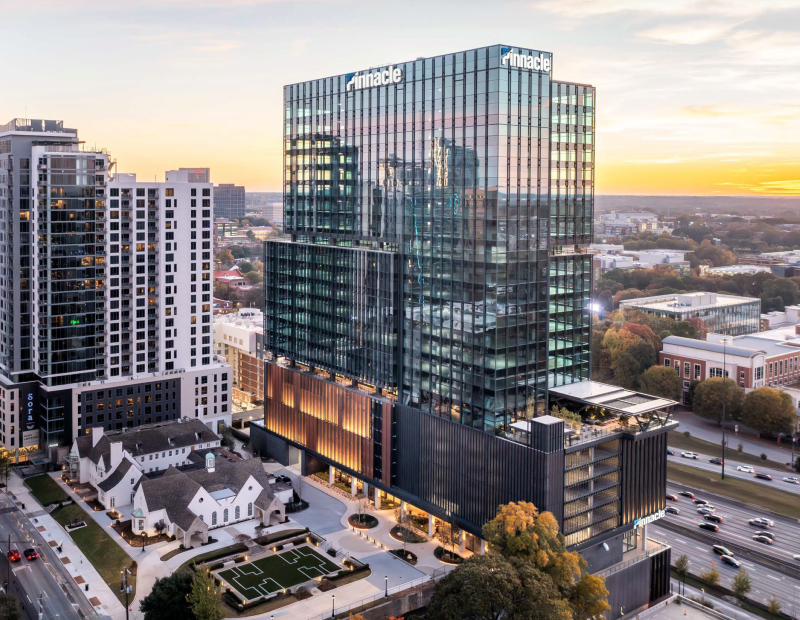
In the second quarter, Pinnacle Financial Partners agreed to lease 165,000 square feet at Ten Twenty Spring, a 525,000-square-foot tower in Midtown Atlanta. The company will use the space as its new corporate headquarters and plans to move in in the second half of 2027. Its bank headquarters will remain in Nashville, Tenn.
Listing rates for Atlanta’s office space as of June average $36.64 per square foot, increasing 2.7 percent year-over-year and ranking in the top 10 among the largest metros nationally. Austin ($46.77) is the only peer market to surpass it.
Flex space maintains strong footprint
As of July, Atlanta’s coworking inventory reached roughly 5.9 million square feet across 306 locations, according to CoworkingCafe data. The metro outpaced Houston (4.9 million square feet) and Denver (4.5 million square feet), as well as Phoenix (3.7 million square feet) and Austin (2.2 million square feet). Among peer metros, Dallas remained in the lead with almost 7 million square feet.
The metro’s share of flex office space as percentage of total office space reached 2.8 percent—above the 2.4 percent national average. Atlanta recorded one of the highest figures among similar markets, with only Raleigh-Durham, N.C., and Nashville surpassing it.
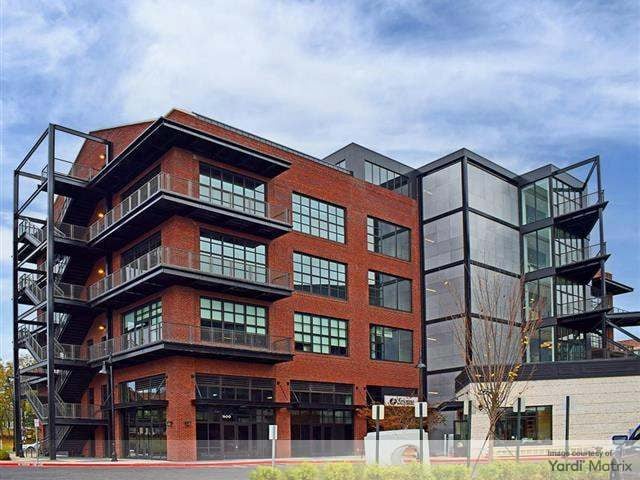
Earlier this year, Industrious signed a long-term, 22,000-square-foot lease at Southern Post in Roswell, Ga., for a new coworking space. The firm will occupy about one and a half floors at AH Realty Trust’s 260,000-square-foot property.
Regus remained Atlanta’s leading coworking provider, with a footprint totaling 667,586 square feet across 31 locations, followed by Industrious with 345,449 square feet. Rounding out the top five were Roam (316,800 square feet), Spaces (264,973 square feet) and WeWork (237,675 square feet).




You must be logged in to post a comment.