


Deloitte’s 2027 CRE Outlook Tests the Recovery Thesis
Investment appetite remains strong, but completed deals and refinancing outcomes have yet to confirm a broad rebound.
More money may flow into commercial real estate in 2027, but not every property stands to benefit. Deloitte’s 2027 CRE outlook finds executives expecting revenue growth and planning to increase real-asset investments even as their confidence in the broader market weakens.
Deloitte’s 2025 edition raised the prospect of a CRE recovery, supported in part by an expected return of deal activity and more favorable lending conditions. When Commercial Property Executive covered the 2026 outlook, that rebound had not unfolded as anticipated. Deloitte described it as ‘paused.’
Growth expectations meet a weaker market view
The Deloitte Center for Financial Services surveyed 950 executives and their direct reports at CRE owner and investment firms with at least $250 million in assets under management. Respondents were based in 13 countries, and the survey was conducted in June and July 2026.
Deloitte’s overall sentiment index fell to 57.8 out of 100, from 64.9 in its 2026 outlook and 68.3 in its 2025 edition. Its revenue sentiment index, however, stood at 67.9, just below its peak of 70.3.
Sally Ann Flood, partner & U.S. real estate leader at Deloitte, said the earlier recovery case depended on a stronger return of transactions under better rate and lending conditions. “I do find it meaningful that 51 percent expect revenue growth in excess of 5 percent, despite the headwinds, but it’s clearly not a synchronized rebound across every organization, market, sector and property,” she told CPE.
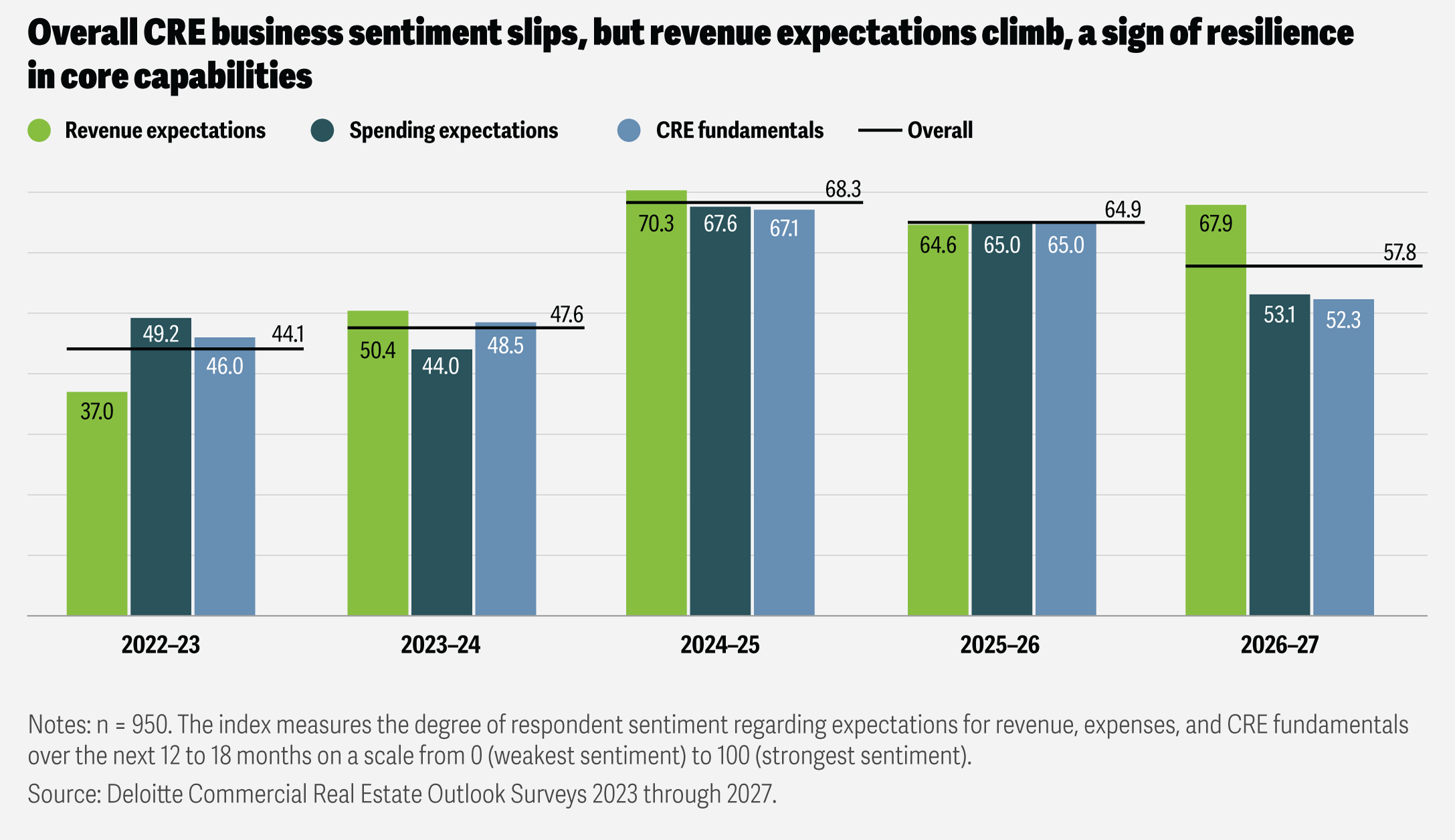
A firm can expect its own revenue to grow without expecting rents, values and transaction activity to improve across its entire portfolio or the market.
Respondents still identified cost of capital, capital availability and elevated interest rates as their three leading macroeconomic concerns. The survey does not establish which obstacles are most decisive for individual deals. Deloitte did not ask respondents about pricing expectations or concerns about future property income, Flood noted, so its findings cannot show whether financing pressures outweigh a bid-ask gap or uncertainty about an asset’s cash flow.
Investment intentions are not transactions
Some capital is already moving: Cross-border CRE capital rose 18 percent in the first quarter of 2026 from a year earlier, according to Deloitte’s 2027 CRE outlook. But one quarter of cross-border activity cannot establish a broad U.S. recovery or show whether owners facing loan maturities have better refinancing options.
Looking ahead, nearly 80 percent of respondents expect to increase their real-assets investments by early 2028. The U.S. also gained ground as a cross-border target: 28 percent named it their leading market outside their home country, up from 16 percent a year earlier. Those plans and preferences, though, have yet to translate into completed deals.
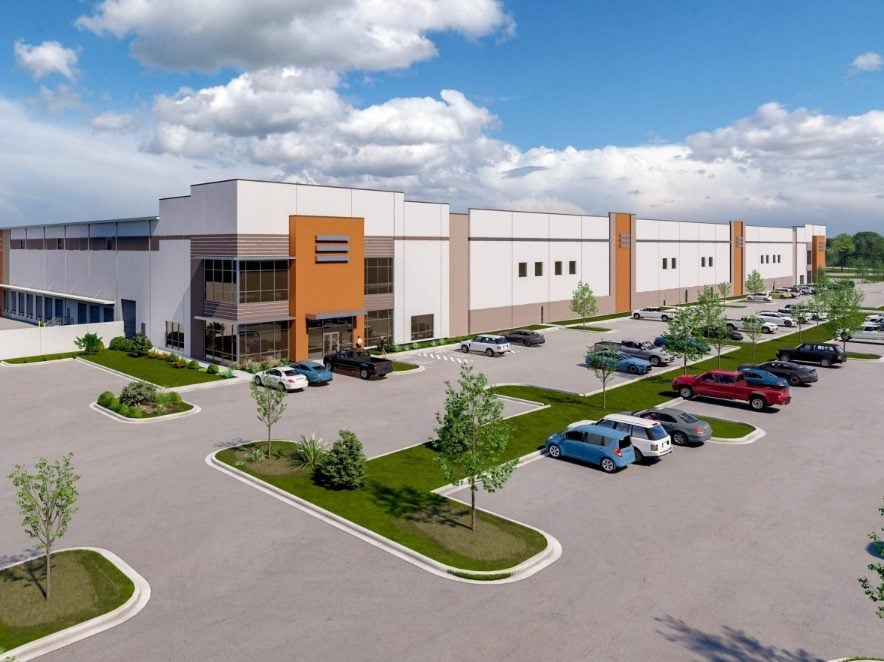
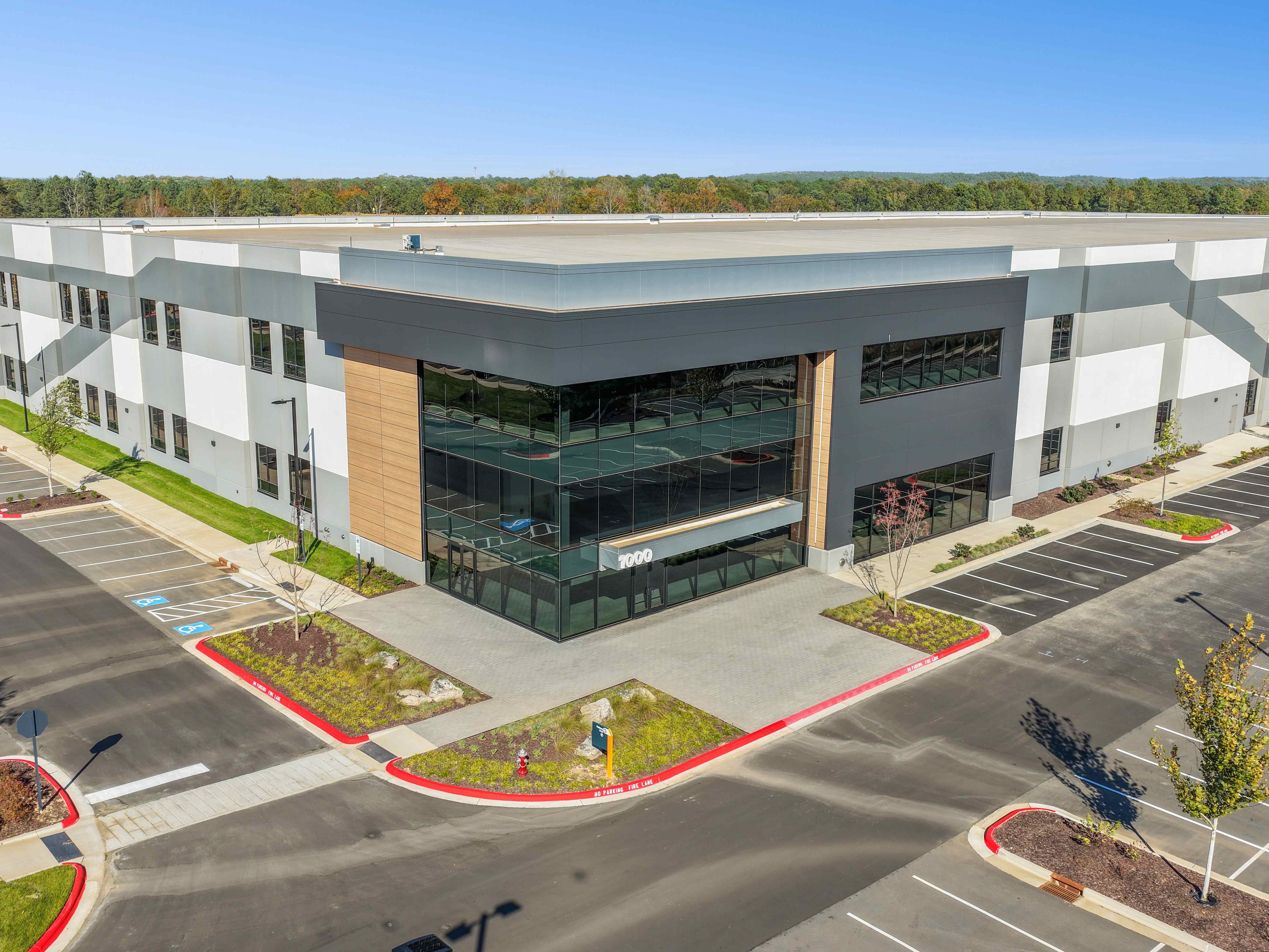
Where capital goes may matter as much as how much is available. Deloitte notes that digital-economy properties and debt strategies accounted for more than two-thirds of capital raised in 2025, potentially leaving less for other sectors. In the survey’s ranking of opportunities over the next 12 to 18 months, logistics and warehousing led, followed closely by digital-economy properties. Neighborhood retail climbed from 11th place in the previous outlook to fifth, while hotels and lodging fell from eighth to 13th.
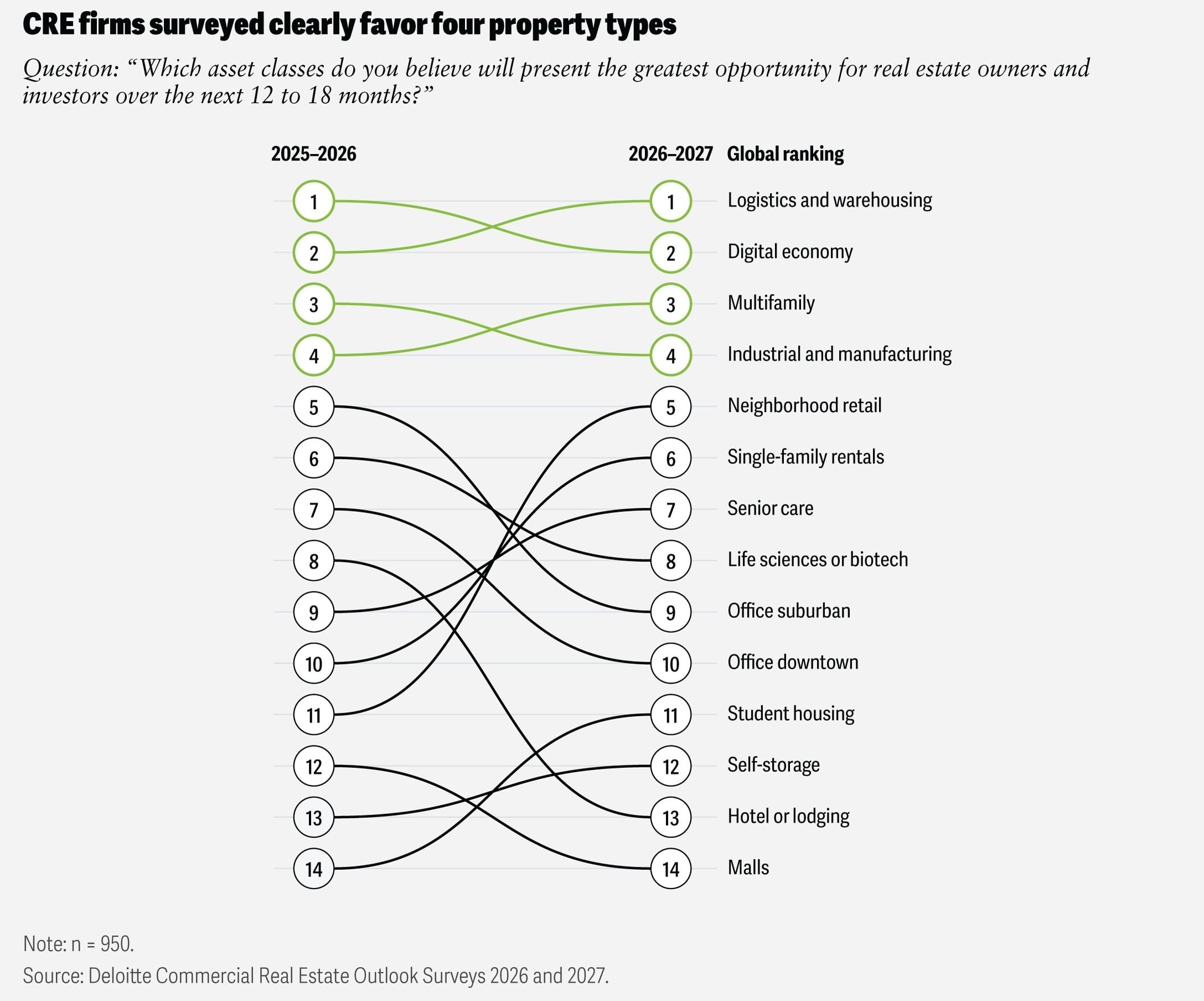
For U.S. investors, Flood recommended re-underwriting target markets, acquisitions and refinancings against current all-in debt costs and highly localized demand. That is especially consequential for owners with maturing loans: As CPE’s examination of CRE maturities found, a property can be operating adequately and still fail to support a refinancing at its existing loan balance.
The cost of holding on
The same return test applies to owners deciding what to do with properties they already hold. Nearly 80 percent of respondents expect to upgrade or reposition assets over the next 12 to 18 months, including 38 percent who plan to be highly active. At the same time, 46 percent expect no sales and 39 percent expect no conversions.
Plans differ by property specialty. Industrial and alternative property specialists place the greatest emphasis on upgrading, office specialists are the most inclined to convert, while housing specialists show the greatest willingness to divest.
Deloitte suggests reluctance to sell could reflect an unwillingness to realize losses, though the survey cannot establish that motive for every owner. An upgrade may make sense where tenant demand supports higher rents. Elsewhere, the expenditure could postpone a sale without improving the building’s long-term prospects.
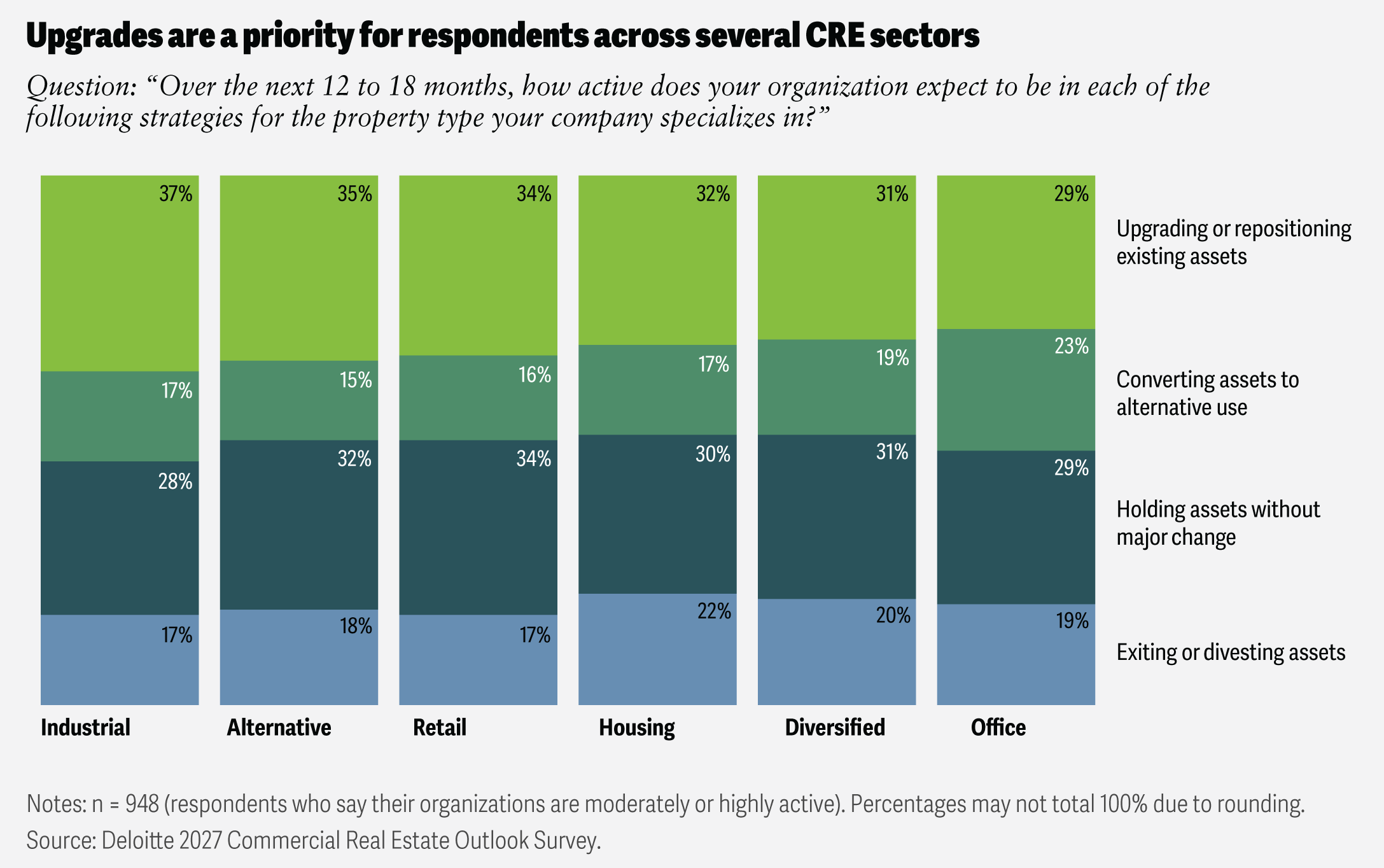
Flood said owners should test lease-up, capital and refinancing costs, alternative uses and exit values under several scenarios. The benchmark is whether a property can meet its return target after further investment. “A property should move from upgrade or hold to sell when it can’t pass a certain threshold,” she said. “Base these decisions on realistic economics of the dollar invested rather than a hope or desire that a previous value will return.”
The report recommends assigning assets to upgrade, hold, convert or sell categories, then funding improvements where verified demand and rent premiums can cover the capital expenditure.
Bring tax into the investment decision
Tax considerations can also change whether a deal meets its return target. More than 90 percent of surveyed executives said tax strategy is already central or will become more central to their investment decisions, and more than 60 percent plan to shift capital toward jurisdictions or assets with stronger tax incentives. Yet only 26 percent involve tax professionals at deal origination.
That timing can affect the choice of property as well as deal structure. “Before a bid or letter of intent, a firm could compare two commercially similar sites using verified tax incentives, transfer and property taxes, cost-recovery options and after-tax IRRs. That could change the location selected, the property acquired, the deal structure used or whether a project clears its investment hurdle at all,” Flood said.
For U.S. investors, two changes warrant attention in the 2027 planning cycle. The Section 179D energy-efficient commercial buildings deduction is unavailable for property where construction began after June 30, 2026. A revised, permanent Qualified Opportunity Zone program is scheduled to begin January 1, 2027. Both make eligibility and timing worth examining before commercial terms are fixed.
New tools, old decisions
Firms are also increasing spending on the systems behind their investment and operating decisions. More than 90 percent of respondents plan to increase data and technology spending next year, up from 76 percent in the prior survey. Yet 92 percent describe their organizations as being in the research or pilot phase of AI adoption, while almost half report having agentic AI in some live production workflows.
“A firm can have a narrow agentic workflow running live while still being in research or pilot mode for its broader AI agenda,” said Flood. “Our survey also captured that a little more than half of the respondents are seeing incremental operational gains, but we would not conclude the industry has solved enterprise-scale value creation.”
Moving beyond isolated gains, she noted, requires verifiable data, defined access and decision controls, human oversight and recurring checks on returns. Those safeguards matter as firms explore AI’s role in underwriting and portfolio decisions.
Firms also need leaders who can oversee those decisions. In the U.S., Deloitte estimates that 59 percent of people in CRE leadership positions could reach retirement age within a decade, while only 30 percent of survey respondents consider their organizations very prepared for C-suite transitions. Flood sees two linked challenges: developing successors and preparing them for roles that require AI and data fluency alongside real estate judgment.
Deloitte’s 2027 CRE outlook leaves the recovery question open. Cross-border investment has increased and executives intend to deploy more capital, but the earlier recovery thesis will ultimately be tested by completed deals, refinancing outcomes and the returns on properties owners choose to fund.



You must be logged in to post a comment.