


Chicago Office Sales Lead Midwest, Pricing Lags Behind
And more on how the Windy City market stacks up against other gateways.
Chicago’s office market continued to show uneven conditions through August, with elevated vacancy and low average sale prices. Investment volume remained relatively solid at $1.3 billion year-to-date, but average sale pricing ranked at the bottom among gateway markets, according to Yardi Matrix. At the same time, development stayed limited.
However, the metro still benefits from pockets of sector-specific demand. Life sciences remain one of the stronger segments, with Chicago maintaining its position as the Midwest’s leading hub, while gradually broadening beyond its traditional pharmaceutical manufacturing base.
In terms of conversions, the market moved further from planning to execution. The city continued using the LaSalle Street initiative as its primary tool, with six office-to-residential projects advancing with public support and more than $315 million in TIF approved by City Council as of January. Rather than a citywide zoning overhaul, the strategy represents a targeted effort to reduce obsolete office inventory in the Loop and add residents to a corridor challenged by elevated vacancies.
Sales hold up, pricing remains low
Office deals in Chicago totaled $1.3 billion year-to-date through August, placing the metro ninth nationally and leading the Midwest. Manhattan had the largest sales volume in the country at $5.2 billion, followed by the Bay Area ($3.4 billion) and Dallas ($3 billion). At the other end of the spectrum, Seattle ($426 million) recorded one of the lowest transaction totals among major U.S. markets.
Chicago office assets traded for an average of $88 per square foot, less than half the $205 national benchmark and the lowest pricing among gateway markets. Nationally, Austin ($877 per square foot) posted the highest average, ahead of Manhattan ($600 per square foot) and San Francisco ($536 per square foot).
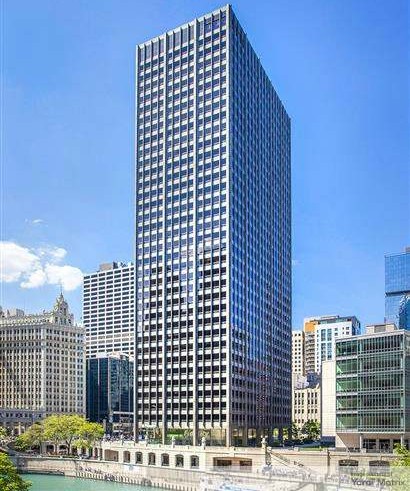
In one of the largest deals so far this year, Real Capital Solutions acquired 401 N. Michigan Ave. for $132.5 million. Located along the Chicago River, the 35-story tower spans 737,308 square feet. The buyer paid almost $180 per square foot for the LEED Platinum-certified high-rise.
Development trails gateway peers
In terms of construction activity, Chicago had one of the smallest under-construction pipelines among the largest U.S. metros when excluding owner-occupied properties. The metro had only 251,930 square feet of office space underway as of August, accounting for 0.1 percent of its total stock. This figure was well below the 0.5 percent national average.
Additionally, Seattle was the only gateway market to have a smaller pipeline. Nationally, Manhattan (3.8 million square feet) had the most space in the making. When also taking into account projects in planning stages, Chicago’s share rose to just 0.2 percent, still well below the national index and behind all peers.
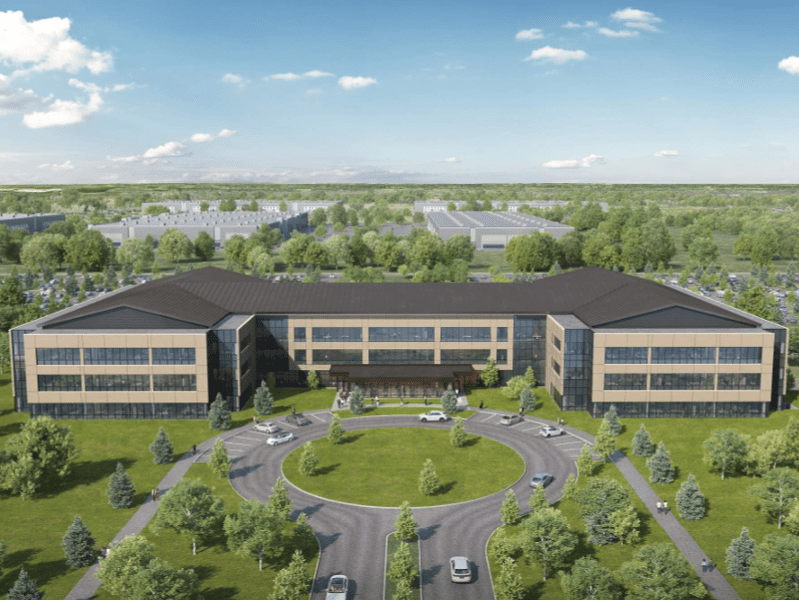
Uline is developing 9900 128th Ave., a 366,000-square-foot office building in Pleasant Prairie, Wis., one of the largest projects underway in Chicago. Also known as Uline Corporate H4, the three-story property is rising on a 45-acre site within Prairie Highlands Corporate Park and will accommodate roughly 1,300 employees upon completion.
As for office completions, developers brought online 422,919 square feet of office space in the first eight months of this year. Three properties came online, accounting for 0.1 percent of the metro’s inventory. This figure, however, marked a 26 percent year-over-year decrease.
Vacancy stays above U.S. average
Chicago’s office vacancy rate as of August clocked in at 19.2 percent, increasing 10 basis points year-over-year. The metro’s figure was above the 17.8 percent national average, but ranked in the middle among gateway markets.
San Francisco (25.9 percent) and Seattle (24.7 percent) had the most available space, while Manhattan (10.2 percent) and Miami (11.6 percent) saw the largest improvement since the pandemic.
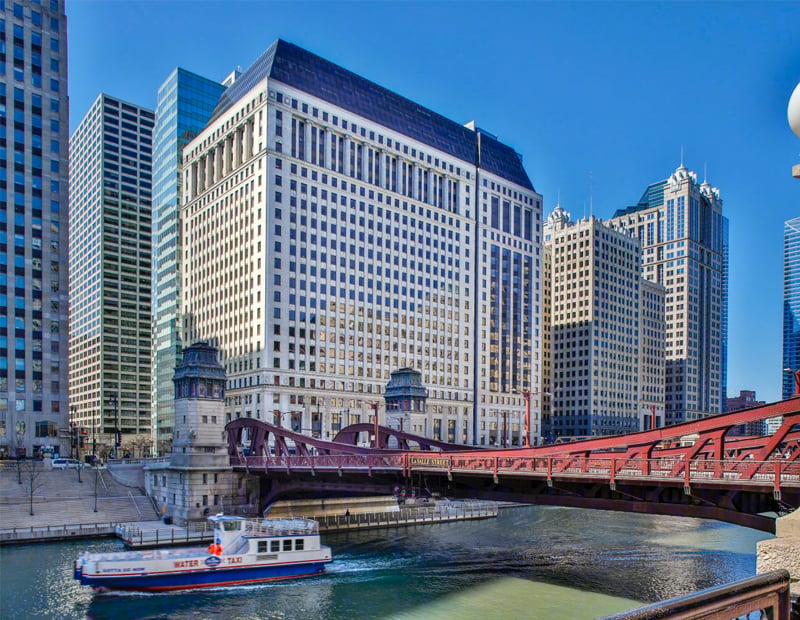
In May, Tishman Speyer signed a 163,000-square-foot, 12-year lease extension with law firm Vedder. The company uses the five-floor space at 222 N. LaSalle St. as its global headquarters and has been a tenant at the building since 1988.
As of August, listing rates for Chicago’s office space averaged $28.4 per square foot, marking a 1.4 percent increase compared to the same month of 2025. Despite the improvement, the metro’s figure was one of the lowest among the largest U.S. cities and the lowest among gateway markets. Manhattan ($72.7) remained in the lead, followed by San Francisco ($65.4) and Miami ($59.7).
Chicago ranks high for flex space
Chicago’s coworking inventory reached nearly 9.3 million square feet across 348 locations as of August, according to CoworkingCafe. Flex space accounted for 2.9 percent of the metro’s total office stock, about 50 basis points above the national average.
That share also placed Chicago near the top among gateway markets. Miami led the country at 4.7 percent, while San Diego (2.8 percent), Los Angeles (2.6 percent) and Washington, D.C. (1.8 percent) posted smaller shares.
Regus remained the metro’s largest coworking operator, with more than 1.3 million square feet across 60 locations. Braveheart followed with 775,266 square feet, ahead of Expansive at 660,995 square feet. WeWork (473,585 square feet) and Industrious (385,830 square feet) rounded out the top five.
London-based coworking marketplace Hubble expanded to Chicago this summer as part of a broader U.S. rollout. The platform entered seven additional markets and launched with more than 10,000 office units across 700-plus properties, working with operators including Regus, WeWork and Industrious.


You must be logged in to post a comment.