

Manhattan Office Market Holds Its Ground in 2026
Strong investment activity, elevated pricing and sustained development are supporting the borough's performance.
Manhattan’s office sector held on to its leadership in the first four months of 2026 across several key metrics, according to Yardi Matrix data. Investment activity remained the highest nationwide, with pricing and rents outperforming all major markets.
Development activity continues to be supported by large-scale projects. Manhattan’s office space pipeline stayed elevated relative to peers, despite national office real estate trends signaling sector shifts. At the same time, the coworking sector’s expansion continued in the metro, reinforcing the borough’s dominant flex office footprint.
Vacancy recovery continues, rents stay elevated
Manhattan’s office vacancy rate fell to 13.1 percent as of April—below the 17.6 percent national rate. The borough registered one of the lowest vacancies in the country, with only Miami posting a lower rate at 12.5 percent. At the other end of the list, Seattle (25.2 percent) and San Francisco (23.3 percent) remained the gateway markets with the most elevated rates.
Manhattan’s vacancy rate declined 300 basis points over the past 12 months, matching Miami’s change. However, San Francisco led the office recovery with a 570-basis-point decrease, followed by Denver (-470 basis points).
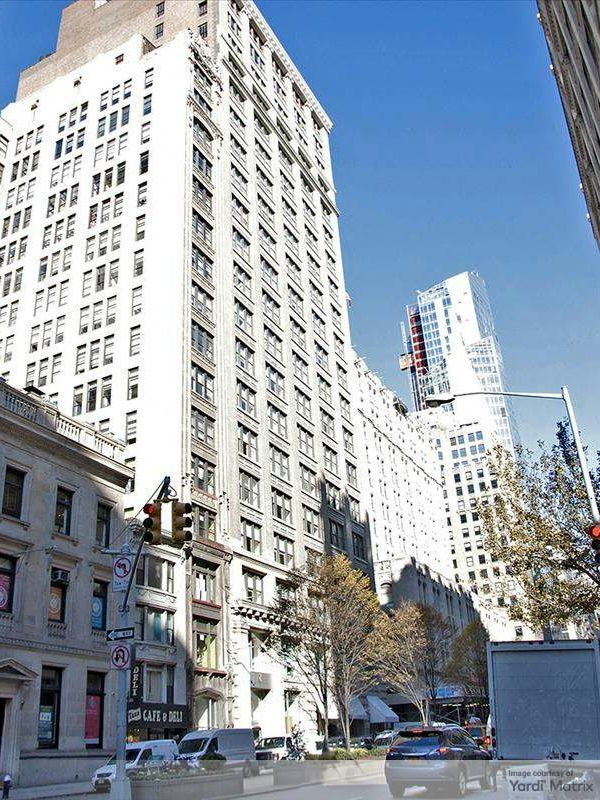
Asking rents averaged $69.29 per square foot in the borough in April—more than double the $32.91 per square foot national average and the highest in the country. San Francisco ($62.03 per square foot) and Miami ($58.41 per square foot) were also among the priciest nationwide.
In contrast, the country’s most affordable rents were recorded in Detroit ($20.81 per square foot). Across gateway cities, Chicago office renters paid the least on average, around $28.02 per square foot.
Nationwide office visits were 29.1 percent below April 2019 levels as of April 2026, according to Placer.ai. The strongest return-to-office growth compared to that period was in New York City, with a 10.4 percent decline in foot traffic, leading all major markets.
Recent leasing activity in Manhattan includes Optiver’s 92,000-square-foot expansion at 360 Park Ave. S, owned by BXP. The trading company brought its total presence at the 21-story building to some 115,000 square feet.
Investment and insurance firm Starr signed a 275,000-square-foot, 20-year lease at 343 Madison Ave., another BXP-owned property. The tenant will move its New York City headquarters to the skyscraper, currently the second-largest office project underway in the metro, expected to come online in 2029.
High pricing and investment momentum keep Manhattan at the top
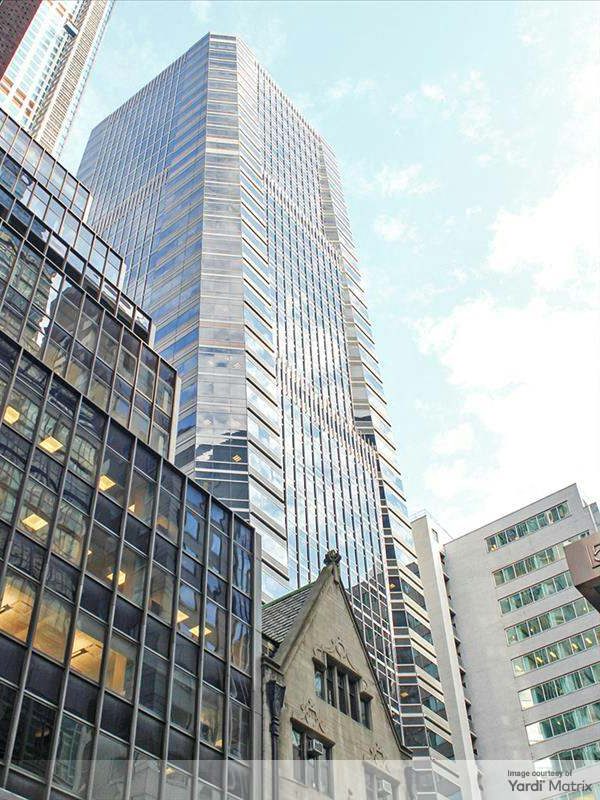
As of April, Manhattan recorded just under $3 billion in office sales, consolidating its leading position nationwide. San Francisco ($1.6 billion) and Dallas ($1.1 billion) followed, with Boston ($281 million) and Seattle ($255 million) lagging.
Manhattan also recorded the highest sales prices. As of April, properties in the metro sold at $712 per square foot—above the national average of $214 per square foot. San Francisco followed, with $686 per square foot, while Miami ranked third with $444 per square foot. By contrast, Chicago office properties sold at $107 per square foot on average, ranking among the most affordable markets in the country.
The largest Manhattan office deal so far in 2026 was the $730 million purchase involving Park Avenue Tower. SL Green completed the acquisition of the Plaza District tower, after going under contract in October 2025.
Manhattan’s pipeline among the nation’s largest
As of April, Manhattan had 3.3 million square feet of office space underway across nine projects. This accounted for 0.7 percent of its existing inventory—on par with the national average.
Among gateway cities, Manhattan’s construction activity placed second after Boston, where 5.1 million square feet of space was under construction.
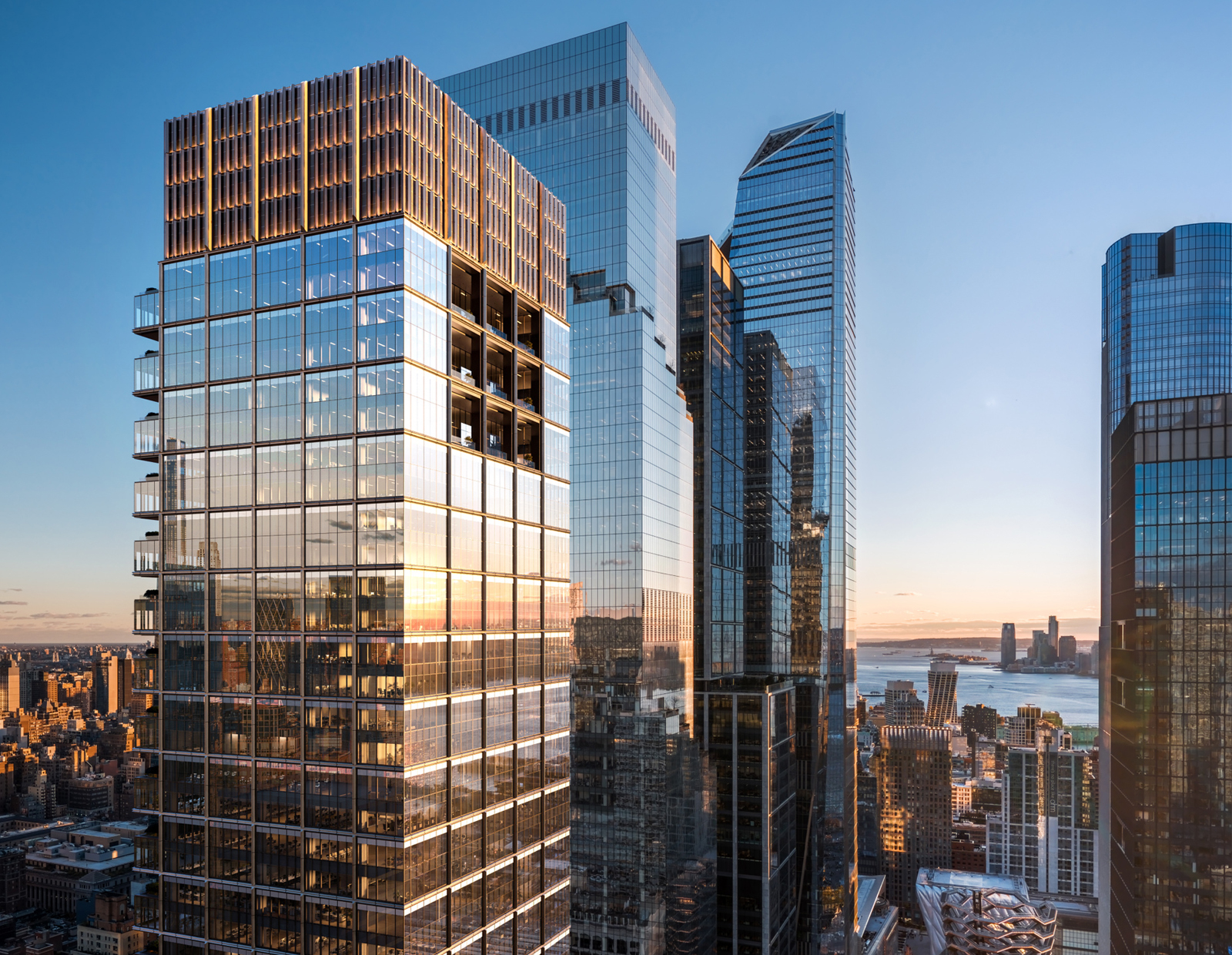
As for competitive office space, developers had 2.9 million square feet under construction in the borough—accounting for 0.6 percent of its existing stock—slightly above the 0.4 percent national average. Manhattan had the second-largest pipeline among the top 25 U.S. office markets, behind Boston’s 3.9 million square feet and ahead of Dallas’ 2.7 million square feet.
U.S. office markets continued to show limited construction activity. Chicago stood out as the gateway city with the smallest pipeline in the country, at 202,568 square feet, while Yardi Matrix recorded no development activity for Seattle.
Manhattan’s top five largest developments total 2.8 million square feet combined. The largest project remains 70 Hudson Yards, totaling 1.4 million square feet and representing the largest ground-up U.S. office project developed since the pandemic.
Related Cos. kicked off construction of the high-rise in June 2025. A month earlier, Deloitte committed to 800,000 square feet at the project. The company will move its North American headquarters to the 72-story all-electric skyscraper. Completion is estimated for October 2028.
Manhattan retains flex office market leadership
Manhattan’s coworking sector comprised 12.8 million square feet of space across 309 locations as of April, according to CoworkingCafe. Coworking space accounted for 2.6 percent of total leasable office space in the borough—above the national average of 2.3 percent and on par with Los Angeles. Among gateway cities, the highest share was in Miami, namely 4.2 percent, while Chicago followed, with 2.8 percent.
Manhattan maintained the nation’s largest flex office inventory. Metros that followed include Chicago (9.2 million square feet), Los Angeles (7.7 million square feet) and Washington, D.C. (7.4 million square feet). Miami’s 3.4 million square feet remained the smallest inventory across gateway markets.
The borough’s list of top five flex office providers by footprint shifted since our previous coverage. WeWork kept the leading position, with a footprint totaling 2.3 million square feet. The company is followed by Industrious (1.7 million square feet), Grand Central Offices (848,640 square feet), Studio by Tishman Speyer (753,350 square feet) and Convene (673,800 square feet).
Recent movement in the sector includes Industrious’ expansion at Kato International’s Tower 49, an office tower in Midtown. The flex office provider brought its footprint to 291,600 square feet at the property, making it the largest single flex office space in the world.



You must be logged in to post a comment.